




Dehradun Deploys Pumps To Tackle Urban Flooding
ECONOMY & POLICY

Dehradun Deploys Pumps To Tackle Urban Flooding

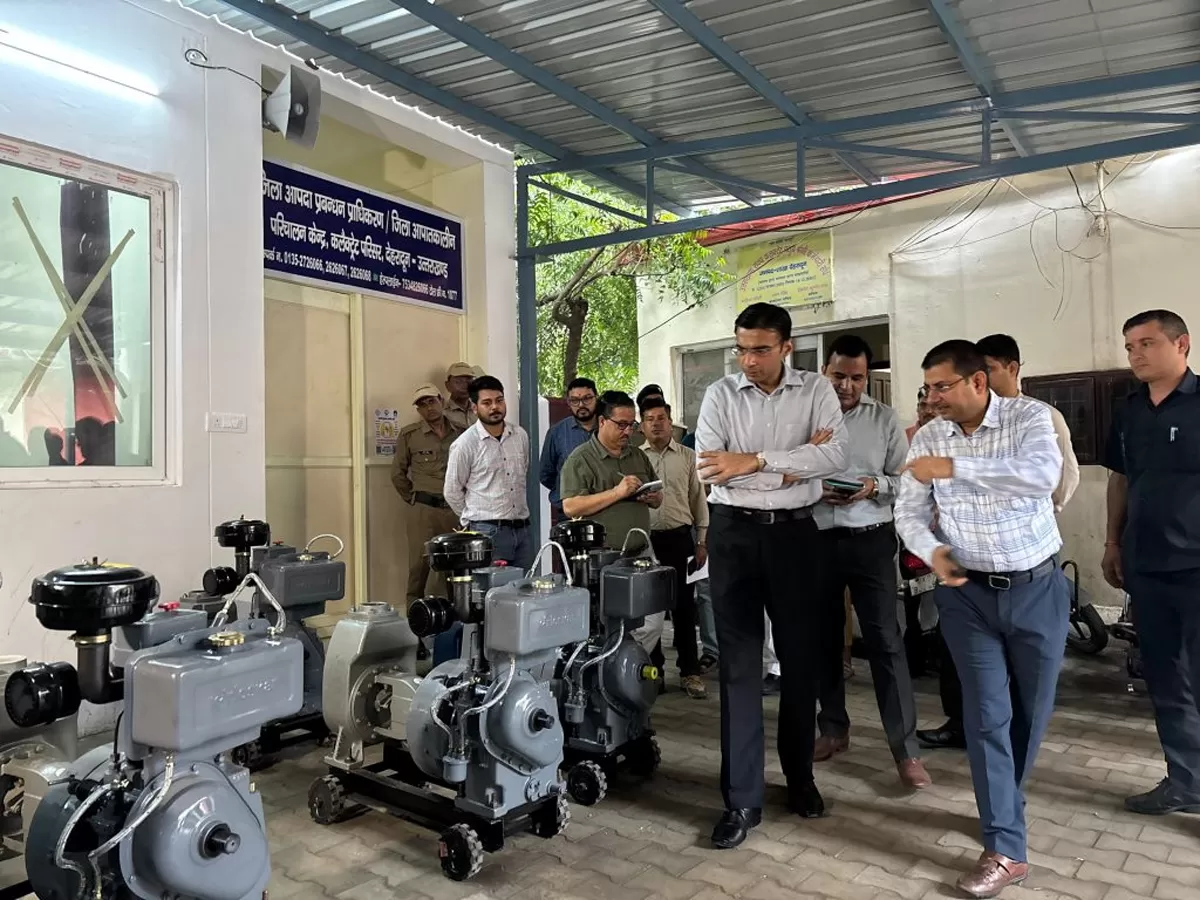
To combat chronic urban waterlogging, the Dehradun district administration has procured 17 high-pressure de-watering pumps at a cost of approximately Rs 3 million. This initiative, influenced by Chief Minister Pushkar Singh Dhami’s focus on civic issues, was ordered by District Magistrate Savin Bansal to address long-standing flooding in areas like ISBT and other vulnerable city zones.
The pumps were dispatched today from the District Emergency Operations Centre to relevant agencies in Dehradun, Rishikesh, and Doiwala. Bansal instructed officials to install them swiftly at critical intersections and locations prone to heavy water accumulation during the monsoon.
Of the 17 pumps, four have been assigned to the Rishikesh Municipal Corporation, two to Doiwala, and one to the Rishikesh Tehsil. Ten additional pumps and support equipment have been distributed among the Disaster Management Authority, Municipal Corporation, Jal Nigam, Jal Sansthan, Smart City teams, the Irrigation Department, and Quick Response Teams (QRTs) in Dehradun. This marks the first targeted deployment of portable de-watering equipment across the city’s most flood-affected areas.
According to the DM, prolonged monsoon periods often leave urban spaces submerged, disrupting daily life for schoolchildren, women, and commuters. Manpower shortages and logistical hurdles in civic agencies have hampered timely response in the past. The administration, invoking powers under the DM Act, undertook the procurement to ensure rapid drainage in flood-prone zones.
The CM’s emphasis on tackling urban floods has led to the formation of a dedicated QRT at the district level. These teams, equipped with the new pumps, will now carry out regular inspections and respond immediately to reports of waterlogging. Bansal affirmed that this improved capacity would significantly cut down response time and provide timely relief during the monsoon.
To further boost preparedness, manpower and machinery have also been positioned at key waterlogging spots, similar to practices used in landslide-prone areas. The Municipal Corporation has been divided into 12 zones, with three QRTs formed under direct orders from the District Magistrate. Nodal officers—City Magistrate Pratyush Singh, SDM Harigiri, and SDM Kumkum Joshi—have been tasked with ensuring swift action on any drainage obstruction.
The equipment launch was attended by senior officials including Additional District Magistrate (FR) KK Mishra, City Magistrate Pratyush Singh, District Disaster Management Officer Rishabh Kumar, and representatives from Jal Nigam, Jal Sansthan, and the Irrigation Department.

To combat chronic urban waterlogging, the Dehradun district administration has procured 17 high-pressure de-watering pumps at a cost of approximately Rs 3 million. This initiative, influenced by Chief Minister Pushkar Singh Dhami’s focus on civic issues, was ordered by District Magistrate Savin Bansal to address long-standing flooding in areas like ISBT and other vulnerable city zones.The pumps were dispatched today from the District Emergency Operations Centre to relevant agencies in Dehradun, Rishikesh, and Doiwala. Bansal instructed officials to install them swiftly at critical intersections and locations prone to heavy water accumulation during the monsoon.Of the 17 pumps, four have been assigned to the Rishikesh Municipal Corporation, two to Doiwala, and one to the Rishikesh Tehsil. Ten additional pumps and support equipment have been distributed among the Disaster Management Authority, Municipal Corporation, Jal Nigam, Jal Sansthan, Smart City teams, the Irrigation Department, and Quick Response Teams (QRTs) in Dehradun. This marks the first targeted deployment of portable de-watering equipment across the city’s most flood-affected areas.According to the DM, prolonged monsoon periods often leave urban spaces submerged, disrupting daily life for schoolchildren, women, and commuters. Manpower shortages and logistical hurdles in civic agencies have hampered timely response in the past. The administration, invoking powers under the DM Act, undertook the procurement to ensure rapid drainage in flood-prone zones.The CM’s emphasis on tackling urban floods has led to the formation of a dedicated QRT at the district level. These teams, equipped with the new pumps, will now carry out regular inspections and respond immediately to reports of waterlogging. Bansal affirmed that this improved capacity would significantly cut down response time and provide timely relief during the monsoon.To further boost preparedness, manpower and machinery have also been positioned at key waterlogging spots, similar to practices used in landslide-prone areas. The Municipal Corporation has been divided into 12 zones, with three QRTs formed under direct orders from the District Magistrate. Nodal officers—City Magistrate Pratyush Singh, SDM Harigiri, and SDM Kumkum Joshi—have been tasked with ensuring swift action on any drainage obstruction.The equipment launch was attended by senior officials including Additional District Magistrate (FR) KK Mishra, City Magistrate Pratyush Singh, District Disaster Management Officer Rishabh Kumar, and representatives from Jal Nigam, Jal Sansthan, and the Irrigation Department.

Next Story
Infrastructure Transport

Pune To Build Nine Km Link Road Between Highways

The Pune Municipal Corporation (PMC) has decided to appoint an expert to plan the development of a nine km long, 60 metre wide road from Khadi Machine chowk to Wadki chowk as an extension to the Katraj-Kondhwa road to link the Mumbai-Satara and Pune-Solapur national highways. The scheme is intended to divert heavy vehicle traffic away from the city and improve access between the two arterial routes. The project has been prioritised by the PMC and forms part of a larger set of schemes in which 19 roads have been identified for development at a combined cost of Rs 9.82 billion (bn) to address c..

Next Story
Infrastructure Transport

Barabanki Bahraich Six Lane Highway Approved in Uttar Pradesh

The Uttar Pradesh government has approved construction of a new six-lane highway linking Barabanki and Bahraich as part of National Highway 927, and the cabinet has cleared the project. The alignment will pass through Mustafabad and Kaiserganj and extend for about 101.5 km, creating a key corridor for local and long-distance movement. The National Highways Authority of India will oversee the work and has signalled the scheme is intended to strengthen regional connectivity and cross-border access to Nepal. The project carries an estimated total cost of Rs 69,690 million, equivalent to Rs 69.69..

Next Story
Infrastructure Transport

Toll At Kharegaon Likely As Highway Upgrade Nears Completion

A section of the highway at Kharegaon has undergone an upgrade and is approaching completion, and authorities have indicated plans for a toll to be introduced once works finish. The project has focused on strengthening the carriageway, improving drainage and upgrading intersections to enhance safety and capacity. Officials have said the toll will be used to recover construction costs and fund ongoing maintenance. The upgrade included resurfacing of the pavement, widening of certain stretches and installation of modern signage and lighting to reduce accident risk. Contractors completed most ma..

Advertisement

Subscribe to Our Newsletter

Get daily newsletters around different themes from Construction world.

STAY CONNECTED

Advertisement

Advertisement

Advertisement