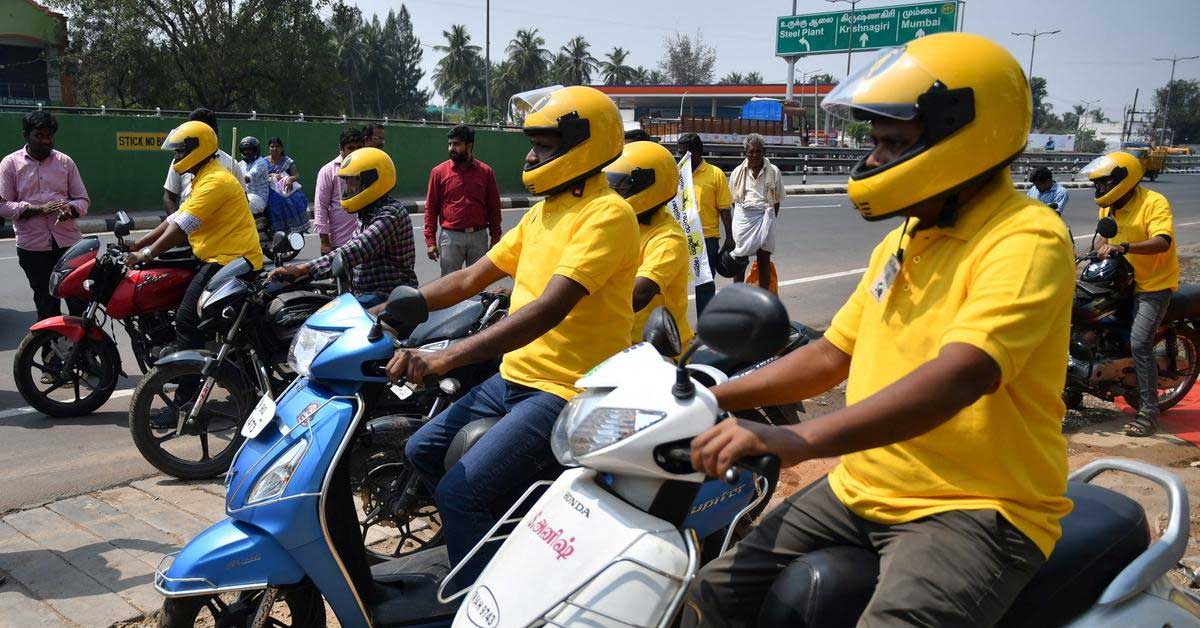
Delhi Bike Taxi Group Appeals for Extended EV Transition Period
ECONOMY & POLICY

Delhi Bike Taxi Group Appeals for Extended EV Transition Period

In a recent development, a prominent bike taxi group has submitted a request to the Lieutenant Governor of Delhi, seeking additional time to transition to electric vehicles (EVs). The appeal comes in the wake of the city's mandate for a swift shift to electric mobility, aiming to reduce emissions and promote sustainable transportation.

The bike taxi association emphasises the challenges faced by its members in making a rapid transition to electric vehicles, citing infrastructure limitations, availability of charging stations, and financial considerations. The request underscores the importance of a phased approach, allowing sufficient time for operators to adapt to the evolving landscape of electric mobility.

Delhi's push towards electric transportation aligns with global efforts to combat air pollution and mitigate the impact of vehicular emissions on the environment. However, the bike taxi group's appeal sheds light on the practical hurdles faced by industry players in meeting the ambitious timeline set by regulatory authorities.

As the transition to electric mobility remains a focal point for urban planning and environmental sustainability, striking a balance between regulatory goals and the practical challenges faced by stakeholders becomes crucial. The response from the Lieutenant Governor will likely shape the trajectory of the bike taxi industry in Delhi and influence the pace of the city's broader shift towards a cleaner and greener transportation ecosystem.

In a recent development, a prominent bike taxi group has submitted a request to the Lieutenant Governor of Delhi, seeking additional time to transition to electric vehicles (EVs). The appeal comes in the wake of the city's mandate for a swift shift to electric mobility, aiming to reduce emissions and promote sustainable transportation. The bike taxi association emphasises the challenges faced by its members in making a rapid transition to electric vehicles, citing infrastructure limitations, availability of charging stations, and financial considerations. The request underscores the importance of a phased approach, allowing sufficient time for operators to adapt to the evolving landscape of electric mobility. Delhi's push towards electric transportation aligns with global efforts to combat air pollution and mitigate the impact of vehicular emissions on the environment. However, the bike taxi group's appeal sheds light on the practical hurdles faced by industry players in meeting the ambitious timeline set by regulatory authorities. As the transition to electric mobility remains a focal point for urban planning and environmental sustainability, striking a balance between regulatory goals and the practical challenges faced by stakeholders becomes crucial. The response from the Lieutenant Governor will likely shape the trajectory of the bike taxi industry in Delhi and influence the pace of the city's broader shift towards a cleaner and greener transportation ecosystem.

Next Story
Infrastructure Urban

Implementation Status of Jal Jeevan Mission

Since August 2019 the Government has implemented Jal Jeevan Mission to provide assured potable water through household tap connections in rural India. At the start of the mission only 32.3 million (mn) rural households, representing 16.7 per cent, were reported to have tap water connections. States and union territories have reported that 125.8 mn additional rural households have since been provided with tap connections. As a result, of about 193.6 mn rural households roughly 158.2 mn, or 81.71 per cent, are reported to have tap water supply at home.\n\nThe State, district and village level st..

Next Story
Infrastructure Urban

Jal Jeevan Mission Reaches Eighty One Per Cent Rural Coverage

The Government reported substantial progress under the Jal Jeevan Mission, launched in August 2019 to provide tap water to every rural household. At launch only 32.3 million (mn) rural households had tap connections and states and Union territories reported provision of 125.8 mn additional households by March 2026. Consequently, out of about 193.6 mn rural households around 158.2 mn, or 81.71 per cent, are reported to have tap water at home. The Finance Minister announced extension of the mission until 2028 in the 2025-26 budget speech. The Swachh Bharat Mission Grameen, launched in October 20..

Next Story
Infrastructure Urban

Empowering Local Governance for Sustainable Rural Water Supply

The Ministry of Jal Shakti has aligned the Jal Jeevan Mission (JJM) with the 73rd Amendment to strengthen village level planning and community ownership of water supply. Gram Panchayats, village water and sanitation committees and Pani Samitis are to plan, implement, manage and maintain piped water systems, with gram sabha processes formalising handover and oversight. Implementation support agencies including non government organisations, community based organisations and self help groups have been empanelled to train local committees and promote women participation. Under JJM, the department ..

Advertisement

Subscribe to Our Newsletter

Get daily newsletters around different themes from Construction world.

STAY CONNECTED

Advertisement

Advertisement

Advertisement