Delhi to Clear Rs 1.4 Billion EV Subsidy Backlog
ECONOMY & POLICY

Delhi to Clear Rs 1.4 Billion EV Subsidy Backlog

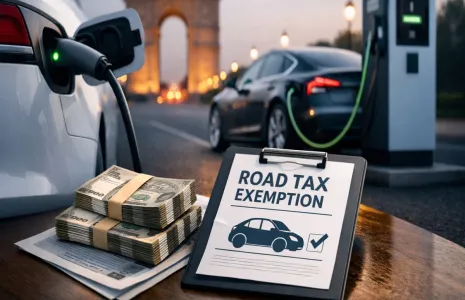
The Delhi government will soon begin clearing pending electric vehicle (EV) subsidy dues of about Rs 1.4 billion, officials said. Transport Minister Pankaj Singh stated on Monday that the department will verify all subsidy applications to address a backlog accumulated over the past two years. A dedicated portal is also being prepared to facilitate the disbursement.
This action follows a High Court order on 3 September directing the Delhi government to immediately release subsidies promised to EV buyers. The court noted that procedural hurdles cannot delay payments and emphasised that the 2020 Delhi Electric Vehicles Policy does not prescribe a timeline for disbursing subsidies.
Officials confirmed that eligible beneficiaries are already being identified. A senior official added that delays arose due to the arrest of former Delhi Chief Minister Arvind Kejriwal last year over an excise policy case, which postponed cabinet meetings and the timely extension of the EV policy.
Since the launch of the EV Policy in August 2020, more than 219,000 vehicles have received tax exemptions, including 109,000 two-wheelers and 83,724 three-wheelers. Until 2023, the government had disbursed Rs 1.77 billion in incentives.
The current EV Policy has been extended until 31 March 2026, as the draft of Electric Vehicle Policy 2.0 undergoes public consultation. Last month, Delhi Chief Minister Rekha Gupta announced a committee, headed by Minister Ashish Sood, to formulate the new policy. 

The Delhi government will soon begin clearing pending electric vehicle (EV) subsidy dues of about Rs 1.4 billion, officials said. Transport Minister Pankaj Singh stated on Monday that the department will verify all subsidy applications to address a backlog accumulated over the past two years. A dedicated portal is also being prepared to facilitate the disbursement.This action follows a High Court order on 3 September directing the Delhi government to immediately release subsidies promised to EV buyers. The court noted that procedural hurdles cannot delay payments and emphasised that the 2020 Delhi Electric Vehicles Policy does not prescribe a timeline for disbursing subsidies.Officials confirmed that eligible beneficiaries are already being identified. A senior official added that delays arose due to the arrest of former Delhi Chief Minister Arvind Kejriwal last year over an excise policy case, which postponed cabinet meetings and the timely extension of the EV policy.Since the launch of the EV Policy in August 2020, more than 219,000 vehicles have received tax exemptions, including 109,000 two-wheelers and 83,724 three-wheelers. Until 2023, the government had disbursed Rs 1.77 billion in incentives.The current EV Policy has been extended until 31 March 2026, as the draft of Electric Vehicle Policy 2.0 undergoes public consultation. Last month, Delhi Chief Minister Rekha Gupta announced a committee, headed by Minister Ashish Sood, to formulate the new policy. 

Related Stories

Gold Stories

Next Story
Infrastructure Urban

KONE Opens India's First Digital Experience Centre in Pune

KONE, a global elevator and escalator manufacturer, has inaugurated its first Digital Experience Centre (DEC) in India, located in Pune. The facility aims to showcase how artificial intelligence (AI), connectivity and data-driven technologies can enhance customer experiences and improve building operations.The centre was inaugurated by Jussi Herlin, Executive Vice Chair, KONE Corporation; Philippe Delorme, President and CEO, KONE; and Nandan Nilekani, Co-founder and Chairman of the Board, Infosys.Designed as an interactive customer environment, the facility demonstrates digital solutions cover..

Next Story
Infrastructure Urban

CII GreenCo Launches Circularity Guidelines for Indian Industry

The Confederation of Indian Industry (CII) GreenCo Council has launched the CII GreenCo Circularity Guidelines – Pilot Version at the 17th CII GreenCo Waste & Resource Management Summit 2026 in Chennai. The initiative aims to strengthen resource efficiency, waste reduction and circular economy practices across Indian manufacturing and process industries.The guidelines introduce a structured framework with circularity indices covering raw materials, consumables, packaging and other resource inputs. These indicators will help industries assess existing practices, identify opportunities to ..

Next Story
Infrastructure Energy

Global Electronics Association Launches IPC-1783-CO2E Standard

The Global Electronics Association has introduced IPC-1783-CO2E, a new international standard aimed at improving consistency, transparency and comparability in product carbon footprint reporting across the electronics manufacturing industry.The standard, titled International Standard for Data Collection and Reporting of CO2 Equivalent (CO2e) Emissions for the Electronics Manufacturing Supply Chain, provides industry-specific guidance for collecting, estimating and reporting carbon emissions data.With increasing regulatory requirements and customer expectations, electronics manufacturers face c..

Advertisement

Subscribe to Our Newsletter

Get daily newsletters around different themes from Construction world.

STAY CONNECTED

Advertisement

SPECIAL OFFER
QR Code