DGFT Special Campaign Accelerates EODC Issuance
ECONOMY & POLICY

DGFT Special Campaign Accelerates EODC Issuance

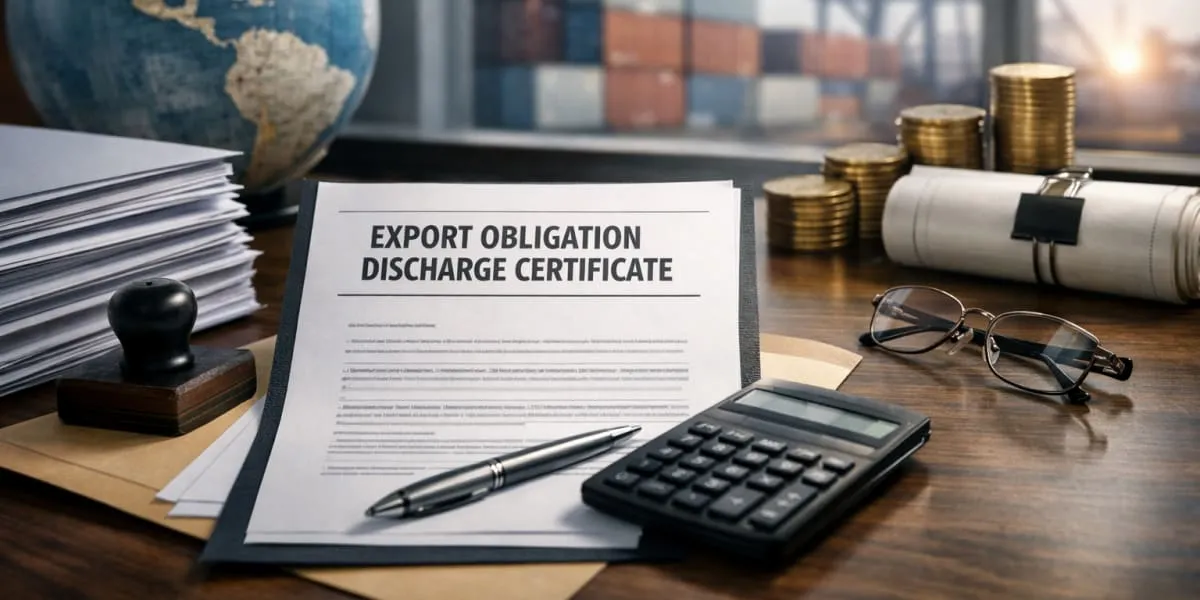
The Directorate General of Foreign Trade, under the Ministry of Commerce and Industry, completed a time bound special campaign in March 2026 to expedite issuance of Export Obligation Discharge Certificates under the Advance Authorisation and Export Promotion Capital Goods schemes. The campaign ran through March and was monitored by daily review meetings chaired by senior DGFT officials. The drive aimed to enable formal closure of export obligations, facilitate release of bank guarantees and bonds, and reduce the grievance burden on exporters.

EODC approvals in March 2026 rose markedly, with increases of 242 per cent under the Advance Authorisation scheme and 234 per cent under the EPCG scheme compared with February. A total of 12,690 EODCs were approved in March, compared with 3,747 in February, representing a more than threefold increase of three point three nine times. The campaign facilitated clearance of 59 per cent of the pending pipeline under the Advance Authorisation scheme and 54 per cent under the EPCG scheme during March.

During March, 13,238 out of 13,627 available Advance Authorisation EODC cases were processed, achieving a processing rate of 97 per cent, while the EPCG scheme saw 8,281 out of 8,473 available cases processed at 98 per cent. The 12,690 approvals in a single month contrasted with 44,018 approvals during the preceding 11 months from April 2025 to February 2026, underscoring the impact of focused administrative intervention. The campaign was credited with substantially accelerating disposal and benefitting exporters across the country.

As a result, in progress cases fell from 15,360 as on March one, 2026 to 3,966 as on April one, 2026 despite the addition of 6,740 new EODC cases during March and an overall decline of 74 per cent. The Special Drive has been extended for a further period of two months from April one to May 31, 2026 with detailed guidelines issued at the end of March. The initiative is expected to further reduce backlog, enable faster closure of obligations and enhance ease of doing business.

The Directorate General of Foreign Trade, under the Ministry of Commerce and Industry, completed a time bound special campaign in March 2026 to expedite issuance of Export Obligation Discharge Certificates under the Advance Authorisation and Export Promotion Capital Goods schemes. The campaign ran through March and was monitored by daily review meetings chaired by senior DGFT officials. The drive aimed to enable formal closure of export obligations, facilitate release of bank guarantees and bonds, and reduce the grievance burden on exporters. EODC approvals in March 2026 rose markedly, with increases of 242 per cent under the Advance Authorisation scheme and 234 per cent under the EPCG scheme compared with February. A total of 12,690 EODCs were approved in March, compared with 3,747 in February, representing a more than threefold increase of three point three nine times. The campaign facilitated clearance of 59 per cent of the pending pipeline under the Advance Authorisation scheme and 54 per cent under the EPCG scheme during March. During March, 13,238 out of 13,627 available Advance Authorisation EODC cases were processed, achieving a processing rate of 97 per cent, while the EPCG scheme saw 8,281 out of 8,473 available cases processed at 98 per cent. The 12,690 approvals in a single month contrasted with 44,018 approvals during the preceding 11 months from April 2025 to February 2026, underscoring the impact of focused administrative intervention. The campaign was credited with substantially accelerating disposal and benefitting exporters across the country. As a result, in progress cases fell from 15,360 as on March one, 2026 to 3,966 as on April one, 2026 despite the addition of 6,740 new EODC cases during March and an overall decline of 74 per cent. The Special Drive has been extended for a further period of two months from April one to May 31, 2026 with detailed guidelines issued at the end of March. The initiative is expected to further reduce backlog, enable faster closure of obligations and enhance ease of doing business.

Next Story
Infrastructure Urban

Centre Clears Power Distribution Upgrade for Uttar Pradesh

The Central Government has approved power distribution projects worth Rs 407.39 billion for Uttar Pradesh under the Revamped Distribution Sector Scheme (RDSS). The investment will be used to modernise the state's electricity distribution infrastructure and strengthen network capacity across urban and rural areas. The package targets one of the country's largest distribution networks as the state experiences rapid urbanisation and rising electricity consumption. Planned interventions include the strengthening of distribution lines, modernisation of substations, replacement of ageing electrical ..

Next Story
Infrastructure Energy

India Data Centres To Consume 191 TWh By 2040 Driving Renewables

A Wood Mackenzie report says India's operational data centre capacity is projected to increase more than fivefold to 12 gigawatt (GW) by 2030 from 2.2 GW in 2025 as artificial intelligence (AI) and cloud computing drive demand. It projects electricity consumption to rise from 10 terawatt-hour (TWh) in 2025 to 191 TWh by 2040. The study forecasts a compound annual growth rate of around 40 per cent and notes AI-dedicated capacity will surge nearly 24-fold from 275 megawatt (MW) in 2025 to 6,546 MW by 2030. The report places India's digital economy at Rs 32 trillion (tn) in 2025 and says it contr..

Next Story
Infrastructure Transport

Hydrogen Train Completes 1,200 Kilometres Of Trials

India's first hydrogen train was flagged off between Jind and Sonipat on July 17 and has travelled over 1,200 kilometres in trials, saving diesel consumption of more than 3,200 litres, a Railway Ministry press release said. The deployment marks the introduction of a zero-emission fuel cell train into route testing and represents a milestone in domestic rail innovation. The train generates electricity onboard through a chemical reaction between hydrogen and oxygen, producing electricity to propel the vehicle while emitting only water vapour as a by-product. There is no smoke and no tailpipe car..

Advertisement

Subscribe to Our Newsletter

Get daily newsletters around different themes from Construction world.

STAY CONNECTED

Advertisement

Advertisement

Advertisement