DIDAC Skills 2026 to Address India's Growing Workforce Skill Gap
ECONOMY & POLICY

DIDAC Skills 2026 to Address India's Growing Workforce Skill Gap

India's manufacturing and services sectors are projected to generate over 350 million jobs by 2030, according to estimates cited from Sector Skill Councils and industry bodies. The anticipated growth highlights the need for accelerated skill development, practical training and stronger collaboration between industry and educational institutions.

The automotive sector is expected to generate 2–2.5 million direct jobs by 2030, according to NITI Aayog. The logistics industry will require an additional 4.7 million skilled workers, while telecommunications could create one million jobs. India's clean energy transition is projected to contribute over 4.4 million full-time jobs, while the textiles and apparel sector anticipates nearly 20 million new employment opportunities over the next three years.

Against this backdrop, DIDAC Skills 2026 will be held from 25–27 November 2026 at the Bangalore International Exhibition Centre (BIEC), Bengaluru. Organised alongside DIDAC India, the exhibition and conference will bring together industry representatives, educational institutions, training organisations and Sector Skill Councils to address evolving workforce requirements.

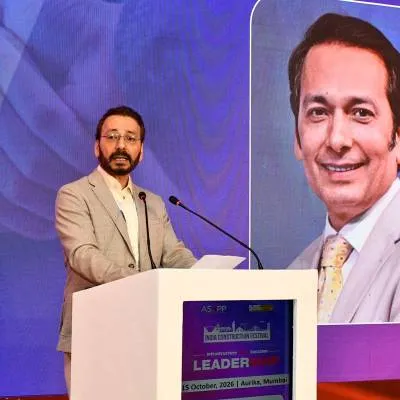
Aditya Gupta, CEO, India Didactics Association, emphasised the need to shift from qualification-driven education towards competency-based learning, focusing on practical skills, industry exposure and adaptability. He said strengthening workforce capabilities would be essential to capitalising on India's emerging employment opportunities.

The exhibition will feature live demonstrations, hands-on workshops, technology showcases and interactive training sessions across advanced manufacturing, healthcare, water management, furniture and fittings, wellness, sports and emerging technologies.

The initiative involves collaboration with several Sector Skill Councils, including the Capital Goods & Strategic Skill Council, Healthcare Sector Skill Council, Water Management and Plumbing Skill Council, and Furniture and Fittings Skill Council.

DIDAC Skills 2026 aims to strengthen industry-academia partnerships, modernise training infrastructure and promote competency-based education to improve workforce readiness and employability across India's expanding industrial sectors.

India's manufacturing and services sectors are projected to generate over 350 million jobs by 2030, according to estimates cited from Sector Skill Councils and industry bodies. The anticipated growth highlights the need for accelerated skill development, practical training and stronger collaboration between industry and educational institutions.The automotive sector is expected to generate 2–2.5 million direct jobs by 2030, according to NITI Aayog. The logistics industry will require an additional 4.7 million skilled workers, while telecommunications could create one million jobs. India's clean energy transition is projected to contribute over 4.4 million full-time jobs, while the textiles and apparel sector anticipates nearly 20 million new employment opportunities over the next three years.Against this backdrop, DIDAC Skills 2026 will be held from 25–27 November 2026 at the Bangalore International Exhibition Centre (BIEC), Bengaluru. Organised alongside DIDAC India, the exhibition and conference will bring together industry representatives, educational institutions, training organisations and Sector Skill Councils to address evolving workforce requirements.Aditya Gupta, CEO, India Didactics Association, emphasised the need to shift from qualification-driven education towards competency-based learning, focusing on practical skills, industry exposure and adaptability. He said strengthening workforce capabilities would be essential to capitalising on India's emerging employment opportunities.The exhibition will feature live demonstrations, hands-on workshops, technology showcases and interactive training sessions across advanced manufacturing, healthcare, water management, furniture and fittings, wellness, sports and emerging technologies.The initiative involves collaboration with several Sector Skill Councils, including the Capital Goods & Strategic Skill Council, Healthcare Sector Skill Council, Water Management and Plumbing Skill Council, and Furniture and Fittings Skill Council.DIDAC Skills 2026 aims to strengthen industry-academia partnerships, modernise training infrastructure and promote competency-based education to improve workforce readiness and employability across India's expanding industrial sectors.

Related Stories

Gold Stories

Next Story
Equipment

TIL Revenue Surges 143% to Rs 1.98 Billion in Q2 FY27

TIL Limited, a manufacturer of material handling and infrastructure equipment, has reported a 143 per cent year-on-year increase in consolidated revenue to Rs 1.98 billion for the second quarter of FY27, compared with Rs 814.5 million in the corresponding period last year. Consolidated EBITDA surged 433 per cent to Rs 173.7 million, while EBITDA margin improved to 8.8 per cent from 4 per cent.The performance was supported by equipment deliveries, defence contracts, aftermarket services and the contribution of Tulip Compression Private Limited (TCPL), which became a majority-owned subsidiary in..

Next Story
Infrastructure Transport

India to Develop Civil Aircraft Within Two Years, Build 100 Airports

India aims to develop its own civil aircraft within the next two years as it seeks to strengthen domestic aerospace capabilities and reduce dependence on foreign aircraft manufacturers, Civil Aviation Minister Ram Mohan Naidu said on November 12. He said the ambition extended beyond assembling aircraft to developing expertise in aircraft design and production. Speaking at the inaugural session of the Confederation of Indian Industry (CII) Partnership Summit 2026 in Visakhapatnam, Naidu said India wanted to establish itself as a major aerospace manufacturing hub. The government’s approach is ..

Next Story
Infrastructure Urban

Two Korean Firms to Invest Rs. 13.7 bn in Tamil Nadu

Two South Korean automotive component suppliers to Hyundai and Kia plan to invest a combined Rs. 13.7 bn in Tamil Nadu over the next five years, according to sources in the state industries department. The proposed investments come after a political dispute over the reported movement of some automotive investments to Andhra Pradesh. The state government has received letters of intent (LoIs) from Hwashin and Seoyon, while memorandums of understanding (MoUs) are expected to be signed shortly. Both companies communicated their investment plans in letters dated November 11, reaffirming their inten..

Advertisement

Subscribe to Our Newsletter

Get daily newsletters around different themes from Construction world.

STAY CONNECTED

Advertisement

SPECIAL OFFER
QR Code