DPIIT Accelerates Progress Under Special Campaign 5.0
ECONOMY & POLICY

DPIIT Accelerates Progress Under Special Campaign 5.0

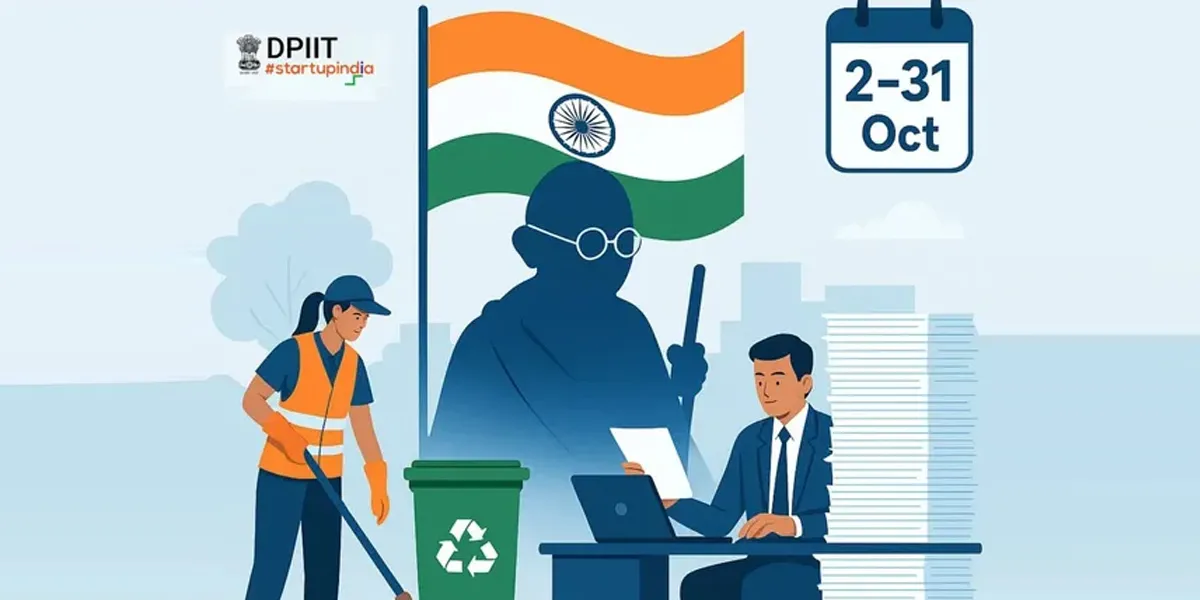
The Department for Promotion of Industry and Internal Trade (DPIIT) and its affiliated organisations are actively executing Special Campaign 5.0 under the guidance of the Department of Administrative Reforms and Public Grievances (DARPG). The initiative seeks to institutionalise Swachhata and reduce pendency in official work across all offices.

During the first fortnight of the implementation phase, DPIIT recorded significant progress across multiple parameters. Pending references — including those from the Prime Minister’s Office, Members of Parliament, State Governments, the Cabinet, and Public Grievances or Appeals — have been systematically identified and are being addressed for quality and timely disposal.

As of 22 October 2025, DPIIT reported that over 47 per cent of PMO references and more than 60 per cent of public grievances had been successfully resolved. Additionally, over 75 per cent of identified e-files were closed, highlighting the Department’s focus on efficient record management. DPIIT and its sub-organisations have also completed 291 cleanliness drives, representing nearly 60 per cent of the planned activities. These sustained efforts underline a strong commitment to improving workplace environments and fostering a culture of cleanliness and efficiency.

The campaign, which runs from 2 to 31 October 2025, follows a preparatory phase conducted between 15 and 30 September 2025. It has raised awareness of the importance of cleanliness, streamlined record management, and timely grievance redressal. DPIIT aims to achieve complete disposal of all pending matters and institutionalise Swachhata practices across all offices by the end of October 2025, thereby contributing to a cleaner, more efficient, and responsive government working environment.

The Department for Promotion of Industry and Internal Trade (DPIIT) and its affiliated organisations are actively executing Special Campaign 5.0 under the guidance of the Department of Administrative Reforms and Public Grievances (DARPG). The initiative seeks to institutionalise Swachhata and reduce pendency in official work across all offices. During the first fortnight of the implementation phase, DPIIT recorded significant progress across multiple parameters. Pending references — including those from the Prime Minister’s Office, Members of Parliament, State Governments, the Cabinet, and Public Grievances or Appeals — have been systematically identified and are being addressed for quality and timely disposal. As of 22 October 2025, DPIIT reported that over 47 per cent of PMO references and more than 60 per cent of public grievances had been successfully resolved. Additionally, over 75 per cent of identified e-files were closed, highlighting the Department’s focus on efficient record management. DPIIT and its sub-organisations have also completed 291 cleanliness drives, representing nearly 60 per cent of the planned activities. These sustained efforts underline a strong commitment to improving workplace environments and fostering a culture of cleanliness and efficiency. The campaign, which runs from 2 to 31 October 2025, follows a preparatory phase conducted between 15 and 30 September 2025. It has raised awareness of the importance of cleanliness, streamlined record management, and timely grievance redressal. DPIIT aims to achieve complete disposal of all pending matters and institutionalise Swachhata practices across all offices by the end of October 2025, thereby contributing to a cleaner, more efficient, and responsive government working environment.

Next Story
Infrastructure Urban

Implementation Status of Jal Jeevan Mission

Since August 2019 the Government has implemented Jal Jeevan Mission to provide assured potable water through household tap connections in rural India. At the start of the mission only 32.3 million (mn) rural households, representing 16.7 per cent, were reported to have tap water connections. States and union territories have reported that 125.8 mn additional rural households have since been provided with tap connections. As a result, of about 193.6 mn rural households roughly 158.2 mn, or 81.71 per cent, are reported to have tap water supply at home.\n\nThe State, district and village level st..

Next Story
Infrastructure Urban

Jal Jeevan Mission Reaches Eighty One Per Cent Rural Coverage

The Government reported substantial progress under the Jal Jeevan Mission, launched in August 2019 to provide tap water to every rural household. At launch only 32.3 million (mn) rural households had tap connections and states and Union territories reported provision of 125.8 mn additional households by March 2026. Consequently, out of about 193.6 mn rural households around 158.2 mn, or 81.71 per cent, are reported to have tap water at home. The Finance Minister announced extension of the mission until 2028 in the 2025-26 budget speech. The Swachh Bharat Mission Grameen, launched in October 20..

Next Story
Infrastructure Urban

Empowering Local Governance for Sustainable Rural Water Supply

The Ministry of Jal Shakti has aligned the Jal Jeevan Mission (JJM) with the 73rd Amendment to strengthen village level planning and community ownership of water supply. Gram Panchayats, village water and sanitation committees and Pani Samitis are to plan, implement, manage and maintain piped water systems, with gram sabha processes formalising handover and oversight. Implementation support agencies including non government organisations, community based organisations and self help groups have been empanelled to train local committees and promote women participation. Under JJM, the department ..

Advertisement

Subscribe to Our Newsletter

Get daily newsletters around different themes from Construction world.

STAY CONNECTED

Advertisement

Advertisement

Advertisement