Economic growth reduces to 5.4% from the expected 8.9%: NSO
ECONOMY & POLICY

Economic growth reduces to 5.4% from the expected 8.9%: NSO

According to the National Statistical Office (NSO), the Indian economy grew at 5.4% in the third quarter (Q3) of FY22.

The statistics office reduced the overall expected growth for FY22 to 8.9% from 9.2%.

According to the experts, the third wave of the pandemic on contact-intensive services sectors in the fourth quarter (Q4) and the spike in commodity prices due to the Russia-Ukraine war may have reduced the Gross Domestic Product (GDP) growth in FY22.

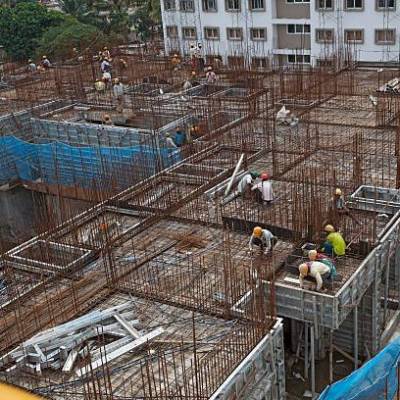
The statistics office data show services sector grew at a robust 8.2%, while the manufacturing sector remained almost static, hit by the shortage of semiconductors. The labour-intensive construction sector contracted 2.8%.

Chief economic adviser at Brickwork Ratings, Govinda Rao, said to achieve 8.9% growth, Q4 GDP had to grow 4.8%.

Retail oil price revisions might resume early March after the Assembly elections are over.

The Reserve Bank of India (RBI) had estimated a 10% price hike of the Indian crude basket could increase the consumer price index by 20 basis points.

The private consumption remained robust in Q3, showing an investment revival in the second quarter (Q2) petered out while weak government expenditure declined growth. However, government expenditure may significantly pick up in the March quarter.

The Controller General of Accounts data showed revenue spending increased by 30%, even as capital spending was 6% lower than in January last year. The second advance estimates the share of private consumption expenditure in FY22 to be 1.2% bigger than in FY20. As a result, the size of all demand-side drivers of GDP in FY22 is comparatively bigger than FY20.

According to data, eight infrastructure sectors witnessed growth, at the rate of 3.7% in January against 4.1% in December.

Image Source

According to the National Statistical Office (NSO), the Indian economy grew at 5.4% in the third quarter (Q3) of FY22. The statistics office reduced the overall expected growth for FY22 to 8.9% from 9.2%. According to the experts, the third wave of the pandemic on contact-intensive services sectors in the fourth quarter (Q4) and the spike in commodity prices due to the Russia-Ukraine war may have reduced the Gross Domestic Product (GDP) growth in FY22. The statistics office data show services sector grew at a robust 8.2%, while the manufacturing sector remained almost static, hit by the shortage of semiconductors. The labour-intensive construction sector contracted 2.8%. Chief economic adviser at Brickwork Ratings, Govinda Rao, said to achieve 8.9% growth, Q4 GDP had to grow 4.8%. Retail oil price revisions might resume early March after the Assembly elections are over. The Reserve Bank of India (RBI) had estimated a 10% price hike of the Indian crude basket could increase the consumer price index by 20 basis points. The private consumption remained robust in Q3, showing an investment revival in the second quarter (Q2) petered out while weak government expenditure declined growth. However, government expenditure may significantly pick up in the March quarter. The Controller General of Accounts data showed revenue spending increased by 30%, even as capital spending was 6% lower than in January last year. The second advance estimates the share of private consumption expenditure in FY22 to be 1.2% bigger than in FY20. As a result, the size of all demand-side drivers of GDP in FY22 is comparatively bigger than FY20. According to data, eight infrastructure sectors witnessed growth, at the rate of 3.7% in January against 4.1% in December. Image Source

Next Story
Infrastructure Urban

ISRO’s IMAT Success Boosts Readiness for Maiden Gaganyaan Mission

Union Minister of State for Science and Technology Dr Jitendra Singh informed Parliament that ISRO has achieved a key milestone in its preparations for India’s first human space mission with the successful completion of the Integrated Main Parachute Airdrop Test (IMAT). He said in the Lok Sabha that the test forms a central part of the qualification campaign for the Crew Module’s parachute-based deceleration system, one of the most vital elements in human-rating the mission.According to Dr. Jitendra Singh, the IMAT recreated one of the most demanding descent conditions by intentionally del..

Next Story
Infrastructure Urban

Gyanesh Kumar Takes Charge as Chair of International IDEA Council

Chief Election Commissioner of India Gyanesh Kumar has assumed the Chairship of the Council of Member States of the International Institute for Democracy and Electoral Assistance for 2026. The ceremony in Stockholm was also attended by India’s Ambassador to Sweden, Anurag Bhushan. India, a founding member of International IDEA, has long contributed to the organisation’s governance and global democratic dialogue, and the new Chairship signals broad recognition of the Election Commission of India as a trusted and innovative election management institution.During his visit, Kumar held discuss..

Next Story
Infrastructure Energy

Coal Mines Boost Local Growth and Support India’s Energy Self-reliance

The Magadh and Amrapali coal mines in Jharkhand are playing a pivotal role in strengthening India’s energy security, contributing nearly half of Central Coalfields Limited’s total coal production in 2024–25. Both mines support the broader goal of ensuring steady coal availability for the power sector under the vision of Aatmanirbhar Bharat. Magadh has estimated mineable reserves of 854.91 million tonnes, while Amrapali holds 456.34 million tonne. For FY 2025–26, the two are expected to generate net sales revenues of Rs 28.12 billion and Rs 23.67 billion respectively. Local development ..

Advertisement

Subscribe to Our Newsletter

Get daily newsletters around different themes from Construction world.

STAY CONNECTED

Advertisement

Advertisement

Advertisement

Advertisement

Get CW App