Eligibility and Subsidy Rules for PM E-DRIVE EV Charging
ECONOMY & POLICY

Eligibility and Subsidy Rules for PM E-DRIVE EV Charging

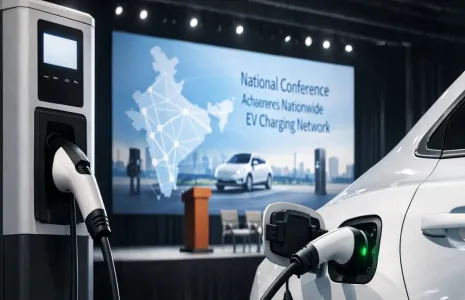
Category A: State/Central Government premises, including offices, hospitals, educational institutes and CPSE establishments (with free public access) 100 per cent subsidy on upstream infrastructure and 100 per cent on EVSE.

Category B: Locations in cities and highways owned/controlled by State or Central Government bodies, such as railway stations, airports, OMC retail outlets, STU-operated bus stations, metro stations, municipal parking lots and NHAI/State-controlled plazas 80 per cent subsidy on upstream infrastructure and 70 per cent on EVSE.

Category C: All other urban and highway locations, including streets, shopping malls and market complexes 80 per cent subsidy on upstream infrastructure.

Category D: Battery Swapping Stations (BSS) and Battery Charging Stations (BCS) at any location 80 per cent subsidy on upstream infrastructure.

The criteria for selecting cities, towns and highways for EVPCS deployment, as well as mechanisms for coordination and maintenance, are detailed in the Operational Guidelines for Deployment of EV Public Charging Stations under the PM E-DRIVE Scheme, issued by the Ministry of Heavy Industries on 26 September 2025.

This information was provided by the Minister of State for Heavy Industries, Shri Bhupathiraju Srinivasa Varma, in a written reply in the Rajya Sabha.

Category A: State/Central Government premises, including offices, hospitals, educational institutes and CPSE establishments (with free public access) 100 per cent subsidy on upstream infrastructure and 100 per cent on EVSE. Category B: Locations in cities and highways owned/controlled by State or Central Government bodies, such as railway stations, airports, OMC retail outlets, STU-operated bus stations, metro stations, municipal parking lots and NHAI/State-controlled plazas 80 per cent subsidy on upstream infrastructure and 70 per cent on EVSE. Category C: All other urban and highway locations, including streets, shopping malls and market complexes 80 per cent subsidy on upstream infrastructure. Category D: Battery Swapping Stations (BSS) and Battery Charging Stations (BCS) at any location 80 per cent subsidy on upstream infrastructure. The criteria for selecting cities, towns and highways for EVPCS deployment, as well as mechanisms for coordination and maintenance, are detailed in the Operational Guidelines for Deployment of EV Public Charging Stations under the PM E-DRIVE Scheme, issued by the Ministry of Heavy Industries on 26 September 2025. This information was provided by the Minister of State for Heavy Industries, Shri Bhupathiraju Srinivasa Varma, in a written reply in the Rajya Sabha.

Next Story
Infrastructure Urban

Centre Boosts FPO Growth With New Credit And Market Support

The Government is implementing the Central Sector Scheme on the formation and promotion of 10,000 Farmer Producer Organisations (FPOs), under which all 10,000 FPOs have now been registered. The scheme provides Rs 1.8 million per FPO for three years as management support, a matching equity grant of up to Rs 1.5 million, and a credit guarantee of up to Rs 0.02 billion through eligible lending institutions. It also offers assistance for training, market linkages and alignment with other schemes. FPOs receive support to obtain input licences for seed, fertiliser and pesticide supplies, as well as..

Next Story
Infrastructure Urban

PM-KISAN Drives Farm Income Gains And Rural Stability

The PM-KISAN scheme, a central sector initiative launched in February 2019, aims to support the financial needs of farmers holding cultivable land. Under the scheme, Rs 6,000 per year is transferred in three equal instalments to Aadhaar-seeded bank accounts through Direct Benefit Transfer. Eligibility is based primarily on cultivable landholding, with certain exclusions for individuals of higher economic status. A farmer-centric digital infrastructure ensures scheme benefits reach farmers across India without intermediaries. With full transparency in registration and verification, the Governm..

Next Story
Infrastructure Urban

Govt Extends Pro Tem Security Certificate To Two Years

In a further push to improve ease of doing business and ensure continuity for the telecom industry, the National Centre for Communication Security (NCCS) under the Department of Telecommunications has extended the validity of the Pro Tem Security Certification from six months to two years. The Pro Tem Certification, initially launched in October 2024 with a six-month validity, was designed to prevent business disruption for IP Router and Wi-Fi CPE products, which became subject to mandatory security certification from 1 October 2024. Under this certification, OEMs submit a declaration confirm..

Advertisement

Subscribe to Our Newsletter

Get daily newsletters around different themes from Construction world.

STAY CONNECTED

Advertisement

Advertisement

Advertisement

Advertisement

Open In App