Exicom Reports Robust Q2 Growth, Eyes Disciplined Scale-Up
ECONOMY & POLICY

Exicom Reports Robust Q2 Growth, Eyes Disciplined Scale-Up

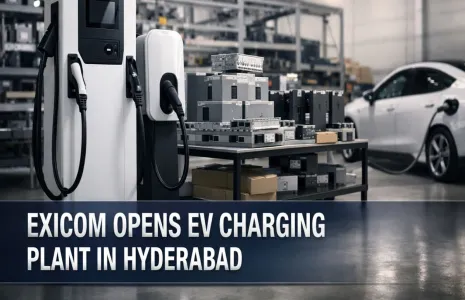
Exicom Tele-Systems Limited, a leading player in India’s EV charging and critical power sectors, reported consolidated revenue of around Rs 2820 million in Q2 FY26, marking an 84 per cent year-on-year and 37 per cent quarter-on-quarter growth. Although consolidated EBITDA stood at a loss of Rs 327 million, the standalone business showed a strong turnaround, recording revenue of Rs 2280 million and EBITDA of Rs 151.7 million—up 72 per cent sequentially and 154 per cent year-on-year.
The Critical Power business saw a rebound with consolidated revenue of about Rs 1700 million, driven by project execution post monsoon. Exicom supplied smart power and energy storage systems for over 5,000 Bharat Net sites and secured a new system integrator under a multi-year supply and AMC contract. It also received Rs 600 million in new lithium-ion battery orders from tower companies and began shipments to African clients.
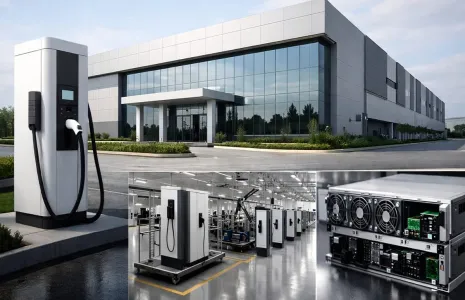
The EV Charging division maintained strong momentum, achieving Rs 1120 million in revenue. The company sold over 20,000 AC chargers and entered a partnership with a leading Auto/EV OEM for 180 kW Harmony Direct 2.0 fast chargers. Expansion into Southeast Asia and the Middle East through channel partnerships is expected to boost exports in the coming quarters.
Exicom remains optimistic about high-power charging, supported by government e-bus tenders and growing e-truck activity. Anant Nahata, Managing Director and CEO said the company’s focus on technology, exports, and disciplined cost management positions it for sustainable EBITDA improvement.
Following the acquisition of Tritium in August 2024, Exicom has revived its sales momentum in the US and Europe. To support this, the board of Exicom BV has approved up to $40 million in external financing to fund Tritium’s product commercialisation and working capital. The firm targets Tritium’s EBITDA break-even by Q4 FY27.
Given the delayed upturn in EV sales and Bharat Net projects, Exicom expects stronger Q3 and Q4 results. The company has revised its FY26 guidance, projecting around 20 per cent standalone revenue growth and 35 per cent consolidated revenue growth.

Exicom Tele-Systems Limited, a leading player in India’s EV charging and critical power sectors, reported consolidated revenue of around Rs 2820 million in Q2 FY26, marking an 84 per cent year-on-year and 37 per cent quarter-on-quarter growth. Although consolidated EBITDA stood at a loss of Rs 327 million, the standalone business showed a strong turnaround, recording revenue of Rs 2280 million and EBITDA of Rs 151.7 million—up 72 per cent sequentially and 154 per cent year-on-year.The Critical Power business saw a rebound with consolidated revenue of about Rs 1700 million, driven by project execution post monsoon. Exicom supplied smart power and energy storage systems for over 5,000 Bharat Net sites and secured a new system integrator under a multi-year supply and AMC contract. It also received Rs 600 million in new lithium-ion battery orders from tower companies and began shipments to African clients.The EV Charging division maintained strong momentum, achieving Rs 1120 million in revenue. The company sold over 20,000 AC chargers and entered a partnership with a leading Auto/EV OEM for 180 kW Harmony Direct 2.0 fast chargers. Expansion into Southeast Asia and the Middle East through channel partnerships is expected to boost exports in the coming quarters.Exicom remains optimistic about high-power charging, supported by government e-bus tenders and growing e-truck activity. Anant Nahata, Managing Director and CEO said the company’s focus on technology, exports, and disciplined cost management positions it for sustainable EBITDA improvement.Following the acquisition of Tritium in August 2024, Exicom has revived its sales momentum in the US and Europe. To support this, the board of Exicom BV has approved up to $40 million in external financing to fund Tritium’s product commercialisation and working capital. The firm targets Tritium’s EBITDA break-even by Q4 FY27.Given the delayed upturn in EV sales and Bharat Net projects, Exicom expects stronger Q3 and Q4 results. The company has revised its FY26 guidance, projecting around 20 per cent standalone revenue growth and 35 per cent consolidated revenue growth.

Next Story
Infrastructure Transport

Dhalbhumgarh Airport Faces 150-km Rule Hurdle

The issue has resurfaced following a recent statement by Union Civil Aviation Minister Ram Mohan Naidu, who said that under existing aviation policy, a new greenfield airport is generally not permitted within an aerial distance of 150 kilometres of an operational civilian airport. He added, however, that if a formal proposal is submitted, its impact on the existing airport can be examined and relaxations may be considered on a case-by-case basis. While the clarification has revived some hope for Dhalbhumgarh, it has also underlined the scale of the technical challenge facing the project. Unde..

Next Story
Infrastructure Transport

Stakeholders Seek Parallel Ops For Vizag Airports

With road and metro rail links to Bhogapuram still several years away, stakeholders in north Andhra Pradesh have renewed demands to continue civil operations at INS Dega even after the commissioning of Bhogapuram International Airport. The new airport is expected to begin commercial operations from June. Officials said close to 80 per cent of the airport infrastructure at Bhogapuram, including the terminal building and internal approach roads, has already been completed. However, inadequate external connectivity remains a key concern. Making a case for parallel operations, Andhra Pradesh Air ..

Next Story
Infrastructure Transport

Govt To Roll Out V2V Tech To Cut Road Crashes

In an effort to curb road accidents, particularly in low-visibility conditions such as dense fog, the government is set to roll out vehicle-to-vehicle (V2V) communication technology that will allow cars to exchange real-time data and alert drivers to potential dangers. The announcement was made by Union Road Transport and Highways Minister Nitin Gadkari after the 43rd meeting of the Transport Development Council. The technology involves installing an on-board unit (OBU) in vehicles, enabling wireless data exchange between nearby cars. This will allow vehicles to share information such as spee..

Advertisement

Subscribe to Our Newsletter

Get daily newsletters around different themes from Construction world.

STAY CONNECTED

Advertisement

Advertisement

Advertisement

Advertisement

Open In App