Five Sewerage Projects Go Live Under Namami Gange Phase II
ECONOMY & POLICY

Five Sewerage Projects Go Live Under Namami Gange Phase II

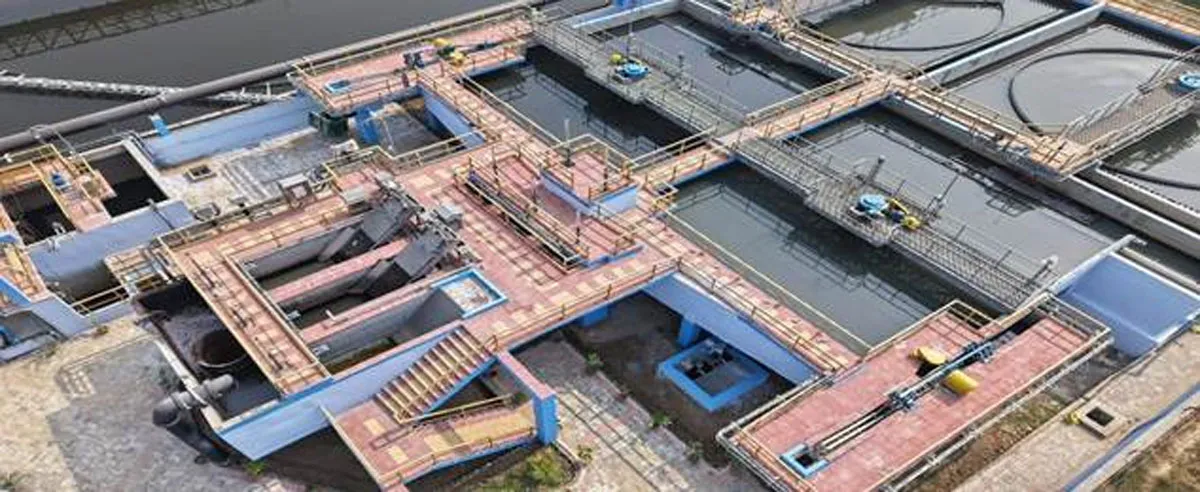
Five sewerage infrastructure projects were made operational recently under Namami Gange Mission Phase II, strengthening pollution abatement and river rejuvenation efforts across multiple states. During FY 2025–26 so far, nine projects have been commissioned, enhancing sewage treatment capacity in key urban centres.

With the commissioning of these projects, total sewage treatment capacity under the Namami Gange Programme has reached 3,976 MLD, while the number of operational Sewage Treatment Plants now stands at 173. These developments reinforce the mission’s objective of preventing untreated sewage from entering rivers and improving urban sanitation infrastructure.

In Shuklagunj, Uttar Pradesh, a 5 MLD STP has been commissioned at a cost of Rs 65 crore. Implemented under the Hybrid Annuity Model using Sequential Batch Reactor technology, the project will benefit nearly three lakh people and prevent sewage discharge into the River Ganga.

In Agra, two STPs of 31 MLD and 35 MLD have been commissioned under a project sanctioned at Rs 8.42 billion. The project, with a planned total capacity of 177.6 MLD across 13 STPs, will benefit around 2.5 million residents and significantly reduce untreated sewage entering the River Yamuna.

In Varanasi, a 55 MLD STP at Assi–BHU has been made operational under a project sanctioned at Rs 3.08 billion. Implemented using SBR technology, the facility will serve nearly 1.8 million people and strengthen long-term wastewater management for the city.

In North Barrackpore, West Bengal, a 30 MLD STP has been commissioned under a project sanctioned at Rs 1.54 billion, benefiting about 2,20,000 people and preventing untreated sewage discharge into the Ganga.

Additionally, the Kankarbagh STP in Patna, Bihar, earlier partially commissioned at 15 MLD, has been expanded to 30 MLD, further supporting pollution abatement efforts along the Ganga.

Five sewerage infrastructure projects were made operational recently under Namami Gange Mission Phase II, strengthening pollution abatement and river rejuvenation efforts across multiple states. During FY 2025–26 so far, nine projects have been commissioned, enhancing sewage treatment capacity in key urban centres. With the commissioning of these projects, total sewage treatment capacity under the Namami Gange Programme has reached 3,976 MLD, while the number of operational Sewage Treatment Plants now stands at 173. These developments reinforce the mission’s objective of preventing untreated sewage from entering rivers and improving urban sanitation infrastructure. In Shuklagunj, Uttar Pradesh, a 5 MLD STP has been commissioned at a cost of Rs 65 crore. Implemented under the Hybrid Annuity Model using Sequential Batch Reactor technology, the project will benefit nearly three lakh people and prevent sewage discharge into the River Ganga. In Agra, two STPs of 31 MLD and 35 MLD have been commissioned under a project sanctioned at Rs 8.42 billion. The project, with a planned total capacity of 177.6 MLD across 13 STPs, will benefit around 2.5 million residents and significantly reduce untreated sewage entering the River Yamuna. In Varanasi, a 55 MLD STP at Assi–BHU has been made operational under a project sanctioned at Rs 3.08 billion. Implemented using SBR technology, the facility will serve nearly 1.8 million people and strengthen long-term wastewater management for the city. In North Barrackpore, West Bengal, a 30 MLD STP has been commissioned under a project sanctioned at Rs 1.54 billion, benefiting about 2,20,000 people and preventing untreated sewage discharge into the Ganga. Additionally, the Kankarbagh STP in Patna, Bihar, earlier partially commissioned at 15 MLD, has been expanded to 30 MLD, further supporting pollution abatement efforts along the Ganga.

Next Story
Real Estate

Union Budge: Infra-Led Urban Shift

The Union Budget FY27 reinforces infrastructure-led urbanisation as the backbone of India’s real estate and housing growth. Higher public capital expenditure, City Economic Regions, risk-mitigation mechanisms and REIT-led asset monetisation are being widely viewed as long-term enablers, even as the industry continues to seek sharper supply-side reforms and affordability-focused measures. Here are a few industry insights:Dr Niranjan Hiranandani, Chairman, NAREDCO & Hiranandani Group“The Union Budget 2026-27 is growth-oriented and stability-focused, supporting consumption and aiming to s..

Next Story
Infrastructure Urban

Budget 2026 Charts Path for Infrastructure-Led, Tech-Driven Growth

The Union Budget 2026–27 signals strong continuity in India’s macroeconomic strategy, anchored in elevated public capital expenditure, fiscal discipline, and a sharper focus on manufacturing, infrastructure, and regional development. With capital outlay pegged at ₹12.2 lakh crore and a fiscal deficit target of around 4.3 per cent, the Budget balances growth ambition with stability, offering long-term visibility to investors and project developers.A dominant theme is the centrality of infrastructure as a multiplier for economic expansion. Public capex now accounts for over 3.3 per cent of..

Next Story
Infrastructure Energy

Tata Power Arm Crosses 10 GW EPC Milestone

Tata Power Renewable Energy Ltd (TPREL) has achieved a major milestone by executing 10 gigawatts of engineering, procurement and construction (EPC) renewable energy projects to date, reinforcing its position in India’s clean energy infrastructure sector. According to the company, the executed portfolio comprises 4.2 gigawatts of in-house projects and 5.8 gigawatts of third-party projects. Of the total 10 gigawatts commissioned so far, 9.7 gigawatts are solar projects and 290 megawatts are wind projects. In the first nine months of FY26, TPREL commissioned 1.88 gigawatts of EPC renewable en..

Advertisement

Subscribe to Our Newsletter

Get daily newsletters around different themes from Construction world.

STAY CONNECTED

Advertisement

Advertisement

Advertisement

Advertisement

Open In App