FSSAI Urges Safe Transport and Storage of Perishable Foods
ECONOMY & POLICY

FSSAI Urges Safe Transport and Storage of Perishable Foods

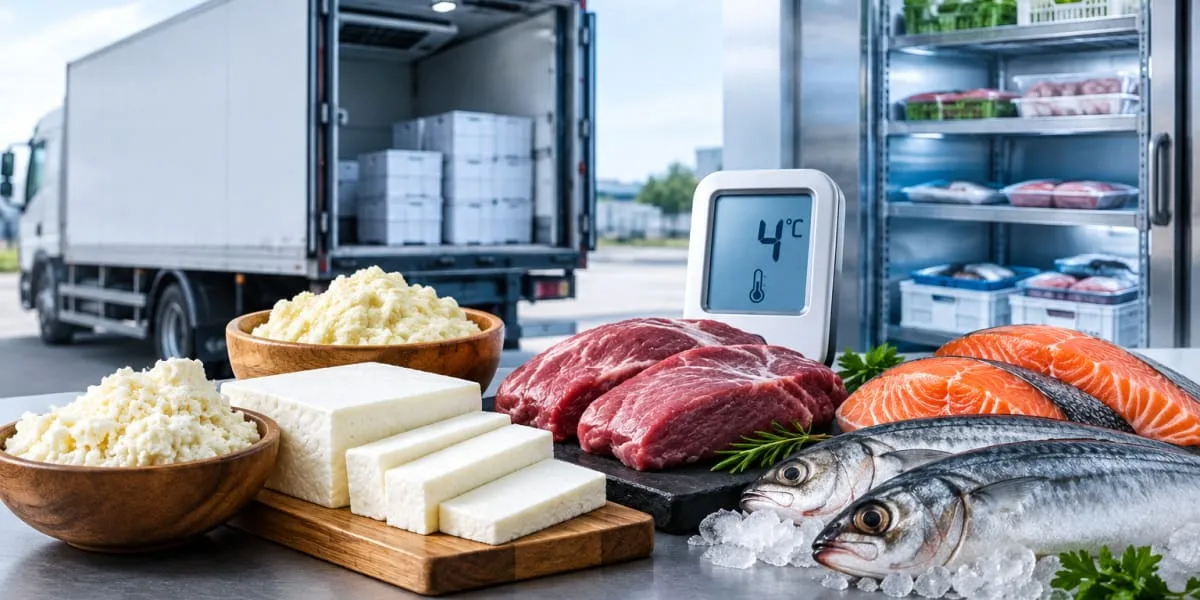
The Food Safety and Standards Authority of India (FSSAI) has directed food business operators (FBOs) to ensure that perishable foods, including khoa, paneer, meat and fish, are transported and stored in hygienic conditions. The regulator issued the advisory on October 15, warning that inadequate temperature control can affect food safety.

The advisory said such products are highly susceptible to microbial growth and spoilage when they are not kept at appropriate temperatures. It called for the required conditions to be maintained throughout the supply chain, from procurement to delivery to the end consumer, so that food safety is not compromised during transit or storage.

FSSAI said some perishable food items were not being handled, stored or transported under suitable temperature conditions. It said exposing products to unsuitable temperatures can adversely affect food safety and public health, and constitutes non-compliance with the hygiene and sanitary requirements prescribed by the authority.

The regulator also instructed FBOs to use only food-grade packaging materials and suitable secondary packaging for these products. It cautioned that gunny bags and other non-food-grade coverings used for packing or transport can compromise product safety and should be avoided. Packaging, the advisory noted, must be appropriate for the food being handled.

The directions cover the handling, storage and transportation of perishable foods across the supply chain, placing responsibility on food businesses to maintain appropriate conditions until products reach consumers. The advisory reinforces the need for hygienic practices alongside temperature management, particularly for foods that can deteriorate quickly and support microbial growth when improperly handled.

The Food Safety and Standards Authority of India (FSSAI) has directed food business operators (FBOs) to ensure that perishable foods, including khoa, paneer, meat and fish, are transported and stored in hygienic conditions. The regulator issued the advisory on October 15, warning that inadequate temperature control can affect food safety. The advisory said such products are highly susceptible to microbial growth and spoilage when they are not kept at appropriate temperatures. It called for the required conditions to be maintained throughout the supply chain, from procurement to delivery to the end consumer, so that food safety is not compromised during transit or storage. FSSAI said some perishable food items were not being handled, stored or transported under suitable temperature conditions. It said exposing products to unsuitable temperatures can adversely affect food safety and public health, and constitutes non-compliance with the hygiene and sanitary requirements prescribed by the authority. The regulator also instructed FBOs to use only food-grade packaging materials and suitable secondary packaging for these products. It cautioned that gunny bags and other non-food-grade coverings used for packing or transport can compromise product safety and should be avoided. Packaging, the advisory noted, must be appropriate for the food being handled. The directions cover the handling, storage and transportation of perishable foods across the supply chain, placing responsibility on food businesses to maintain appropriate conditions until products reach consumers. The advisory reinforces the need for hygienic practices alongside temperature management, particularly for foods that can deteriorate quickly and support microbial growth when improperly handled.

Related Stories

Gold Stories

Next Story
Real Estate

PE investment in Indian realty reaches USD 1.3 billion

Private equity (PE) investment in Indian real estate stood at USD 1.3 billion in Q3 2026, excluding USD 167 million in asset acquisitions by REITs and InvITs, according to Savills India. The investment volume declined 33 per cent quarter-on-quarter, amid geopolitical and macroeconomic uncertainties. However, inflows for January-September 2026 rose 16 per cent year-on-year to USD 4.5 billion.Hospitality emerged as the largest recipient of PE investment during the quarter, accounting for 26 per cent of total inflows. Industrial and logistics assets followed with a 22 per cent share, supported by..

Next Story
Real Estate

Bhartiya Urban plans Rs 10 billion investment in Nikoo Homes 9

Bhartiya Urban has launched Nikoo Homes 9 | Alpine | Bhartiya Garden Hill in Bagalur, North Bengaluru, in a joint venture with Alpine. The company plans to invest over Rs 10 billion in the development, which is spread across 13 acres of freehold land and will comprise 1,584 residential units across two phases.The project is part of the Nikoo Homes portfolio, built around the company's ‘The Good Life’ philosophy, which focuses on family, community, culture, health and learning. The development will offer a range of housing formats, from studios and lofts to Sky Villas. Most homes will have ..

Next Story
Infrastructure Transport

L&T Starts Initial Work on New Tashkent Airport Project

Larsen and Toubro (L&T) has begun initial activities for the New Tashkent International Airport project in Uzbekistan after receiving a limited notice to proceed from the consortium developing the greenfield facility. The work is being undertaken by its public spaces, airport and health (PAH) business vertical. The limited notice to proceed was issued after the execution of an engineering, procurement and construction (EPC) contract previously awarded to L&T for the passenger terminal and associated landside infrastructure. The company said the current phase includes initial engineering, detai..

Advertisement

Subscribe to Our Newsletter

Get daily newsletters around different themes from Construction world.

STAY CONNECTED

Advertisement

SPECIAL OFFER
QR Code