GIFT City Seeks Global Financial Hub Status with Easier Rules
ECONOMY & POLICY

GIFT City Seeks Global Financial Hub Status with Easier Rules

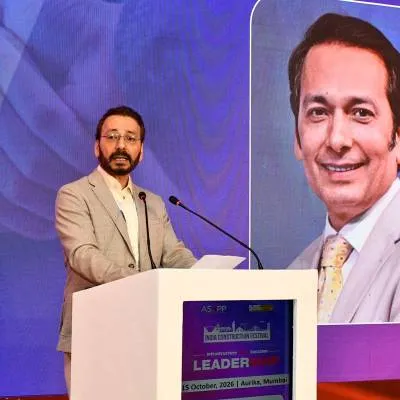
GIFT City is pursuing a stronger position as an international financial centre through simpler business approvals, wider access to overseas investments and new routes for companies to raise capital. Industry leaders discussed the measures at the Business Standard BFSI Summit in Mumbai, where representatives of the International Financial Services Centres Authority (IFSCA), NSE International Exchange, India INX and Price Waterhouse & Co LLP assessed the centre’s progress.

The regulatory framework has expanded beyond conventional capital markets to include banking and other financial services. An IFSCA-nominated development commissioner has been appointed within the special economic zone, reducing the need for entities to secure separate approvals under both the zone and IFSCA frameworks. A single-window system now allows applications for relevant approvals, with letters of approval issued in around 15-16 days on average.

NSE International Exchange said the migration of offshore Nifty trading to GIFT City in 2023 helped establish GIFT Nifty as a platform for international investors. IFSCA and the Securities and Exchange Board of India have formed an implementation group to develop a framework for Indian issuers seeking international capital through GIFT City, with operating guidelines expected soon. Companies and investment bankers have expressed interest, and some issuances have been filed.

The centre has also attracted Indian broking firms offering retail investors access to overseas securities. However, market activity remains at an early stage, with participants calling for stronger inbound and outbound flows, clearer rules for Indian unlisted companies raising funds, and simpler know-your-customer procedures. Restrictions on participation in initial public offerings and limited eligibility for some investor categories remain additional concerns.

Industry representatives identified insurance, aircraft and ship leasing, fund management, exchange-traded funds and emerging financing activities as areas with potential for growth. They also sought a more favourable outbound tax regime and greater coordination between IFSCA and domestic regulators. Regulatory certainty under Indian law, improved infrastructure and consultation with market participants were seen as important to attracting global businesses and expanding the centre’s role.

GIFT City is pursuing a stronger position as an international financial centre through simpler business approvals, wider access to overseas investments and new routes for companies to raise capital. Industry leaders discussed the measures at the Business Standard BFSI Summit in Mumbai, where representatives of the International Financial Services Centres Authority (IFSCA), NSE International Exchange, India INX and Price Waterhouse & Co LLP assessed the centre’s progress. The regulatory framework has expanded beyond conventional capital markets to include banking and other financial services. An IFSCA-nominated development commissioner has been appointed within the special economic zone, reducing the need for entities to secure separate approvals under both the zone and IFSCA frameworks. A single-window system now allows applications for relevant approvals, with letters of approval issued in around 15-16 days on average. NSE International Exchange said the migration of offshore Nifty trading to GIFT City in 2023 helped establish GIFT Nifty as a platform for international investors. IFSCA and the Securities and Exchange Board of India have formed an implementation group to develop a framework for Indian issuers seeking international capital through GIFT City, with operating guidelines expected soon. Companies and investment bankers have expressed interest, and some issuances have been filed. The centre has also attracted Indian broking firms offering retail investors access to overseas securities. However, market activity remains at an early stage, with participants calling for stronger inbound and outbound flows, clearer rules for Indian unlisted companies raising funds, and simpler know-your-customer procedures. Restrictions on participation in initial public offerings and limited eligibility for some investor categories remain additional concerns. Industry representatives identified insurance, aircraft and ship leasing, fund management, exchange-traded funds and emerging financing activities as areas with potential for growth. They also sought a more favourable outbound tax regime and greater coordination between IFSCA and domestic regulators. Regulatory certainty under Indian law, improved infrastructure and consultation with market participants were seen as important to attracting global businesses and expanding the centre’s role.

Related Stories

Gold Stories
Next Story
Infrastructure Energy

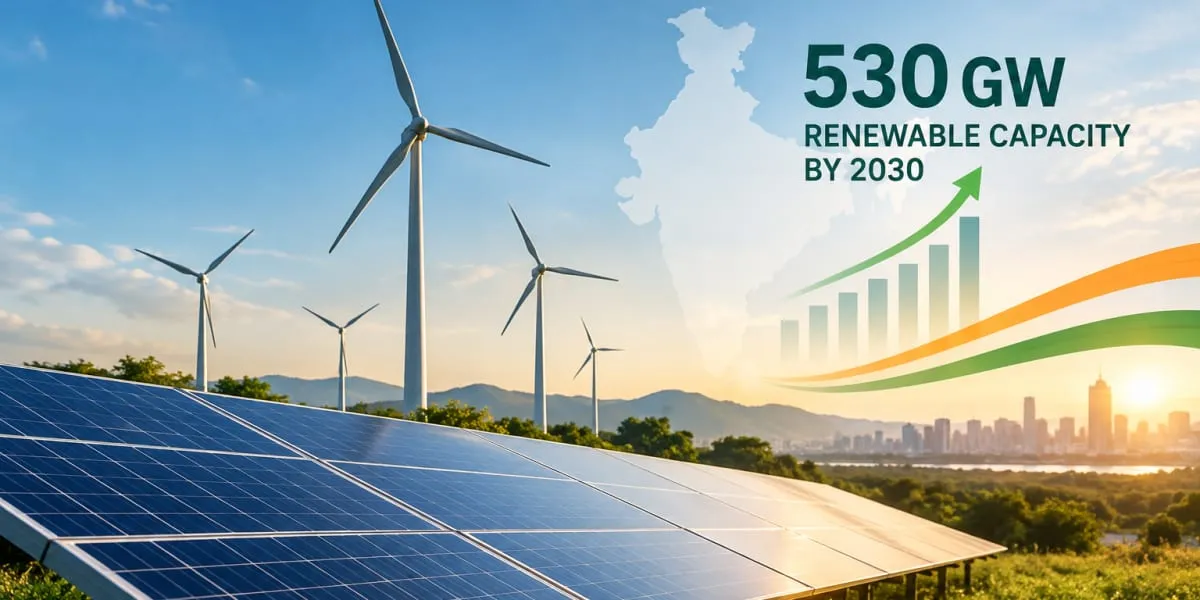
India’s Renewable Capacity to Reach 530 GW by 2030: IEA

India’s renewable energy capacity is projected to reach around 530 GW by 2030, with solar power accounting for more than 80 per cent of additions, according to the International Energy Agency (IEA). The country’s renewable power capacity surpassed 300 GW in Q4 2026, nearly quadrupling over the past decade. India achieved its target of sourcing 50 per cent of installed power capacity from non-fossil fuel sources in 2025, five years ahead of schedule. It has also become the world’s fourth-largest liquid biofuel market, with production increasing sixfold between 2020 and 2025, supported by ..

Next Story
Infrastructure Energy

Tata Power Renewable Commissions 300 MW Solar Project in Karnataka

Tata Power Renewable Energy (TPREL), a subsidiary of Tata Power, has commissioned a 300 MW solar project in Koppal, Karnataka. The project has been developed by TP Saurya, a wholly owned subsidiary of TPREL, for the Solar Energy Corporation of India (SECI). With the project’s commissioning, TPREL’s total renewable utility capacity has reached 12 GW. About 7.2 GW is operational, comprising 5.8 GW of solar capacity and 1.3 GW of wind capacity, while nearly 4.9 GW is under various stages of implementation. The project will supply renewable power to SECI and uses solar trackers to follow the s..

Next Story
Technology

Grasim, Suzlon Partner to Develop Recyclable Wind Turbine Blades

Grasim Industries’ Advanced Materials Division and Aditya Birla Renewables (ABRen) have partnered with Suzlon Energy to develop and commercialise wind turbines fitted with recyclable blades. The initiative is intended to address the growing challenge of wind turbine blade waste and support wider adoption of recyclable technology in India and other markets. The companies have signed a memorandum of understanding (MoU) and will initially collaborate on a pilot project. The technology is expected to be demonstrated at a selected renewable energy project site operated by ABRen, where the perform..

Advertisement

Subscribe to Our Newsletter

Get daily newsletters around different themes from Construction world.

STAY CONNECTED

Advertisement

SPECIAL OFFER
QR Code