Ahmedabad Metro Airport, GIFT City Extensions Advance
RAILWAYS & METRO RAIL

Ahmedabad Metro Airport, GIFT City Extensions Advance

Ahmedabad Metro’s expansion to Sardar Vallabhbhai Patel International Airport and deeper into GIFT City moved forward on Friday, with Prime Minister Narendra Modi performing the foundation-stone ceremony for two projects with a combined estimated cost of Rs. 27 bn. The corridors are intended to improve airport access and strengthen connections within GIFT City’s financial and residential districts, according to a report by Divya Bhaskar.

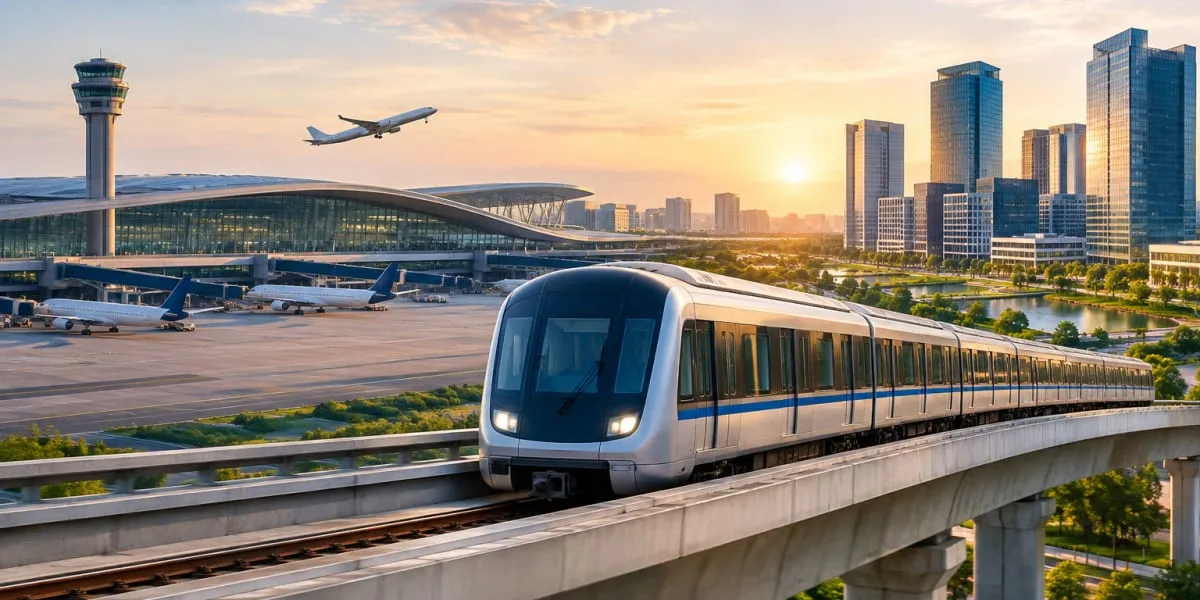
The airport corridor, designated Phase 2A, will cover 6 km from Koteshwar Road to Ahmedabad airport at an estimated cost of Rs. 18 bn. It will include five stations, comprising four elevated stations and one underground station within the airport premises. The section from Koteshwar Road through Hansol to Taj Circle will be elevated, while the route from Taj Circle towards the airport will run underground.

The proposed airport station is planned to connect with the terminal through lifts and escalators, creating an interchange between metro and air travel. The project details released in the report do not specify construction deadlines, opening dates or service frequencies.

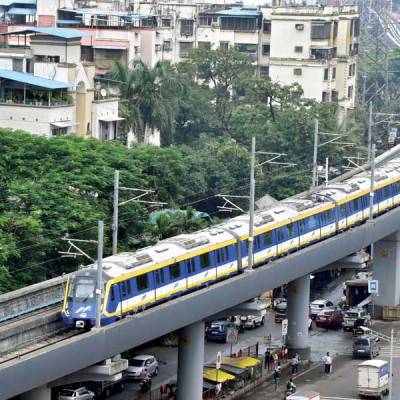
The second corridor, Phase 2B, will extend the metro 3.3 km into GIFT City’s internal areas. Estimated at Rs. 9 bn, the entirely elevated route will connect the business district with Shahpur and include three new stations. Metro services have already reached GIFT City’s main entrance.

The internal extension is intended to serve commercial offices, residential societies and institutions across the planned financial hub. It is expected to provide an additional transport option for employees, students and daily commuters. Together, the two corridors broaden the Ahmedabad Metro’s role beyond existing city and suburban links, supporting connectivity across the Ahmedabad-Gandhinagar region.

The next milestones will depend on implementation of the corridors and construction of their planned stations. The available project information does not provide details of financing arrangements beyond the estimated costs or indicate when passenger services will begin.

Ahmedabad Metro’s expansion to Sardar Vallabhbhai Patel International Airport and deeper into GIFT City moved forward on Friday, with Prime Minister Narendra Modi performing the foundation-stone ceremony for two projects with a combined estimated cost of Rs. 27 bn. The corridors are intended to improve airport access and strengthen connections within GIFT City’s financial and residential districts, according to a report by Divya Bhaskar. The airport corridor, designated Phase 2A, will cover 6 km from Koteshwar Road to Ahmedabad airport at an estimated cost of Rs. 18 bn. It will include five stations, comprising four elevated stations and one underground station within the airport premises. The section from Koteshwar Road through Hansol to Taj Circle will be elevated, while the route from Taj Circle towards the airport will run underground. The proposed airport station is planned to connect with the terminal through lifts and escalators, creating an interchange between metro and air travel. The project details released in the report do not specify construction deadlines, opening dates or service frequencies. The second corridor, Phase 2B, will extend the metro 3.3 km into GIFT City’s internal areas. Estimated at Rs. 9 bn, the entirely elevated route will connect the business district with Shahpur and include three new stations. Metro services have already reached GIFT City’s main entrance. The internal extension is intended to serve commercial offices, residential societies and institutions across the planned financial hub. It is expected to provide an additional transport option for employees, students and daily commuters. Together, the two corridors broaden the Ahmedabad Metro’s role beyond existing city and suburban links, supporting connectivity across the Ahmedabad-Gandhinagar region. The next milestones will depend on implementation of the corridors and construction of their planned stations. The available project information does not provide details of financing arrangements beyond the estimated costs or indicate when passenger services will begin.

Related Stories

Gold Stories

Next Story
Infrastructure Energy

DMRC Invites Bids for Solar-Linked BESS Power Procurement

Delhi Metro Rail Corporation (DMRC) has invited bids for renewable energy from an Inter-State Transmission System (ISTS)-connected generating plant combining a solar photovoltaic (PV) system with a co-located Battery Energy Storage System (BESS). The procurement will be conducted through competitive bidding followed by an e-reverse auction. The last date for submitting online bids is December 10, 2026, at 3 PM. DMRC will open the technical bids on December 11, 2026, at 3 PM. The opening of financial bids and the e-reverse auction will be scheduled after completion of the technical evaluation. ..

Next Story
Infrastructure Energy

Solar Growth May Slow Beyond FY28 on Awards, Grid Constraints

India’s solar capacity growth could face headwinds beyond FY28 as slower renewable energy project awards, delays in signing power agreements and transmission constraints threaten expansion, according to a report by Yes Securities. Near-term additions remain supported by a construction pipeline exceeding 150 GW and rising rooftop installations, but weaker award activity could affect capacity additions and industry volumes in FY29 and FY30. Solar capacity additions nearly doubled to 44.61 GW in FY26 from 23.83 GW in FY25. Installations remained strong in the first half of FY27, when 21 GW of s..

Next Story
Infrastructure Transport

India’s First High-Speed Rail Service to Begin in 2027

India’s first high-speed rail service will commence in 2027, with the Surat-Vapi section of the Mumbai-Ahmedabad High-Speed Rail corridor scheduled to open first, Railway Minister Ashwini Vaishnaw said. The remaining sections to Mumbai will be opened in phases. Vaishnaw said 456 km of pier work and 371 km of viaduct construction had been completed by September. About 600,000 noise barriers had been installed along a 299 km stretch, while 9,300 overhead equipment masts had been erected across a 206 km viaduct. Four mountain tunnels have been excavated, and 5 km of the 21 km Maharashtra tunnel..

Advertisement

Subscribe to Our Newsletter

Get daily newsletters around different themes from Construction world.

STAY CONNECTED

Advertisement

SPECIAL OFFER
QR Code