Government Approves 10 Projects Under Semicon India Programme
ECONOMY & POLICY

Government Approves 10 Projects Under Semicon India Programme

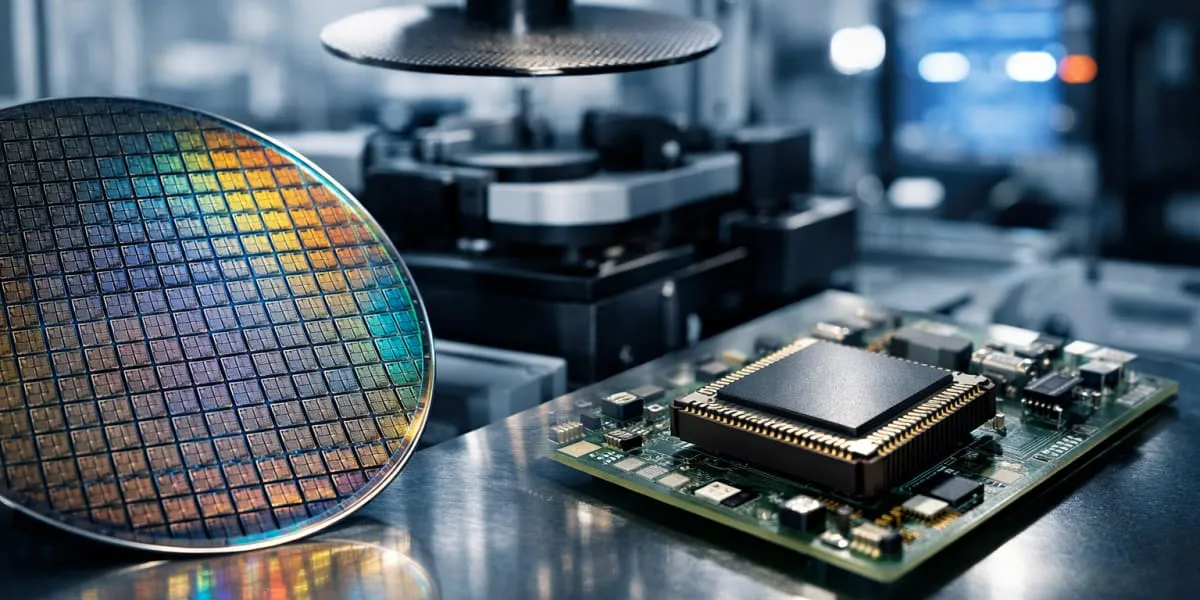
The Government said the Semicon India Programme aims to build a complete semiconductor ecosystem from design to manufacture and has approved 10 projects with investment commitments of about Rs 1.6 tn. Commercial production has begun at two plants and two more are expected to start later this year. The programme was launched in January 2022 to scale fabrication, assembly, testing, packaging and module manufacture.

Targeted policies over the last 11 years have driven substantial growth in electronics manufacturing. Production of electronics goods rose from Rs 1.9 tn to Rs 12 tn, exports grew from Rs 380 bn to Rs 3.3 tn and mobile phone production increased from Rs 180 bn to Rs 5.45 tn. The Government attributed the expansion to measures supporting domestic manufacturing and exports.

The Government supported chip design by providing tools from eight companies to 315 universities at no cost, with usage exceeding 20 mn hours. Using those tools 211 chips have been taped out by 75 institutions and 149 chips were produced at 180 nm while 62 were fabricated at overseas foundries. Authorities approved 24 design projects addressing surveillance, drone detection, energy metering, microprocessors, satellite communications, broadband and internet of things system on chips (SoCs).

14 design companies have attracted venture capital totalling more than Rs 6.5 bn and seven chips have been fabricated at nodes including 12 nm. The Government has signed memorandums of understanding with the United States, Japan, the European Union, Singapore and the Netherlands to strengthen supply chain resilience. Under the India Semiconductor Mission (ISM), 10 semiconductor units are under construction and 249 applications have been received under the Electronics Component Manufacturing Scheme (ECMS).

Industry estimates indicate the electronics sector supports 2.5 mn jobs, with mobile phone manufacturing alone sustaining about 1.2 mn jobs. Approved manufacturing projects include a Micron facility in Gujarat with investment of Rs 225.16 bn and a Tata Electronics project in Gujarat of Rs 915.26 bn, alongside other facilities covering wafer starts, packaging and assembly expected to boost domestic capacity across memory, logic, display driver and packaging segments.

The Government said the Semicon India Programme aims to build a complete semiconductor ecosystem from design to manufacture and has approved 10 projects with investment commitments of about Rs 1.6 tn. Commercial production has begun at two plants and two more are expected to start later this year. The programme was launched in January 2022 to scale fabrication, assembly, testing, packaging and module manufacture. Targeted policies over the last 11 years have driven substantial growth in electronics manufacturing. Production of electronics goods rose from Rs 1.9 tn to Rs 12 tn, exports grew from Rs 380 bn to Rs 3.3 tn and mobile phone production increased from Rs 180 bn to Rs 5.45 tn. The Government attributed the expansion to measures supporting domestic manufacturing and exports. The Government supported chip design by providing tools from eight companies to 315 universities at no cost, with usage exceeding 20 mn hours. Using those tools 211 chips have been taped out by 75 institutions and 149 chips were produced at 180 nm while 62 were fabricated at overseas foundries. Authorities approved 24 design projects addressing surveillance, drone detection, energy metering, microprocessors, satellite communications, broadband and internet of things system on chips (SoCs). 14 design companies have attracted venture capital totalling more than Rs 6.5 bn and seven chips have been fabricated at nodes including 12 nm. The Government has signed memorandums of understanding with the United States, Japan, the European Union, Singapore and the Netherlands to strengthen supply chain resilience. Under the India Semiconductor Mission (ISM), 10 semiconductor units are under construction and 249 applications have been received under the Electronics Component Manufacturing Scheme (ECMS). Industry estimates indicate the electronics sector supports 2.5 mn jobs, with mobile phone manufacturing alone sustaining about 1.2 mn jobs. Approved manufacturing projects include a Micron facility in Gujarat with investment of Rs 225.16 bn and a Tata Electronics project in Gujarat of Rs 915.26 bn, alongside other facilities covering wafer starts, packaging and assembly expected to boost domestic capacity across memory, logic, display driver and packaging segments.

Next Story
Infrastructure Urban

Centre Disburses Over Rs 24,610 mn in XV Finance Commission Grants

The Union Government has released XV Finance Commission tied grants during the financial year 2025–26 to rural local bodies in Chhattisgarh, Gujarat, Madhya Pradesh, Punjab and Sikkim and has released withheld portions of tied and untied grants to Himachal Pradesh, Odisha and Tripura. The total disbursal exceeded Rs 24,610 mn, with figures expressed in million (mn) thereafter. The releases cover allocations pertaining to different financial years and aim to strengthen rural local governance. State-wise disbursements included Rs 3,324.6 mn for Punjab, Rs 9,432.7 mn for Madhya Pradesh, Rs 3,47..

Next Story
Infrastructure Urban

Centre Releases Over Rs 15 bn as XV FC Grants to Rural Bodies

The Union Government has released over Rs 15 bn in grants recommended by the Fifteenth Finance Commission (XV FC) to strengthen Panchayati Raj Institutions (PRIs) and Rural Local Bodies (RLBs) in six states. The funds comprise tied and untied grants disbursed in FY 2025–26. Telangana received Rs 2.48 bn as the first instalment of untied grants for FY 2025–26, benefitting 12600 Gram Panchayats (GPs). Uttarakhand received Rs 913.1 mn as the second instalment and an additional Rs 18.4 mn of a withheld first instalment was released to a further 216 GPs. Mizoram is included among beneficiary st..

Next Story
Infrastructure Energy

Government Assures Fuel Supplies And Seafarer Safety Amid West Asia Developments

The Government of India has stepped up coordinated measures to maintain stability in critical sectors as developments in West Asia continue to unfold. It has prioritised uninterrupted energy supplies, safeguarded maritime operations and extended consular assistance to nationals. Central authorities are working with State and Union territory administrations to ensure timely information dissemination and operational continuity. Refineries are reported to be operating at high capacity with adequate inventories of petrol and diesel, and domestic LPG production has been increased to support consump..

Advertisement

Subscribe to Our Newsletter

Get daily newsletters around different themes from Construction world.

STAY CONNECTED

Advertisement

Advertisement

Advertisement