Government Launches Sagarmala 2.0 to Strengthen Maritime Infra
ECONOMY & POLICY

Government Launches Sagarmala 2.0 to Strengthen Maritime Infra

The 4th National Sagarmala Apex Committee (NSAC) meeting reviewed key projects under the Sagarmala Programme, the flagship initiative of the Ministry of Ports, Shipping & Waterways (MoPSW). The meeting focused on port-led development and strengthening India’s maritime infrastructure. 

The Ministry is currently implementing 839 projects worth Rs 5.79 trillion under Sagarmala, with 272 projects completed at an investment of Rs 1.41 trillion. Among these, 234 port modernization projects worth Rs 2.91 trillion are underway, with 103 projects completed, adding 230 MTPA capacity. Additionally, 279 connectivity projects worth Rs 2.06 trillion have been taken up, with 92 completed, improving 1,500 km of port connectivity. Coastal community development and inland waterway projects worth Rs 260 billion have benefited over 30,000 fishermen. 

Union Minister of Ports, Shipping, and Waterways, Shri Sarbananda Sonowal, stated that Sagarmala has been instrumental in transforming India’s maritime sector. Under Sagarmala 2.0, the focus will be on bridging infrastructure gaps, boosting investments, and positioning India as a global maritime leader in line with the vision of a Viksit and Atmanirbhar Bharat by 2047. The new phase includes a stronger emphasis on shipbuilding, repair, recycling, and green shipping, backed by Rs 400 billion in budgetary support, with a goal of attracting Rs 12 trillion in investments over the next decade. 

Sagarmala has already improved India’s logistics efficiency, with coastal shipping growing 118% in a decade, Ro-Pax ferries transporting over 40 lakh passengers, and inland waterway cargo increasing by 700%. Nine Indian ports now rank among the world’s top 100, with Vizag among the top 20 container ports. 

A key highlight of the NSAC meeting was the launch of the Sagarmala Startup Innovation Initiative (S2I2), aimed at fostering research, innovation, startups, and entrepreneurship (RISE) in maritime logistics, shipbuilding, green shipping, and coastal infrastructure. This initiative will provide funding, mentorship, and industry partnerships to accelerate maritime sector advancements. 

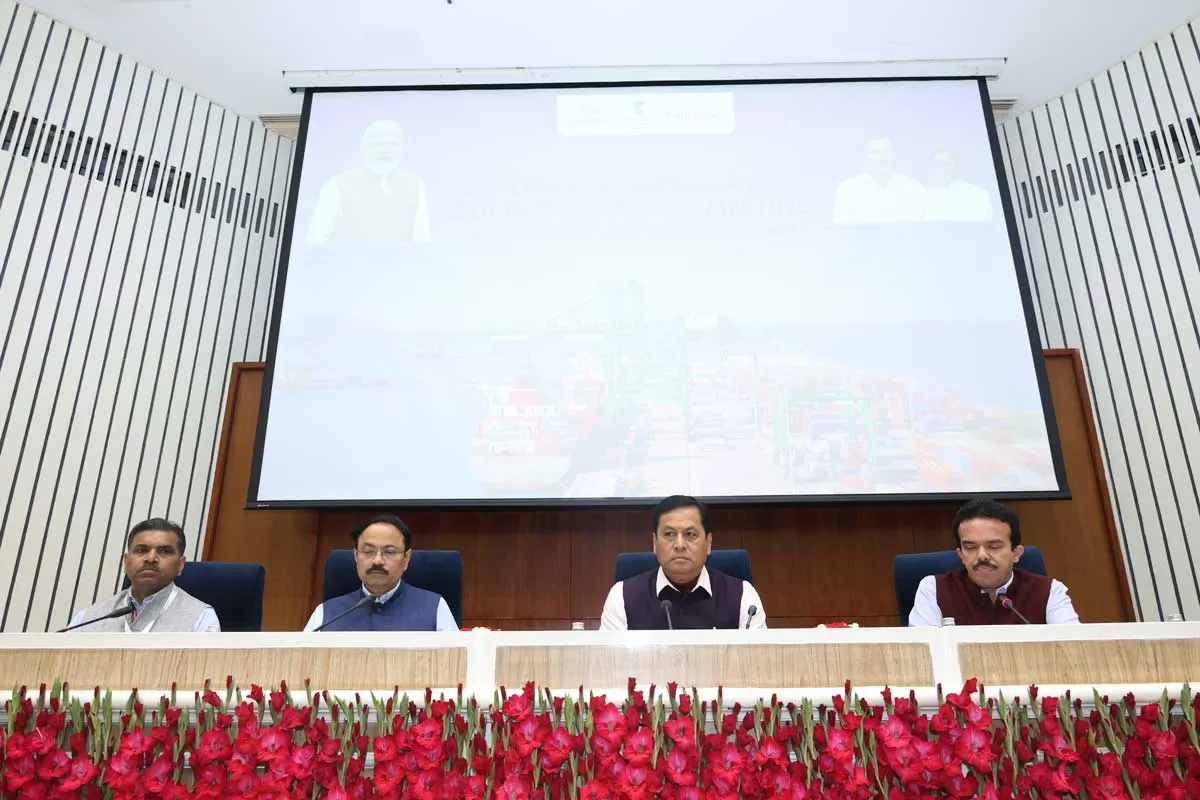
The meeting, chaired by Shri Sonowal, was attended by Union Minister of Road Transport and Highways Shri Nitin Gadkari, NITI Aayog Vice Chairman Suman Bery, and representatives from coastal states and Union Territories. The discussion centered on policy directions for Sagarmala’s next phase, which aims to enhance port efficiency, reduce logistics costs, and promote coastal economic zones. 

The government also reaffirmed its commitment to the Maritime Amrit Kaal Vision (MAKV), which aims to position India among the top five shipbuilding nations, expand port handling capacity to 10 billion metric tons annually, and drive long-term growth in the maritime sector. 

With the successful conclusion of the 4th NSAC meeting, India is set to further modernize its maritime infrastructure, enhance global competitiveness, and strengthen its position as a key player in the global shipping and logistics industry. 

(PIB)   

"Join industry leaders at RAHSTA Expo, India's premier platform for roads, highways and traffic infrastructure. Register now to explore innovations, network with experts and shape the future of mobility."

The 4th National Sagarmala Apex Committee (NSAC) meeting reviewed key projects under the Sagarmala Programme, the flagship initiative of the Ministry of Ports, Shipping & Waterways (MoPSW). The meeting focused on port-led development and strengthening India’s maritime infrastructure. The Ministry is currently implementing 839 projects worth Rs 5.79 trillion under Sagarmala, with 272 projects completed at an investment of Rs 1.41 trillion. Among these, 234 port modernization projects worth Rs 2.91 trillion are underway, with 103 projects completed, adding 230 MTPA capacity. Additionally, 279 connectivity projects worth Rs 2.06 trillion have been taken up, with 92 completed, improving 1,500 km of port connectivity. Coastal community development and inland waterway projects worth Rs 260 billion have benefited over 30,000 fishermen. Union Minister of Ports, Shipping, and Waterways, Shri Sarbananda Sonowal, stated that Sagarmala has been instrumental in transforming India’s maritime sector. Under Sagarmala 2.0, the focus will be on bridging infrastructure gaps, boosting investments, and positioning India as a global maritime leader in line with the vision of a Viksit and Atmanirbhar Bharat by 2047. The new phase includes a stronger emphasis on shipbuilding, repair, recycling, and green shipping, backed by Rs 400 billion in budgetary support, with a goal of attracting Rs 12 trillion in investments over the next decade. Sagarmala has already improved India’s logistics efficiency, with coastal shipping growing 118% in a decade, Ro-Pax ferries transporting over 40 lakh passengers, and inland waterway cargo increasing by 700%. Nine Indian ports now rank among the world’s top 100, with Vizag among the top 20 container ports. A key highlight of the NSAC meeting was the launch of the Sagarmala Startup Innovation Initiative (S2I2), aimed at fostering research, innovation, startups, and entrepreneurship (RISE) in maritime logistics, shipbuilding, green shipping, and coastal infrastructure. This initiative will provide funding, mentorship, and industry partnerships to accelerate maritime sector advancements. The meeting, chaired by Shri Sonowal, was attended by Union Minister of Road Transport and Highways Shri Nitin Gadkari, NITI Aayog Vice Chairman Suman Bery, and representatives from coastal states and Union Territories. The discussion centered on policy directions for Sagarmala’s next phase, which aims to enhance port efficiency, reduce logistics costs, and promote coastal economic zones. The government also reaffirmed its commitment to the Maritime Amrit Kaal Vision (MAKV), which aims to position India among the top five shipbuilding nations, expand port handling capacity to 10 billion metric tons annually, and drive long-term growth in the maritime sector. With the successful conclusion of the 4th NSAC meeting, India is set to further modernize its maritime infrastructure, enhance global competitiveness, and strengthen its position as a key player in the global shipping and logistics industry. (PIB)   

Next Story
Real Estate

Pecan Realty Completes Rs 1.5 Billion Transactions

Pecan Realty has recently completed four institutional transactions worth over Rs 1.5 billion over the past two years, strengthening its position as an execution-led real estate platform. The deals include resolution-led acquisitions, structured finance transactions and capital partnerships across its development portfolio.The transactions covered acquisitions through the National Company Law Tribunal process and helped provide repayment or exits to both private and public sector lenders. The company said the deals demonstrate its ability to resolve complex project situations, work with instit..

Next Story
Real Estate

SNN Estates Expands North Bengaluru Housing Project

SNN Estates has announced an expansion of its SNN Estates Felicity residential project in North Bengaluru following strong buyer demand, with 75 per cent of the first-phase inventory sold within three days of launch.The developer will add 76 apartments in the new phase, taking the project's estimated revenue potential to around Rs 1,000 crore upon completion of Phase 2.Spread across 6.5 acres in Rachenahalli, near Manyata Tech Park, the project comprises 604 apartments in 1.5, 2, 2.5, 3 and 4 BHK configurations. The development includes a 50,000-sq-ft clubhouse with amenities such as sports co..

Next Story
Infrastructure Urban

SCG Drives ASEAN Industrial Transformation Strategy

SCG is strengthening its focus on ASEAN as a key growth region by advancing industrial transformation, enhancing competitiveness and building resilient regional value chains. Thammasak Sethaudom, President and Chief Executive Officer, SCG, highlighted the need for industries to continuously develop capabilities, strengthen resilience and deepen regional cooperation to achieve sustainable long-term growth.SCG views ASEAN as an important growth engine alongside China, supported by favourable demographics, trade connectivity and investment flows. With ASEAN’s GDP projected to grow by around 4.7..

Advertisement

Subscribe to Our Newsletter

Get daily newsletters around different themes from Construction world.

STAY CONNECTED

Advertisement

Advertisement

Advertisement