+
Govt injects Rs 16.50 billion into RINL to ensure its sustainability
ECONOMY & POLICY

Govt injects Rs 16.50 billion into RINL to ensure its sustainability

The government has invested approximately Rs 16.50 billion in the state-owned Rashtriya Ispat Nigam (RINL), which is currently facing operational and financial challenges, as stated in an official document. The Ministry of Steel mentioned in a note that it is implementing various measures to ensure RINL remains a viable entity.

The document indicated that on September 19, 2024, the Government of India infused Rs 5 billion as equity and subsequently provided a working capital loan of Rs 11.40 billion on September 27, 2024.

Furthermore, it noted that SBICAPS, a wholly-owned subsidiary of the State Bank of India (SBI), is preparing a report assessing the sustainability of RINL.

According to the document, RINL is experiencing severe financial difficulties, prompting the Ministry of Steel to undertake several initiatives in collaboration with the Ministry of Finance to keep the company operational.

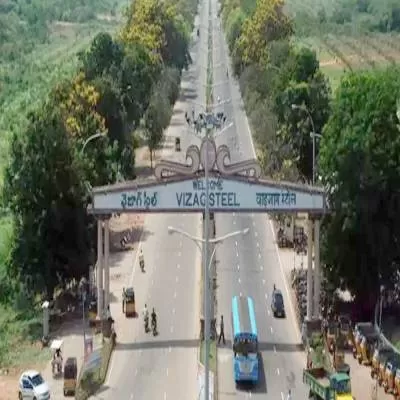
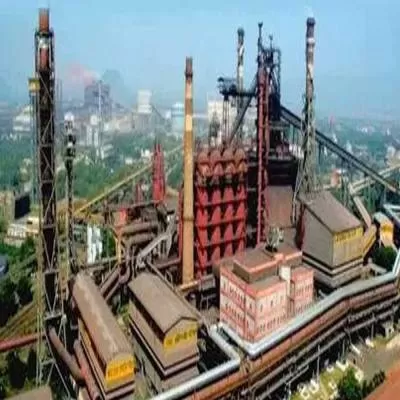
RINL, operating under the Ministry of Steel, is a steel manufacturing entity that operates a 7.5 million tonne plant located in Visakhapatnam, Andhra Pradesh. The company has been grappling with significant financial and operational issues.

As of October 2028, two of the three blast furnaces were shut down, with the second furnace being reactivated after approximately 4 to 6 months. RINL's overall outstanding dues have exceeded Rs 350 billion. In January 2021, the Cabinet Committee on Economic Affairs (CCEA) granted 'in-principle' approval for the complete disinvestment of the government's stake in RINL, also known as Visakhapatnam Steel Plant or Vizag Steel, including RINL's stakes in its subsidiaries and joint ventures through strategic disinvestment and privatisation. This decision has met with opposition from workers' unions, which argue that RINL's lack of access to captive iron ore mines is a significant factor contributing to the company's crisis.

The government has invested approximately Rs 16.50 billion in the state-owned Rashtriya Ispat Nigam (RINL), which is currently facing operational and financial challenges, as stated in an official document. The Ministry of Steel mentioned in a note that it is implementing various measures to ensure RINL remains a viable entity. The document indicated that on September 19, 2024, the Government of India infused Rs 5 billion as equity and subsequently provided a working capital loan of Rs 11.40 billion on September 27, 2024. Furthermore, it noted that SBICAPS, a wholly-owned subsidiary of the State Bank of India (SBI), is preparing a report assessing the sustainability of RINL. According to the document, RINL is experiencing severe financial difficulties, prompting the Ministry of Steel to undertake several initiatives in collaboration with the Ministry of Finance to keep the company operational. RINL, operating under the Ministry of Steel, is a steel manufacturing entity that operates a 7.5 million tonne plant located in Visakhapatnam, Andhra Pradesh. The company has been grappling with significant financial and operational issues. As of October 2028, two of the three blast furnaces were shut down, with the second furnace being reactivated after approximately 4 to 6 months. RINL's overall outstanding dues have exceeded Rs 350 billion. In January 2021, the Cabinet Committee on Economic Affairs (CCEA) granted 'in-principle' approval for the complete disinvestment of the government's stake in RINL, also known as Visakhapatnam Steel Plant or Vizag Steel, including RINL's stakes in its subsidiaries and joint ventures through strategic disinvestment and privatisation. This decision has met with opposition from workers' unions, which argue that RINL's lack of access to captive iron ore mines is a significant factor contributing to the company's crisis.

Next Story
Infrastructure Urban

ABB to Invest Rs 6.25 Billion to Expand India Manufacturing

ABB recently announced plans to invest approximately Rs 6.25 billion ($75 million) in India during 2026 to expand its manufacturing footprint and research and development capabilities. The investment follows more than $35 million spent in 2025 and reflects the company’s continued focus on strengthening its ‘local-for-local’ strategy in the country.The investment will support ABB’s Electrification, Motion and Automation businesses and expand manufacturing capacity for infrastructure sectors such as renewable energy, metro rail, data centres and industrial applications. Approximately 300..

Next Story
Equipment

Six WOLFF Cranes Handle 60,000 m³ Concrete for German Hospital

Six WOLFF tower cranes are playing a key role in constructing a new hospital complex in Memmingen, Germany, supporting large-scale material handling for the project. The facility is being built on a 7.7-hectare site and will feature six floors, around 480 beds and a gross floor area exceeding 75,000 sq m.Building shell works began recently in February 2025. One WOLFF 6531.12 Cross crane supported early site preparation before being dismantled in autumn 2025, while five remaining cranes continue operations. Over an average deployment period of 16 months, the cranes are expected to move approxim..

Next Story
Equipment

REC Funds Rs 115.6 Million CSR Support for Bihar Eye Hospital

REC recently committed Rs 115.6 million under its Corporate Social Responsibility (CSR) programme for the procurement of clinical and non-clinical equipment at Sankara Eye Hospital in Saharsa, Bihar. The initiative aims to strengthen healthcare infrastructure and improve access to specialised eye care services in the region.A Memorandum of Agreement (MoA) was recently signed between Pradeep Fellows, Executive Director (CSR), REC Limited, and Wg Cdr V. Shankar (Retd), Trustee and Executive Director of Sankara Eye Hospital, at the REC office in the SCOPE Complex, New Delhi.The support is expecte..

Advertisement

Subscribe to Our Newsletter

Get daily newsletters around different themes from Construction world.

STAY CONNECTED

Advertisement

Advertisement

Advertisement