Gurugram Development Authority Begins Survey to Identify Squatters
ECONOMY & POLICY

Gurugram Development Authority Begins Survey to Identify Squatters

GMDA officials conducted an inspection of DLF Phase 3 and Vyapar Kendra, Sushant Lok-1, as part of an anti-encroachment drive aimed at addressing illegal commercial activities in residential areas, as reported by an official on Saturday.

During the inspection of Nathupur Road, U and S Blocks of DLF Phase 3, officials discovered widespread encroachments, including portions of the road up to 10 feet wide and illegal extensions of buildings.

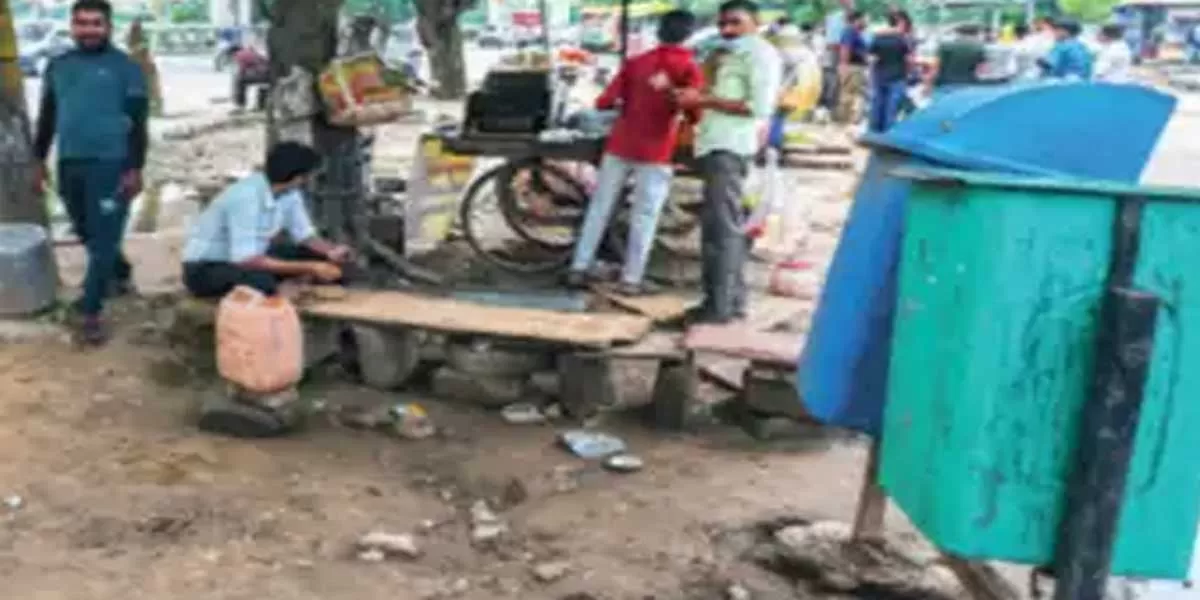
An official noted that Nathupur Road, which connects to MG Road, remains congested due to unauthorized establishments. Most of the road space had been encroached upon by vendors and temporary shops, with rents ranging from Rs 10,000 to Rs 20,000 per month.

RS Batth, GMDA's DTP and nodal officer for enforcement, stated that a strategy would be prepared to systematically address the encroachments. He highlighted that large residential plots were being misused, with each floor illegally converted into gyms, commercial spaces, or one-bedroom units, with up to four flats per floor, often rented to students. These activities were in clear violation of regulations.

The team also instructed shopkeepers to remove their establishments from corridors and parking areas, emphasizing the need for compliance with regulations to maintain the area's functionality as a commercial zone.

Batth added that public support would be sought through dialogue with all stakeholders to prevent further illegal constructions. He emphasized that public participation would be crucial for ensuring long-term solutions. A detailed survey was being conducted in DLF Phase 3 to identify and document all violations, with a focus on clearing road encroachments and taking action to effectively address the issue. In the case of habitual offenders, strict measures would be taken against serious violations.

GMDA officials conducted an inspection of DLF Phase 3 and Vyapar Kendra, Sushant Lok-1, as part of an anti-encroachment drive aimed at addressing illegal commercial activities in residential areas, as reported by an official on Saturday. During the inspection of Nathupur Road, U and S Blocks of DLF Phase 3, officials discovered widespread encroachments, including portions of the road up to 10 feet wide and illegal extensions of buildings. An official noted that Nathupur Road, which connects to MG Road, remains congested due to unauthorized establishments. Most of the road space had been encroached upon by vendors and temporary shops, with rents ranging from Rs 10,000 to Rs 20,000 per month. RS Batth, GMDA's DTP and nodal officer for enforcement, stated that a strategy would be prepared to systematically address the encroachments. He highlighted that large residential plots were being misused, with each floor illegally converted into gyms, commercial spaces, or one-bedroom units, with up to four flats per floor, often rented to students. These activities were in clear violation of regulations. The team also instructed shopkeepers to remove their establishments from corridors and parking areas, emphasizing the need for compliance with regulations to maintain the area's functionality as a commercial zone. Batth added that public support would be sought through dialogue with all stakeholders to prevent further illegal constructions. He emphasized that public participation would be crucial for ensuring long-term solutions. A detailed survey was being conducted in DLF Phase 3 to identify and document all violations, with a focus on clearing road encroachments and taking action to effectively address the issue. In the case of habitual offenders, strict measures would be taken against serious violations.

Next Story
Infrastructure Urban

Implementation Status of Jal Jeevan Mission

Since August 2019 the Government has implemented Jal Jeevan Mission to provide assured potable water through household tap connections in rural India. At the start of the mission only 32.3 million (mn) rural households, representing 16.7 per cent, were reported to have tap water connections. States and union territories have reported that 125.8 mn additional rural households have since been provided with tap connections. As a result, of about 193.6 mn rural households roughly 158.2 mn, or 81.71 per cent, are reported to have tap water supply at home.\n\nThe State, district and village level st..

Next Story
Infrastructure Urban

Jal Jeevan Mission Reaches Eighty One Per Cent Rural Coverage

The Government reported substantial progress under the Jal Jeevan Mission, launched in August 2019 to provide tap water to every rural household. At launch only 32.3 million (mn) rural households had tap connections and states and Union territories reported provision of 125.8 mn additional households by March 2026. Consequently, out of about 193.6 mn rural households around 158.2 mn, or 81.71 per cent, are reported to have tap water at home. The Finance Minister announced extension of the mission until 2028 in the 2025-26 budget speech. The Swachh Bharat Mission Grameen, launched in October 20..

Next Story
Infrastructure Urban

Empowering Local Governance for Sustainable Rural Water Supply

The Ministry of Jal Shakti has aligned the Jal Jeevan Mission (JJM) with the 73rd Amendment to strengthen village level planning and community ownership of water supply. Gram Panchayats, village water and sanitation committees and Pani Samitis are to plan, implement, manage and maintain piped water systems, with gram sabha processes formalising handover and oversight. Implementation support agencies including non government organisations, community based organisations and self help groups have been empanelled to train local committees and promote women participation. Under JJM, the department ..

Advertisement

Subscribe to Our Newsletter

Get daily newsletters around different themes from Construction world.

STAY CONNECTED

Advertisement

Advertisement

Advertisement