




Hindenburg Alleges SEBI Intimidation
ECONOMY & POLICY

Hindenburg Alleges SEBI Intimidation

U.S.-based short-seller Hindenburg Research announced that India's securities regulator, SEBI, had sent a letter outlining suspected violations over its short bet against Adani Group last year. Hindenburg disclosed that it may "barely come out above breakeven" on its trade.

In a detailed statement, Hindenburg revealed that Kotak Bank, an Indian firm, created and managed an offshore fund structure for its "investor partner" to bet against the Adani conglomerate. This provided new insights into the trades that had puzzled many investors. The short-seller reported making $4.1 million in gross revenue from gains related to Adani shorts and just $31,000 from its short position on Adani's U.S. bonds.

Hindenburg characterized SEBI's "show cause" notice as an attempt at intimidation, stating that the regulator accused Hindenburg's report of containing misrepresentations and inaccuracies intended to mislead readers. "SEBI has neglected its responsibility, seemingly doing more to protect those perpetrating fraud than the investors being victimized by it," Hindenburg said.

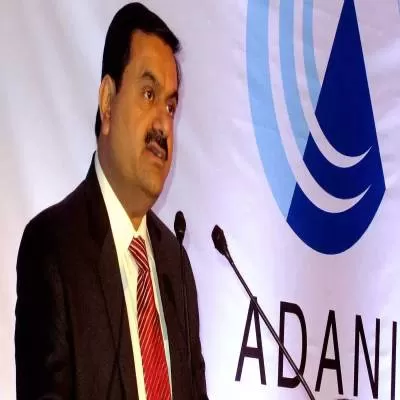
SEBI has also been investigating Adani, with India's top court granting it until August 14 to complete the probe. This disclosure adds a new twist to the saga that began last year when Hindenburg, founded by Nathan Anderson, alleged improper business dealings by Adani. The group, which refuted the allegations, suffered a loss of up to $150 billion in combined market value but has since rebounded.

Hindenburg's response sheds new light on the mechanics of its trade, intriguing other investors due to the complexity of shorting Indian securities. "It was a tiny position," Hindenburg said. "But, to date, our research on Adani is by far the work we are most proud of."

"Join industry leaders at RAHSTA Expo, India's premier platform for roads, highways and traffic infrastructure. Register now to explore innovations, network with experts and shape the future of mobility."

U.S.-based short-seller Hindenburg Research announced that India's securities regulator, SEBI, had sent a letter outlining suspected violations over its short bet against Adani Group last year. Hindenburg disclosed that it may barely come out above breakeven on its trade. In a detailed statement, Hindenburg revealed that Kotak Bank, an Indian firm, created and managed an offshore fund structure for its investor partner to bet against the Adani conglomerate. This provided new insights into the trades that had puzzled many investors. The short-seller reported making $4.1 million in gross revenue from gains related to Adani shorts and just $31,000 from its short position on Adani's U.S. bonds. Hindenburg characterized SEBI's show cause notice as an attempt at intimidation, stating that the regulator accused Hindenburg's report of containing misrepresentations and inaccuracies intended to mislead readers. SEBI has neglected its responsibility, seemingly doing more to protect those perpetrating fraud than the investors being victimized by it, Hindenburg said. SEBI has also been investigating Adani, with India's top court granting it until August 14 to complete the probe. This disclosure adds a new twist to the saga that began last year when Hindenburg, founded by Nathan Anderson, alleged improper business dealings by Adani. The group, which refuted the allegations, suffered a loss of up to $150 billion in combined market value but has since rebounded. Hindenburg's response sheds new light on the mechanics of its trade, intriguing other investors due to the complexity of shorting Indian securities. It was a tiny position, Hindenburg said. But, to date, our research on Adani is by far the work we are most proud of.

Next Story
Infrastructure Urban

Designing Human-Centric High-Rises

The Institution of Engineers (India) (IEI), Navi Mumbai Local Centre, under the aegis of the Architectural Engineering Division Board, organised a one-day national seminar, ‘Reaching New Heights – Overcoming High-Rise Construction Challenges’, at CBD Belapur, Navi Mumbai.The seminar brought together architects, engineers, planners, developers, academicians and industry professionals to deliberate on the design, construction, operation and sustainability of tall buildings in rapidly urbanising cities...To read the full article Click Here ..

Next Story
Infrastructure Urban

Carbon-negative and ultra-low carbon are not just claims!

In an interaction with Construction World, Tarun Jami, Founder, GreenJams, explains how the company is cutting cement’s carbon footprint by 80 per cent through Binder, while scaling innovations such as Agrocrete® and Novastone to make buildings lighter, faster and carbon-negative.Agrocrete® is positioned as a carbon-negative material. What does this mean for developers?For developers, Agrocrete® offers a practical way to reduce embodied carbon at the material level. Since walling forms a significant part of a building’s material footprint, using carbon-negative blocks can bring the net ..

Next Story
Technology

Crushing Goes Green

If the past few years have seen sustainability emerge as a buzzword in the design of commercial spaces, the next few years will see the focus shift to ‘experience’. Workplaces that prioritise superior employee experiences consistently report stronger talent attraction and higher retention rates and productivity, while using resources sustainably.First things first; what sort of experiences are expected from a workplace?As Vandana Dhawan Saxena, Founder and Design Principal, Studio IV Designs, explains, “Offices have grown into environments that need to support various kinds of experience..

Advertisement

Subscribe to Our Newsletter

Get daily newsletters around different themes from Construction world.

STAY CONNECTED

Advertisement

Advertisement

Advertisement















