Hyundai Targets 250,000 Annual Sales from New Bayon, Creta
ECONOMY & POLICY

Hyundai Targets 250,000 Annual Sales from New Bayon, Creta

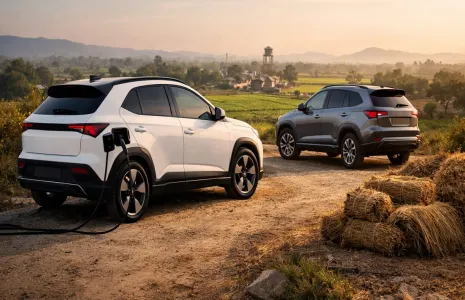
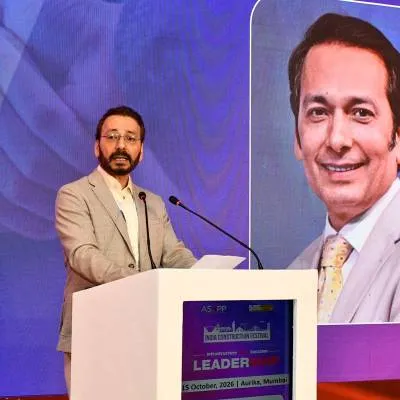
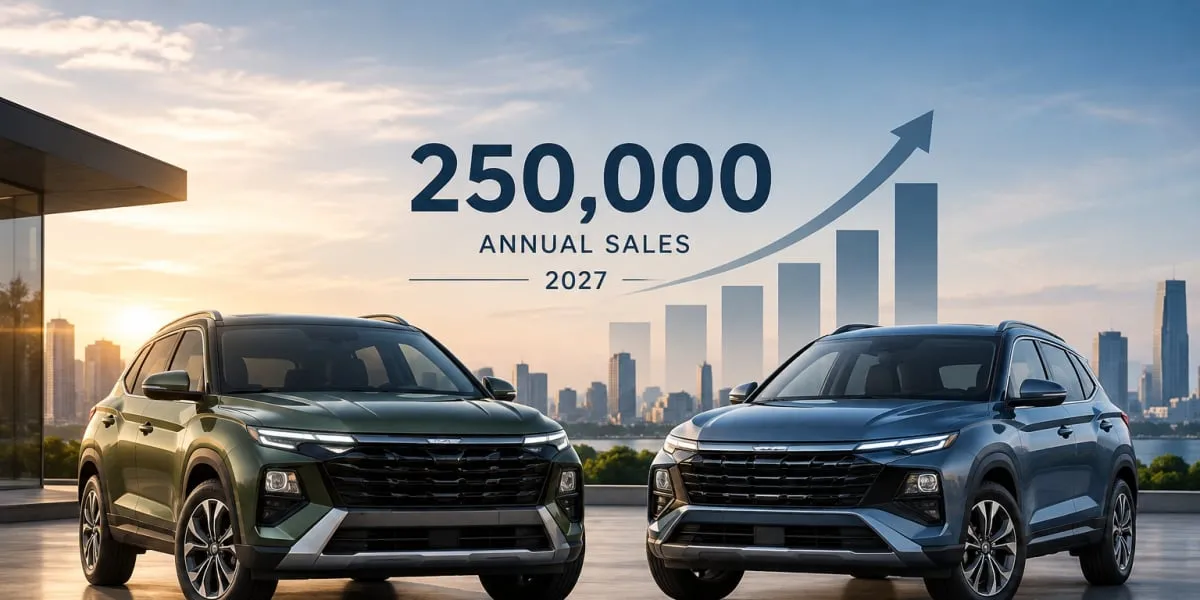
Hyundai Motor India aims to sell at least 250,000 units annually of its Creta and new Bayon models from 2027, seeking to retain leadership in the expanding mid-size SUV segment. Managing Director and Chief Executive Officer Tarun Garg said the target represented a baseline for the company’s future growth rather than an upper limit.

The mid-size utility vehicle segment, covering models between 4 and 4.4 metres in length, including SUVs and MPVs, sold around 900,000 units in the previous financial year, according to data from the Society of Indian Automobile Manufacturers. Hyundai sold close to 200,000 units a year in the segment during the past two financial years through the Creta alone.

The segment contributed nearly 35 per cent of Hyundai’s total domestic sales in financial year 2026. The new Bayon, priced from Rs. 1 mn ex-showroom, is positioned between the sub-4-metre Venue and the mid-size Creta, giving Hyundai a second product in a category where the Creta has recently faced pressure.

Creta sales declined more than 9 per cent year on year to 89,727 units during the first six months of financial year 2027, while the industry’s segment volume increased by more than 50 per cent. Garg attributed some of the decline to limited supplies of diesel variants, with the diesel Creta having a waiting period of more than one month.

The Bayon will be offered with petrol and CNG powertrains, without diesel or electric variants. Hyundai said market research indicated that petrol would account for the largest share of demand in the segment, while providing every powertrain in one model could make the range harder to manage. The model will be manufactured at Hyundai’s Chennai plant and is expected to improve capacity utilisation after Venue production shifted to Pune.

Hyundai now has 10 models, comprising six SUVs, two sedans and two hatchbacks, across petrol, diesel, CNG and electric powertrains. The company previously announced plans to launch 26 models in India by the end of the decade, including 20 internal combustion engine vehicles and six electric vehicles. Its South Korean parent has committed USD 15.5 bn of investment in India by 2032.

Hyundai Motor India aims to sell at least 250,000 units annually of its Creta and new Bayon models from 2027, seeking to retain leadership in the expanding mid-size SUV segment. Managing Director and Chief Executive Officer Tarun Garg said the target represented a baseline for the company’s future growth rather than an upper limit. The mid-size utility vehicle segment, covering models between 4 and 4.4 metres in length, including SUVs and MPVs, sold around 900,000 units in the previous financial year, according to data from the Society of Indian Automobile Manufacturers. Hyundai sold close to 200,000 units a year in the segment during the past two financial years through the Creta alone. The segment contributed nearly 35 per cent of Hyundai’s total domestic sales in financial year 2026. The new Bayon, priced from Rs. 1 mn ex-showroom, is positioned between the sub-4-metre Venue and the mid-size Creta, giving Hyundai a second product in a category where the Creta has recently faced pressure. Creta sales declined more than 9 per cent year on year to 89,727 units during the first six months of financial year 2027, while the industry’s segment volume increased by more than 50 per cent. Garg attributed some of the decline to limited supplies of diesel variants, with the diesel Creta having a waiting period of more than one month. The Bayon will be offered with petrol and CNG powertrains, without diesel or electric variants. Hyundai said market research indicated that petrol would account for the largest share of demand in the segment, while providing every powertrain in one model could make the range harder to manage. The model will be manufactured at Hyundai’s Chennai plant and is expected to improve capacity utilisation after Venue production shifted to Pune. Hyundai now has 10 models, comprising six SUVs, two sedans and two hatchbacks, across petrol, diesel, CNG and electric powertrains. The company previously announced plans to launch 26 models in India by the end of the decade, including 20 internal combustion engine vehicles and six electric vehicles. Its South Korean parent has committed USD 15.5 bn of investment in India by 2032.

Related Stories

Gold Stories

Next Story
Building Material

PureSil Paints Develops Mineral Coatings from Industrial Waste

PureSil Paints, a brand of Relic Coatings LLP, has developed an indigenous mineral-based coating technology aimed at reducing dependence on petrochemical-derived raw materials in the paints and coatings industry. Its proprietary Silicification Technology uses agricultural and industrial by-products to manufacture architectural coatings as an alternative to conventional acrylic paints.Developed in-house by Dr Nikhil Dhote, Founder and Chief Technologist, Relic Coatings LLP, the technology uses silicate binders derived from upcycled rice husk ash and industrial coal fly ash. The formulation is d..
Next Story
Infrastructure Energy

Vedanta Eyes AI to Accelerate Mineral Exploration

Vedanta Group is exploring the use of artificial intelligence (AI) to significantly improve efficiency in mineral exploration, geological analysis and resource modelling. The company aims to reduce exploration processes that traditionally take three to four months to just six to seven days through AI-driven technologies.The proposed approach involves AI-led geological analysis and mineral block modelling to accelerate mineral resource assessment and support faster, more cost-efficient development of domestic mineral reserves. The initiative aligns with India's growing focus on critical mineral..
Next Story
Technology

NXP Launches Unified Robotics Platform for Physical AI

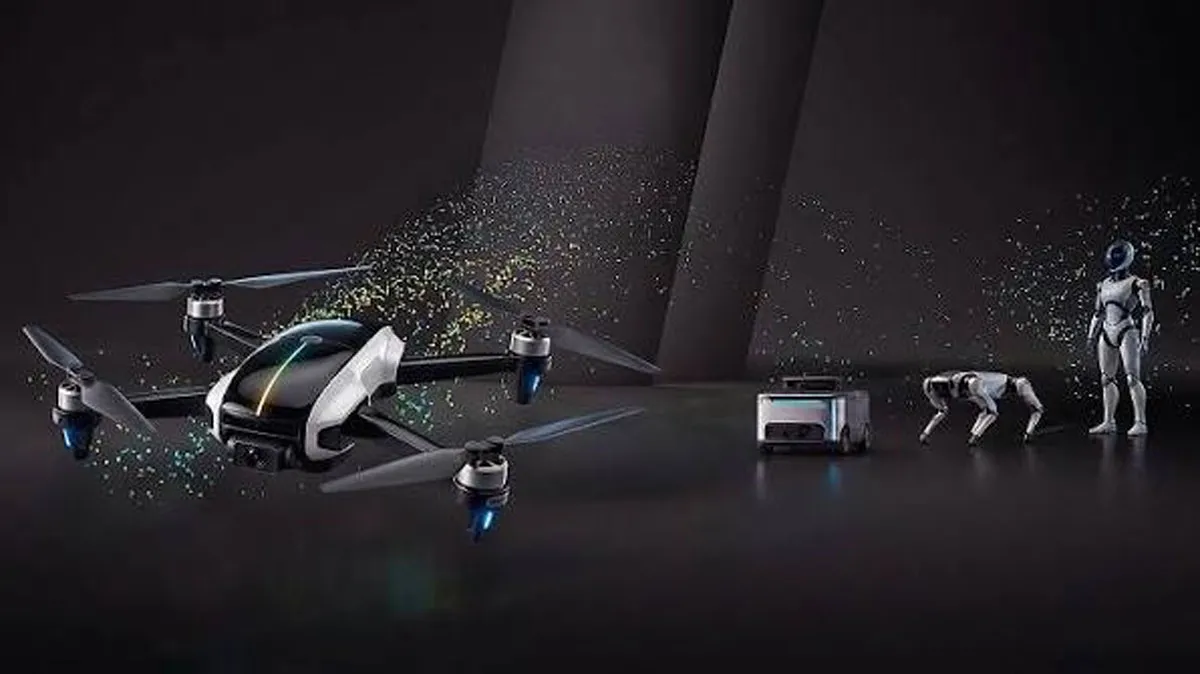
NXP Semiconductors has launched a unified robotics platform designed to accelerate the development and deployment of trusted physical artificial intelligence (AI) systems. Built on the company's neural axis architecture, the platform integrates AI processing, connectivity, motor control, security and energy management within a common hardware and software ecosystem.The platform combines an open-source, modular software development kit (SDK) with pre-validated reference designs, enabling developers to build robotic systems more efficiently. It supports development ranging from individual subsys..

Advertisement

Subscribe to Our Newsletter

Get daily newsletters around different themes from Construction world.

STAY CONNECTED

Advertisement

SPECIAL OFFER
QR Code