+
India, ADB Seal $800 Mn Loans and TA Grant for Multi-state Projects
ECONOMY & POLICY

India, ADB Seal $800 Mn Loans and TA Grant for Multi-state Projects

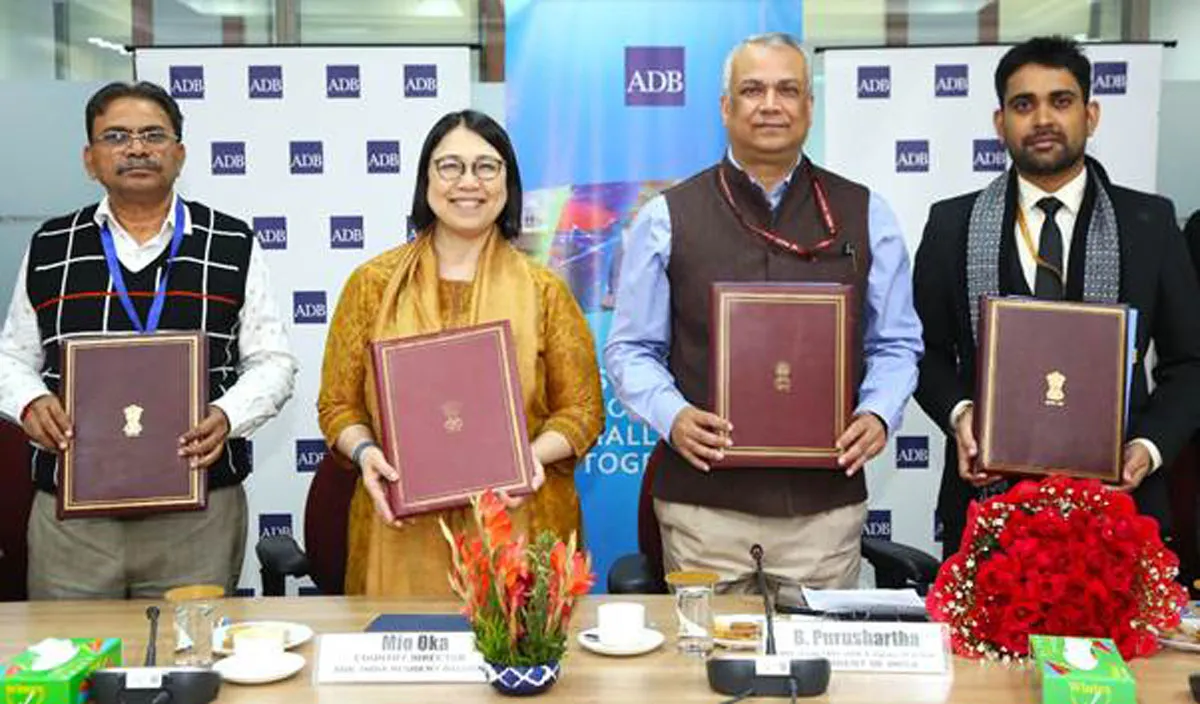
The Government of India and the Asian Development Bank (ADB) have formalised three major loan agreements worth more than $800 million, along with a $1 million Technical Assistance grant, to advance infrastructure and skill development initiatives across Maharashtra, Madhya Pradesh, Gujarat and Assam. The agreements were signed yesterday following negotiations led by the Department of Economic Affairs.

Saurabh Singh, Deputy Secretary, Department of Economic Affairs, Ministry of Finance, signed the loan documents on behalf of the Government of India, while Mio Oka, Country Director, India Resident Mission, represented ADB. The loans cover the Maharashtra Power Distribution Enhancement Programme for Agricultural Solarization; the Indore Metro Rail Project (approximately $190.6 million); and the Gujarat Skills Development Programme ($109.97 million).

The $500 million programme in Maharashtra aims to modernise rural power systems, integrate renewable energy and ensure daytime solar electricity for irrigation. By 2028, the initiative targets supplying reliable solar power to at least 900,000 agricultural consumers. Planned upgrades include strengthened substation capacity, enhanced distribution lines and the installation of 500 MWh of battery storage to support renewable integration.

For Madhya Pradesh, the Yen-denominated loan will support construction of an 8.62-kilometre underground metro corridor in Indore, comprising seven stations that will link core commercial areas with the airport. Implemented by the Madhya Pradesh Metro Rail Corporation, the project includes multimodal integration with bus and feeder services and is expected to begin operations by January 2030.

In Gujarat, the nearly $110 million skills programme seeks to equip the state’s workforce with advanced, industry-ready capabilities in high-growth sectors such as automotive, logistics, manufacturing, IT, renewable energy, healthcare and agri-tech. Led by the Labour, Skill Development and Employment Department and Kaushalya – The Skill University, the initiative will upgrade 11 mega ITIs, create centres of excellence and adopt a hub-and-spoke model involving industry partnerships.

Additionally, a $1 million Technical Assistance grant will support preparation of the Sustainable Wetland and Integrated Fisheries Transformation (SWIFT) Project in Assam, aimed at strengthening wetland ecosystems and fisheries management.

News source: PIB


The Government of India and the Asian Development Bank (ADB) have formalised three major loan agreements worth more than $800 million, along with a $1 million Technical Assistance grant, to advance infrastructure and skill development initiatives across Maharashtra, Madhya Pradesh, Gujarat and Assam. The agreements were signed yesterday following negotiations led by the Department of Economic Affairs.Saurabh Singh, Deputy Secretary, Department of Economic Affairs, Ministry of Finance, signed the loan documents on behalf of the Government of India, while Mio Oka, Country Director, India Resident Mission, represented ADB. The loans cover the Maharashtra Power Distribution Enhancement Programme for Agricultural Solarization; the Indore Metro Rail Project (approximately $190.6 million); and the Gujarat Skills Development Programme ($109.97 million).The $500 million programme in Maharashtra aims to modernise rural power systems, integrate renewable energy and ensure daytime solar electricity for irrigation. By 2028, the initiative targets supplying reliable solar power to at least 900,000 agricultural consumers. Planned upgrades include strengthened substation capacity, enhanced distribution lines and the installation of 500 MWh of battery storage to support renewable integration.For Madhya Pradesh, the Yen-denominated loan will support construction of an 8.62-kilometre underground metro corridor in Indore, comprising seven stations that will link core commercial areas with the airport. Implemented by the Madhya Pradesh Metro Rail Corporation, the project includes multimodal integration with bus and feeder services and is expected to begin operations by January 2030.In Gujarat, the nearly $110 million skills programme seeks to equip the state’s workforce with advanced, industry-ready capabilities in high-growth sectors such as automotive, logistics, manufacturing, IT, renewable energy, healthcare and agri-tech. Led by the Labour, Skill Development and Employment Department and Kaushalya – The Skill University, the initiative will upgrade 11 mega ITIs, create centres of excellence and adopt a hub-and-spoke model involving industry partnerships.Additionally, a $1 million Technical Assistance grant will support preparation of the Sustainable Wetland and Integrated Fisheries Transformation (SWIFT) Project in Assam, aimed at strengthening wetland ecosystems and fisheries management.News source: PIB

Related Stories

Gold Stories

Next Story
Infrastructure Urban

Infrastructure Opportunity Outlook by IMPACCT.Info

India’s infrastructure pipeline is witnessing dynamic activity across stages — from immediate bidding to future planning. IMPACCT segments these into three categories: Immediate, 3–6 Month, and Future Opportunities, enabling businesses to identify, prepare, and participate in high-value tenders and projects across sectors.To read full article Click Here ..

Next Story
Real Estate

Glass, Reframed!

Glass façades, quintessential aesthetic building envelopes globally, have been widely adopted in India as well. But when the focus is high-performance building systems that deliver energy efficiency, comfort and architectural identity, glass isn’t the only preference. Combination solutions, involving glass and some other material, improve façade outcomes. Some combinations come at comparable prices, some at a higher price. Here is a selection of performance-oriented solutions...To read the full story Click Here ..

Next Story
Infrastructure Urban

Beyond Building Faster

India’s cities are expanding at an unprecedented pace, bringing new infrastructure and development opportunities while also intensifying challenges around mobility, public spaces, liveability and supporting infrastructure. The question, therefore, is not simply whether India can build faster, but whether it can build cities that work better.At a CW webinar, Are We Designing Better Cities – or Just Building Faster?, moderator Ar. Samir Shaikh, Founding Principal, AR&UD Studio, brought together perspectives from design, development, master planning and technology...To read the full artic..

Advertisement

Subscribe to Our Newsletter

Get daily newsletters around different themes from Construction world.

STAY CONNECTED

Advertisement

SPECIAL OFFER
QR Code