



India–New Zealand FTA Talks Advance in Queenstown
ECONOMY & POLICY

India–New Zealand FTA Talks Advance in Queenstown

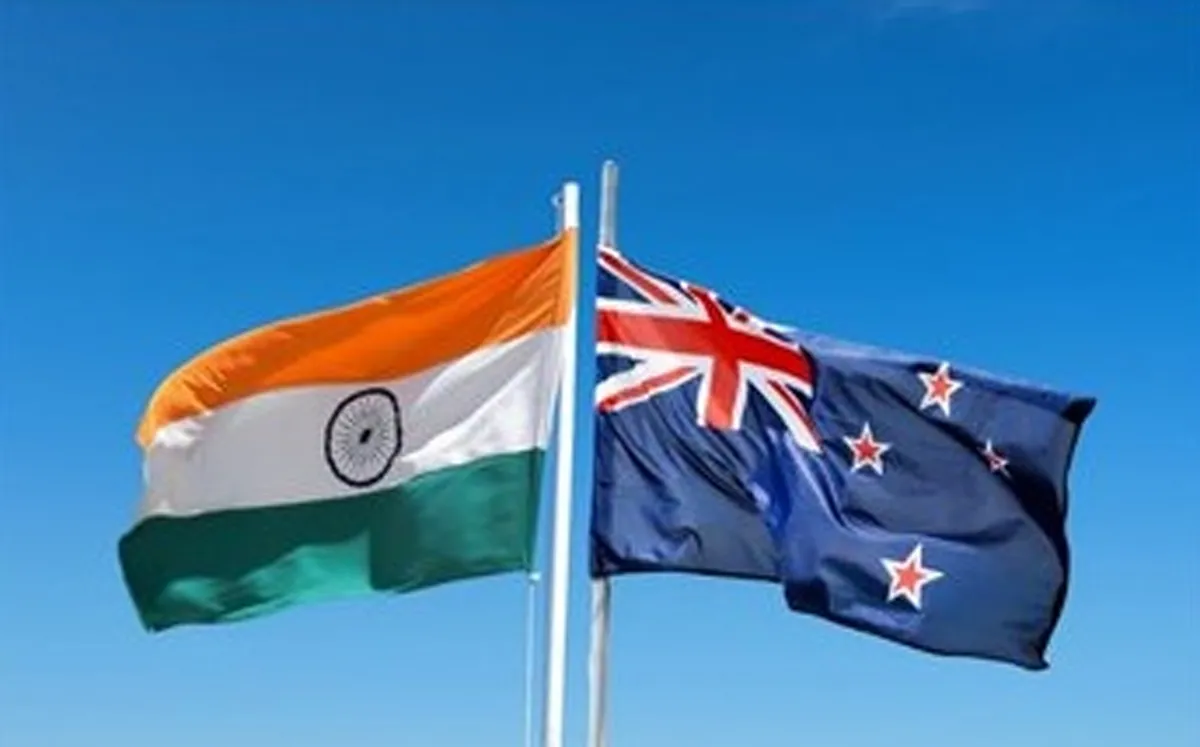
The third round of negotiations for the India–New Zealand Free Trade Agreement (FTA) concluded successfully on 19 September 2025 in Queenstown, New Zealand. The discussions reaffirmed both nations’ commitment to enhance economic ties and work towards the early conclusion of a balanced, mutually beneficial agreement.
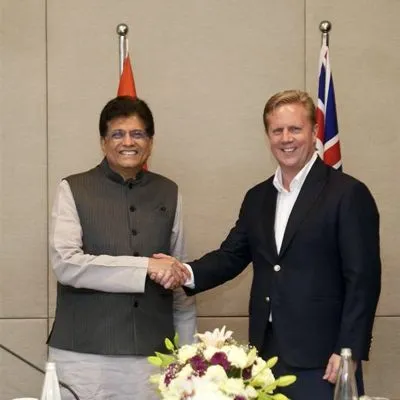
Guided by the vision of Prime Minister Shri Narendra Modi and Right Hon. Christopher Luxon, Prime Minister of New Zealand, the talks reflected a shared resolve to deepen bilateral trade, investment, and economic cooperation. The FTA was formally launched on 16 March 2025, during a meeting between Union Minister of Commerce and Industry, Shri Piyush Goyal, and New Zealand’s Minister for Trade and Investment, Mr Todd McClay.
Held from 15–19 September 2025, the third round saw constructive discussions across all chapters of the agreement. Several chapters were concluded, and significant progress was made in other key areas.
India’s bilateral merchandise trade with New Zealand reached USD 1.3 billion in FY 2024–25, marking a 49 per cent growth over the previous year. The proposed FTA is expected to further boost trade flows, promote investment linkages, enhance supply chain resilience, and provide a predictable framework for businesses in both countries.
Both sides agreed to maintain momentum through inter-sessional engagements, with the next round of in-person negotiations scheduled in New Delhi on 13–14 October 2025. 

The third round of negotiations for the India–New Zealand Free Trade Agreement (FTA) concluded successfully on 19 September 2025 in Queenstown, New Zealand. The discussions reaffirmed both nations’ commitment to enhance economic ties and work towards the early conclusion of a balanced, mutually beneficial agreement.Guided by the vision of Prime Minister Shri Narendra Modi and Right Hon. Christopher Luxon, Prime Minister of New Zealand, the talks reflected a shared resolve to deepen bilateral trade, investment, and economic cooperation. The FTA was formally launched on 16 March 2025, during a meeting between Union Minister of Commerce and Industry, Shri Piyush Goyal, and New Zealand’s Minister for Trade and Investment, Mr Todd McClay.Held from 15–19 September 2025, the third round saw constructive discussions across all chapters of the agreement. Several chapters were concluded, and significant progress was made in other key areas.India’s bilateral merchandise trade with New Zealand reached USD 1.3 billion in FY 2024–25, marking a 49 per cent growth over the previous year. The proposed FTA is expected to further boost trade flows, promote investment linkages, enhance supply chain resilience, and provide a predictable framework for businesses in both countries.Both sides agreed to maintain momentum through inter-sessional engagements, with the next round of in-person negotiations scheduled in New Delhi on 13–14 October 2025. 

Next Story
Infrastructure Energy

SHANTI Bill marks turning point for India’s nuclear energy sector: Deloitte India

The proposed Sustainable Harnessing and Advancement of Nuclear Energy for Transforming India (SHANTI) Bill, 2025, signals a fundamental shift in India’s nuclear energy framework, positioning nuclear power at the core of the country’s long-term energy strategy, according to Deloitte India. The Bill, likely to be introduced in the Lok Sabha this week, seeks to overhaul the existing legal regime governing the sector.The proposed legislation aims to repeal the Atomic Energy Act, 1962, and the Civil Liability to Nuclear Damage Act, 2010, replacing them with a single, unified law for nuclear ene..

Next Story
Infrastructure Energy

Battery storage cost drops to Rs 2.1/unit, boosting grid-scale adoption

Battery Energy Storage System (BESS) costs in India have declined sharply to Rs 2.1 per unit, compared with about Rs 10.18 per unit discovered through tariff-based competitive bidding during 2022–23, the Ministry of Power informed Parliament. The steep reduction is expected to significantly accelerate grid-scale battery storage adoption and support renewable energy integration.According to a statement from the Ministry of Power, the BESS tariff discovered during FY2022–23 was around Rs 10.18/kWh, assuming the storage system is utilised for two cycles per day. However, recent competitive bi..

Next Story
Infrastructure Energy

India’s thermal power capacity demand seen at 307 GW by 2035: Goyal

India’s thermal power requirement is projected to rise sharply to 307 gigawatts (GW) by 2035, reflecting the country’s sustained efforts to meet growing energy demand, Union Minister for Commerce Piyush Goyal said.Responding to a question from The Hindu, Piyush Goyal, Union Minister for Commerce, said the government is making continuous progress to strengthen India’s power generation capacity and ensure reliable energy availability for the country’s expanding economy. Speaking to reporters on December 15, 2025, he highlighted the pace at which new capacity is being added and contracts ..

Advertisement

Subscribe to Our Newsletter

Get daily newsletters around different themes from Construction world.

STAY CONNECTED

Advertisement

Advertisement

Advertisement

Advertisement

Open In App