India and France Discuss Boosting Cooperation in Critical Minerals
ECONOMY & POLICY

India and France Discuss Boosting Cooperation in Critical Minerals

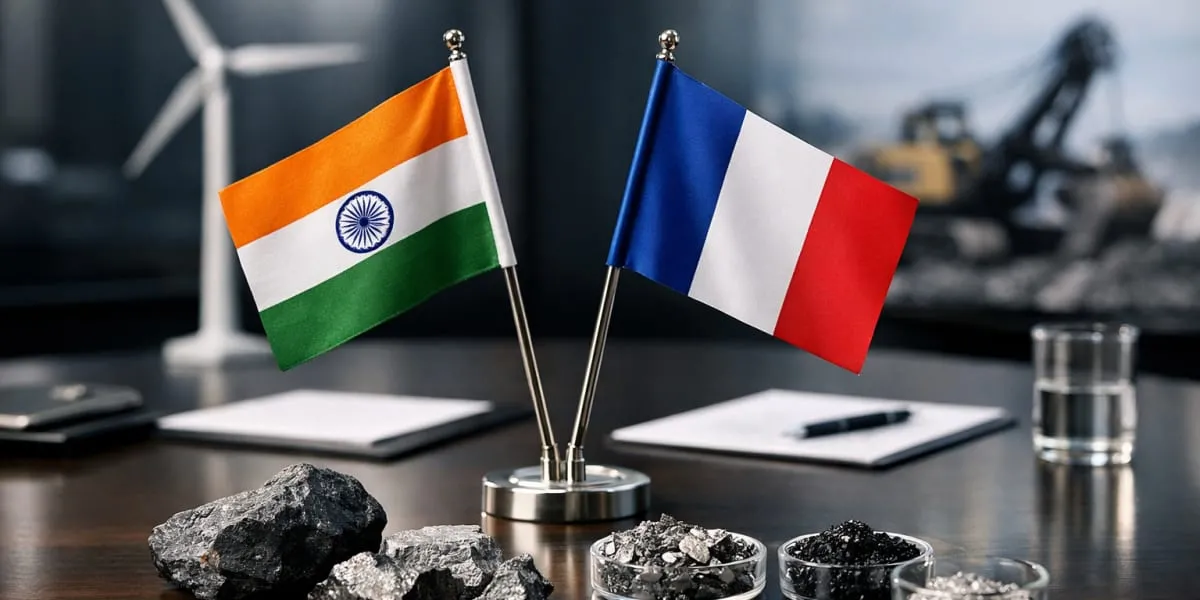
India and France held high level discussions to identify ways to boost cooperation in the critical minerals sector. The talks brought together government officials, diplomats and industry representatives to review strategic priorities and to examine supply chain resilience. Both sides outlined the role of critical minerals in supporting clean energy deployments and industrial competitiveness. The discussions emphasised the need for secure, diversified sources and resilient logistics.

Delegates examined collaboration across the full value chain from exploration and extraction to processing and advanced manufacturing. Attention focused on technology transfer, joint research initiatives and capacity building to develop downstream capabilities. The agenda included measures to strengthen environmental standards and to promote responsible sourcing practices across suppliers. Discussions also covered investment incentives, public private partnerships and measures to enhance domestic processing capacity to capture greater value within supply chains.

Participants explored mechanisms to mobilise private investment and to facilitate trade and financing for projects that build capacity in mineral processing and recycling. They discussed regulatory cooperation, standards harmonisation and streamlined permitting to reduce duplication and enhance project delivery. Skills development and workforce training were highlighted as priorities to support sustainable industrial expansion. Stakeholders emphasised mechanisms for technology incubation, improved logistics infrastructure and incentives to scale recycling operations for critical mineral residues and end of life materials.

The two sides agreed to establish working groups to develop practical roadmaps and to monitor progress against agreed milestones. Follow up actions will include joint feasibility studies, pilot projects and regular consultations at ministerial and technical levels. The focus will remain on aligning industrial objectives with environmental safeguards and on supporting the transition to cleaner technologies. Timelines for deliverables were proposed and a framework for periodic review was set out to ensure sustained momentum and to address technical bottlenecks.

"Join industry leaders at RAHSTA Expo, India's premier platform for roads, highways and traffic infrastructure. Register now to explore innovations, network with experts and shape the future of mobility."

India and France held high level discussions to identify ways to boost cooperation in the critical minerals sector. The talks brought together government officials, diplomats and industry representatives to review strategic priorities and to examine supply chain resilience. Both sides outlined the role of critical minerals in supporting clean energy deployments and industrial competitiveness. The discussions emphasised the need for secure, diversified sources and resilient logistics. Delegates examined collaboration across the full value chain from exploration and extraction to processing and advanced manufacturing. Attention focused on technology transfer, joint research initiatives and capacity building to develop downstream capabilities. The agenda included measures to strengthen environmental standards and to promote responsible sourcing practices across suppliers. Discussions also covered investment incentives, public private partnerships and measures to enhance domestic processing capacity to capture greater value within supply chains. Participants explored mechanisms to mobilise private investment and to facilitate trade and financing for projects that build capacity in mineral processing and recycling. They discussed regulatory cooperation, standards harmonisation and streamlined permitting to reduce duplication and enhance project delivery. Skills development and workforce training were highlighted as priorities to support sustainable industrial expansion. Stakeholders emphasised mechanisms for technology incubation, improved logistics infrastructure and incentives to scale recycling operations for critical mineral residues and end of life materials. The two sides agreed to establish working groups to develop practical roadmaps and to monitor progress against agreed milestones. Follow up actions will include joint feasibility studies, pilot projects and regular consultations at ministerial and technical levels. The focus will remain on aligning industrial objectives with environmental safeguards and on supporting the transition to cleaner technologies. Timelines for deliverables were proposed and a framework for periodic review was set out to ensure sustained momentum and to address technical bottlenecks.

Next Story
Infrastructure Transport

Railways To Operate Over 300 Special Trains For Rath Yatra

Union Railway Minister Ashwini Vaishnaw announced that Indian Railways (IR) will operate more than 300 special trains for the annual Jagannath Rath Yatra in Odisha and over 100 special trains during the Onam festival in Keralam. He flagged off the Nanded–Mumbai and Tanakpur–Nanded Express trains and inaugurated the extension of the Tanakpur–Pilibhit service up to Shahjahanpur via video conference from Rail Sadan in Bhubaneswar. He noted that the summer season, which concluded on 30 June, had seen a record 15,000 special trains. Vaishnaw stated that the newly launched services are intende..

Next Story
Infrastructure Transport

Vande Bharat Express To Start From Tripura Soon

Tripura Chief Minister Manik Saha said the Vande Bharat Express will commence operations from Tripura in the coming days after he flagged off the Agartala–Karimganj MEMU service at Agartala Railway Station. He recalled the rail history of the state, noting that a metre-gauge service first arrived in 1964 and that broad gauge reached Agartala in 2008 following national projects and later upgrades under the Act East policy. The event was described as a milestone for regional connectivity and the MEMU was presented as the first electric passenger train to originate from Tripura.\n\nSaha said he..

Next Story
Infrastructure Urban

MEMU Suspension Disrupts Commuters Between Vadodara And Dahod

The Vadodara–Dahod Mainline Electric Multiple Unit (MEMU) service has been temporarily suspended for 26 days after its rake was diverted to Odisha to manage the surge in passenger traffic during the annual Rath Yatra in Puri. Indian Railways redeployed several MEMU rakes from different zones to meet the additional travel demand for the festival scheduled from the seventh of July to the second of August. As a result, train numbers 69233 and 69234 operating between Vadodara and Dahod will remain cancelled for the duration. Railway authorities advised passengers to use alternative train service..

Advertisement

Subscribe to Our Newsletter

Get daily newsletters around different themes from Construction world.

STAY CONNECTED

Advertisement

Advertisement

Advertisement