Lohum Targets 30,000 Tonnes Lithium Carbonate From Zimbabwe Assets
ECONOMY & POLICY

Lohum Targets 30,000 Tonnes Lithium Carbonate From Zimbabwe Assets

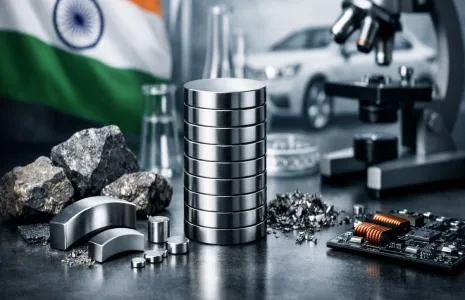
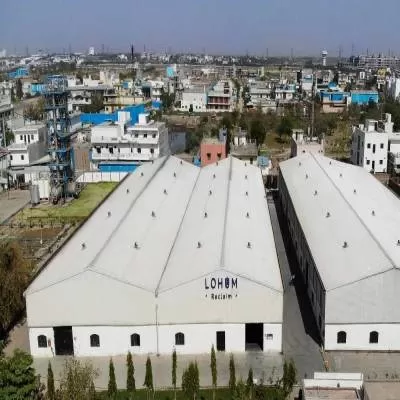
Lohum is targeting 30,000 tonne (t) lithium carbonate output from assets in Zimbabwe as it seeks to build an integrated supply chain spanning mining, processing and refining. The company plans to carry out mining and initial processing in Zimbabwe while converting the material into lithium carbonate in India, and it is setting up a new refinery whose location has not yet been finalised.

The firm intends to extend the chain further downstream by establishing a cathode active material facility, which could make it a customer for its own lithium carbonate ahead of sales to cell manufacturers, according to Lohum's chief executive. The company already supplies customers in India and overseas and is in discussions with other domestic firms.

Lohum acquired 10 blocks and has preferred rights over an additional 90 blocks, giving it a right of first refusal before those blocks are offered to other buyers. The initial 10 blocks are expected to support production of around 300,000 t over the life of the assets, and at prevailing lithium carbonate prices the deposits are estimated to have an in-situ value of about $7 bn.

The Zimbabwe investment reflects Lohum's broader strategy of acquiring critical mineral assets overseas and of solving three problems simultaneously: acquiring the asset at the right price, bringing it into production quickly and creating value locally, the chief executive said. The company is particularly focused on assets able to generate throughput within one to two years rather than projects that require a decade or more to develop.

The firm noted that delays compound the competitive gap with Chinese companies, which may already have operations in target countries and can push up acquisition prices. Lohum therefore evaluates opportunities on the basis of cheap acquisition, quick production and local value addition in order to deliver results within a short time frame.

Lohum is targeting 30,000 tonne (t) lithium carbonate output from assets in Zimbabwe as it seeks to build an integrated supply chain spanning mining, processing and refining. The company plans to carry out mining and initial processing in Zimbabwe while converting the material into lithium carbonate in India, and it is setting up a new refinery whose location has not yet been finalised. The firm intends to extend the chain further downstream by establishing a cathode active material facility, which could make it a customer for its own lithium carbonate ahead of sales to cell manufacturers, according to Lohum's chief executive. The company already supplies customers in India and overseas and is in discussions with other domestic firms. Lohum acquired 10 blocks and has preferred rights over an additional 90 blocks, giving it a right of first refusal before those blocks are offered to other buyers. The initial 10 blocks are expected to support production of around 300,000 t over the life of the assets, and at prevailing lithium carbonate prices the deposits are estimated to have an in-situ value of about $7 bn. The Zimbabwe investment reflects Lohum's broader strategy of acquiring critical mineral assets overseas and of solving three problems simultaneously: acquiring the asset at the right price, bringing it into production quickly and creating value locally, the chief executive said. The company is particularly focused on assets able to generate throughput within one to two years rather than projects that require a decade or more to develop. The firm noted that delays compound the competitive gap with Chinese companies, which may already have operations in target countries and can push up acquisition prices. Lohum therefore evaluates opportunities on the basis of cheap acquisition, quick production and local value addition in order to deliver results within a short time frame.

Related Stories

Gold Stories

Next Story
Real Estate

Japanese companies expand GCC operations in India

More than 100 Japanese companies have established or are expanding Global Capability Centres (GCCs) in India, with a growing focus on artificial intelligence (AI), engineering, digital innovation, product development, cybersecurity and advanced analytics. The shift marks an expansion beyond traditional back-office and operational support functions towards higher-value technology and innovation activities.Japanese companies are increasingly using their Indian GCCs to support digital transformation, address talent shortages and contribute to global business strategies. These centres are taking o..

Next Story
Real Estate

India’s flexible office stock projected to reach 160 million sq ft by 2030

India retained its position as the world's most mature flexible office market, scoring 100 per cent on Cushman & Wakefield's Flexible Office Market Maturity Index, according to the firm's Global Trends in Flexible Office 2026 report.India's flexible office inventory reached 88.7 million sq ft (MSF) in H1 2026, accounting for 10.5 per cent of the country's total office stock. The report projects this to exceed 100 MSF in 2026 and reach approximately 160 MSF by 2030.Flexible office operators leased 8.5 MSF across India's top eight cities in H1 2026, their strongest first-half performance to ..

Next Story
Infrastructure Urban

K2 Infragen appoints Abhishek Sharma as DGM, supply chain

K2 Infragen has appointed Abhishek Sharma as Deputy General Manager, Supply Chain Management. He will oversee procurement planning, vendor partnerships and coordination with project teams.Sharma brings nearly two decades of experience in infrastructure procurement across railways, highways, expressways and hydropower. His experience includes procurement responsibilities associated with the Delhi–Meerut Expressway and the Delhi–Vadodara greenfield corridor. ..

Advertisement

Subscribe to Our Newsletter

Get daily newsletters around different themes from Construction world.

STAY CONNECTED

Advertisement

SPECIAL OFFER
QR Code