India Electronics Manufacturing Expands Under PLI Schemes
ECONOMY & POLICY

India Electronics Manufacturing Expands Under PLI Schemes

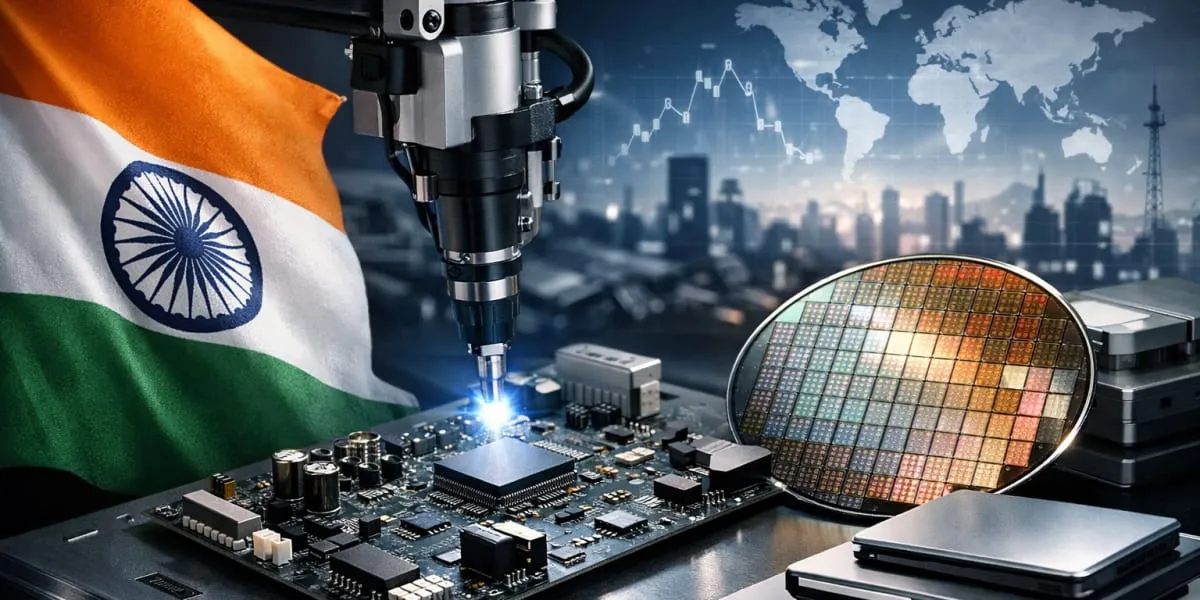
India's electronics manufacturing strategy follows the Prime Minister's vision of AtmaNirbhar Bharat and seeks to make India a global manufacturing hub. The government has pursued a targeted approach to develop the entire value chain from finished products to components, base materials and capital equipment. Over the past 11 years electronics manufacturing has expanded significantly and domestic value addition has improved to 18–20 per cent. Production of electronics goods rose six times and exports increased eight times.

The Production Linked Incentive scheme for Large Scale Electronics Manufacturing (PLI LSEM) began in 2020 to boost domestic mobile phone manufacturing, with 32 beneficiary companies approved. The scheme exceeded its investment target of Rs 7,000 crore by achieving Rs 17,519 crore, equivalent to Rs 175.19 billion (bn). Production targets of Rs 812,550 crore were exceeded by Rs 1,101,813 crore, equivalent to Rs 11.02 trillion (tn), and export targets of Rs 487,530 crore were surpassed with Rs 620,974 crore achieved.

India is now the second largest mobile manufacturer, with mobile phone production rising from Rs 2.14 lakh crore in FY 2019-20 to Rs 5.5 lakh crore in FY 2024-25, equivalent to Rs 2.14 trillion (tn) and Rs 5.5 trillion (tn) respectively. Mobile phone exports rose roughly eightfold from Rs 0.27 lakh crore to Rs 2 lakh crore, and smartphones became India’s top exported commodity in calendar year 2025 with exports of Rs 262,452 crore, equivalent to Rs 2.62 trillion (tn). More than 300 mobile manufacturing units are operational and the sector supports around 1,200,000 direct and indirect jobs.

The PLI scheme 2.0 for IT Hardware recorded cumulative production of Rs 18,863.1 crore and cumulative investment of Rs 872.16 crore, equivalent to Rs 188.63 billion (bn) and Rs 8.72 billion (bn) respectively, with 5,039 direct jobs and Rs 82 crore of incentives disbursed. The Electronics Component Manufacturing Scheme has received commitments of Rs 1.15 lakh crore against a target of Rs 59,350 crore and is estimated to generate about 140,000 jobs; the budgetary outlay was increased to Rs 40,000 crore from Rs 22,919 crore. This information was submitted by the Union Minister of State for Electronics and Information Technology, Shri Jitin Prasad, in the Lok Sabha on one April 2026.

India's electronics manufacturing strategy follows the Prime Minister's vision of AtmaNirbhar Bharat and seeks to make India a global manufacturing hub. The government has pursued a targeted approach to develop the entire value chain from finished products to components, base materials and capital equipment. Over the past 11 years electronics manufacturing has expanded significantly and domestic value addition has improved to 18–20 per cent. Production of electronics goods rose six times and exports increased eight times. The Production Linked Incentive scheme for Large Scale Electronics Manufacturing (PLI LSEM) began in 2020 to boost domestic mobile phone manufacturing, with 32 beneficiary companies approved. The scheme exceeded its investment target of Rs 7,000 crore by achieving Rs 17,519 crore, equivalent to Rs 175.19 billion (bn). Production targets of Rs 812,550 crore were exceeded by Rs 1,101,813 crore, equivalent to Rs 11.02 trillion (tn), and export targets of Rs 487,530 crore were surpassed with Rs 620,974 crore achieved. India is now the second largest mobile manufacturer, with mobile phone production rising from Rs 2.14 lakh crore in FY 2019-20 to Rs 5.5 lakh crore in FY 2024-25, equivalent to Rs 2.14 trillion (tn) and Rs 5.5 trillion (tn) respectively. Mobile phone exports rose roughly eightfold from Rs 0.27 lakh crore to Rs 2 lakh crore, and smartphones became India’s top exported commodity in calendar year 2025 with exports of Rs 262,452 crore, equivalent to Rs 2.62 trillion (tn). More than 300 mobile manufacturing units are operational and the sector supports around 1,200,000 direct and indirect jobs. The PLI scheme 2.0 for IT Hardware recorded cumulative production of Rs 18,863.1 crore and cumulative investment of Rs 872.16 crore, equivalent to Rs 188.63 billion (bn) and Rs 8.72 billion (bn) respectively, with 5,039 direct jobs and Rs 82 crore of incentives disbursed. The Electronics Component Manufacturing Scheme has received commitments of Rs 1.15 lakh crore against a target of Rs 59,350 crore and is estimated to generate about 140,000 jobs; the budgetary outlay was increased to Rs 40,000 crore from Rs 22,919 crore. This information was submitted by the Union Minister of State for Electronics and Information Technology, Shri Jitin Prasad, in the Lok Sabha on one April 2026.

Next Story
Infrastructure Urban

Centre Disburses Over Rs 24,610 mn in XV Finance Commission Grants

The Union Government has released XV Finance Commission tied grants during the financial year 2025–26 to rural local bodies in Chhattisgarh, Gujarat, Madhya Pradesh, Punjab and Sikkim and has released withheld portions of tied and untied grants to Himachal Pradesh, Odisha and Tripura. The total disbursal exceeded Rs 24,610 mn, with figures expressed in million (mn) thereafter. The releases cover allocations pertaining to different financial years and aim to strengthen rural local governance. State-wise disbursements included Rs 3,324.6 mn for Punjab, Rs 9,432.7 mn for Madhya Pradesh, Rs 3,47..

Next Story
Infrastructure Urban

Centre Releases Over Rs 15 bn as XV FC Grants to Rural Bodies

The Union Government has released over Rs 15 bn in grants recommended by the Fifteenth Finance Commission (XV FC) to strengthen Panchayati Raj Institutions (PRIs) and Rural Local Bodies (RLBs) in six states. The funds comprise tied and untied grants disbursed in FY 2025–26. Telangana received Rs 2.48 bn as the first instalment of untied grants for FY 2025–26, benefitting 12600 Gram Panchayats (GPs). Uttarakhand received Rs 913.1 mn as the second instalment and an additional Rs 18.4 mn of a withheld first instalment was released to a further 216 GPs. Mizoram is included among beneficiary st..

Next Story
Infrastructure Energy

Government Assures Fuel Supplies And Seafarer Safety Amid West Asia Developments

The Government of India has stepped up coordinated measures to maintain stability in critical sectors as developments in West Asia continue to unfold. It has prioritised uninterrupted energy supplies, safeguarded maritime operations and extended consular assistance to nationals. Central authorities are working with State and Union territory administrations to ensure timely information dissemination and operational continuity. Refineries are reported to be operating at high capacity with adequate inventories of petrol and diesel, and domestic LPG production has been increased to support consump..

Advertisement

Subscribe to Our Newsletter

Get daily newsletters around different themes from Construction world.

STAY CONNECTED

Advertisement

Advertisement

Advertisement