+
India Flexible Workspace Leasing Hits Record in H1 2026
ECONOMY & POLICY

India Flexible Workspace Leasing Hits Record in H1 2026

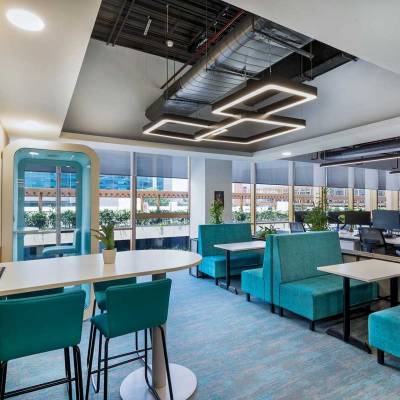
Flexible workspace leasing in India reached a record 84 million square feet (84 mn sq ft) in the first half of 2026, marking a significant milestone for the sector. Industry data showed leasing activity was broad based across markets and tenancy profiles. The surge reflected continued uptake of flexible arrangements by corporates and growing penetration by operators.

Occupiers increasingly sought flexible solutions to manage expansion, project work and footprint optimisation. Large enterprises, mid?sized firms and start?ups all contributed to demand, while operators diversified product lines to include longer term leases and customised space solutions. Investors responded by channelising capital into established operators and platforms.

The market structure adjusted as occupiers combined flexible space with conventional leases to create hybrid portfolios that balance cost and agility. Developers repurposed some office stock to meet demand for managed workspaces, and service offerings were broadened to include technology enabled membership models and curated workplace services. The evolving mix supported stronger absorption and improved utilisation rates.

Regional cities complemented gateway markets as demand spread beyond central business districts, reflecting decentralisation of office requirements and corporate risk mitigation. This geographic diffusion encouraged local operators to scale and multinational occupiers to pilot alternative city strategies. Market participants reported heightened operational focus on customer experience and flexible lease terms.

The record leasing volume in H1 2026 underscored the maturation of the flexible workplace ecosystem in India. Stakeholders said the development is reshaping office leasing strategies and increasing emphasis on adaptable real estate solutions.

Landlords adjusted leasing models to accommodate shorter terms and modular fit?outs, while service providers invested in technology to streamline bookings and occupancy analytics. The combination of flexible supply and adaptive demand has altered capital allocation patterns within the real estate sector and prompted a reevaluation of long term workplace strategies by occupiers.

Flexible workspace leasing in India reached a record 84 million square feet (84 mn sq ft) in the first half of 2026, marking a significant milestone for the sector. Industry data showed leasing activity was broad based across markets and tenancy profiles. The surge reflected continued uptake of flexible arrangements by corporates and growing penetration by operators. Occupiers increasingly sought flexible solutions to manage expansion, project work and footprint optimisation. Large enterprises, mid?sized firms and start?ups all contributed to demand, while operators diversified product lines to include longer term leases and customised space solutions. Investors responded by channelising capital into established operators and platforms. The market structure adjusted as occupiers combined flexible space with conventional leases to create hybrid portfolios that balance cost and agility. Developers repurposed some office stock to meet demand for managed workspaces, and service offerings were broadened to include technology enabled membership models and curated workplace services. The evolving mix supported stronger absorption and improved utilisation rates. Regional cities complemented gateway markets as demand spread beyond central business districts, reflecting decentralisation of office requirements and corporate risk mitigation. This geographic diffusion encouraged local operators to scale and multinational occupiers to pilot alternative city strategies. Market participants reported heightened operational focus on customer experience and flexible lease terms. The record leasing volume in H1 2026 underscored the maturation of the flexible workplace ecosystem in India. Stakeholders said the development is reshaping office leasing strategies and increasing emphasis on adaptable real estate solutions. Landlords adjusted leasing models to accommodate shorter terms and modular fit?outs, while service providers invested in technology to streamline bookings and occupancy analytics. The combination of flexible supply and adaptive demand has altered capital allocation patterns within the real estate sector and prompted a reevaluation of long term workplace strategies by occupiers.

Related Stories

Gold Stories

Next Story
Infrastructure Transport

97 Per Cent Of Rongjeng-Mangsang-Adokgre Road Nears Completion

Deputy Chief Minister in-charge of public works Prestone Tynsong said in Shillong on 26 August that 97 per cent physical progress had been achieved on the ongoing Rongjeng-Mangsang-Adokgre road being constructed under the Non-Lapsable Central Pool of Resources (NLCPR). He noted the project was sanctioned in 2017 and that the stipulated time for completion had been 24 months from issue of the final work order. The deputy chief minister informed the assembly that the government had decided to include the remaining work under a World Bank project. In reply to a query from Rongjeng MLA Jim M Sangm..

Next Story
Infrastructure Transport

First TBM Starts Digging Five Point Three Kilometre Tunnel Under SGNP

The Goregaon-Mulund Link Road (GMLR) Phase three (B) project has reached a key milestone as the first tunnel boring machine (TBM) began excavation of the first of two tunnels beneath the Sanjay Gandhi National Park (SGNP). The machine, named Tulsi, started cutting a five point three kilometre bore that will link Dadasaheb Phalke Chitranagari in Goregaon East with Amar Nagar in Mulund West. Officials issued a statement noting the commencement of tunnelling work under the protected green belt. The twin tunnels are being constructed using mechanised tunnelling methods that aim to limit surface di..

Next Story
Infrastructure Transport

UP Approves Two Expressways And Rs 240 bn Infrastructure Push

The Uttar Pradesh Cabinet approved a series of infrastructure and industrial investment proposals totalling Rs 240 billion (Rs 240 bn), including two major expressway projects, a manufacturing and logistics cluster in Sultanpur and incentives for 11 industrial projects across the state. The decisions, taken at a meeting chaired by Chief Minister Yogi Adityanath, underline the state government’s focus on expanding road connectivity around emerging industrial hubs while attracting manufacturing investment to districts beyond major urban centres. The approvals cover both greenfield expressway c..

Advertisement

Subscribe to Our Newsletter

Get daily newsletters around different themes from Construction world.

STAY CONNECTED

Advertisement

SPECIAL OFFER
QR Code