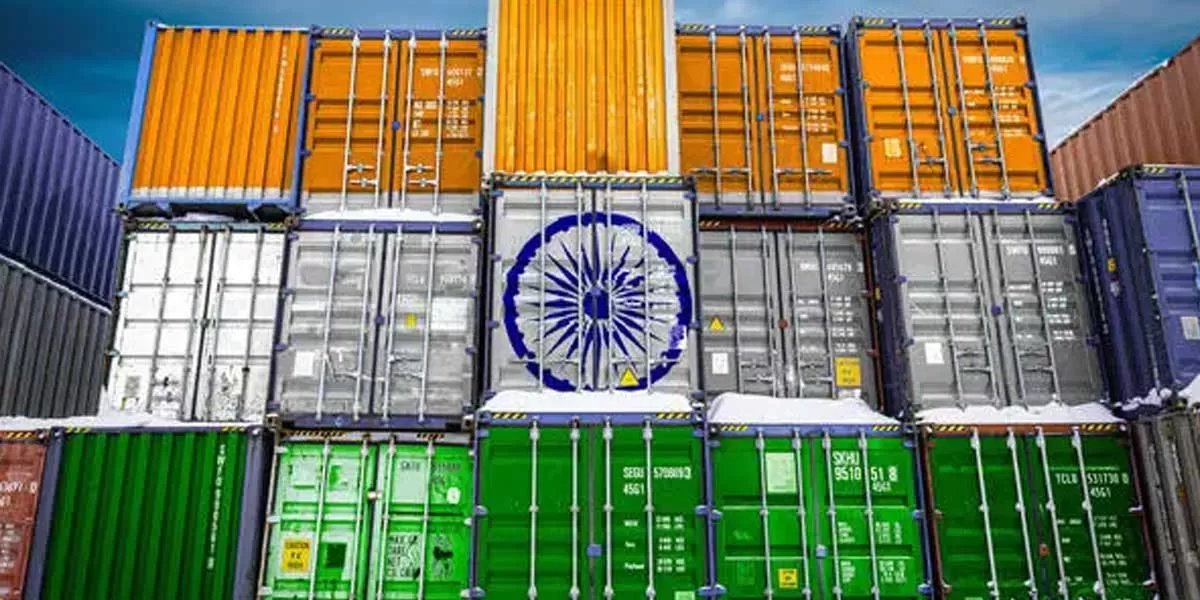
India-GCC trade reaches $162 billion, strengthening energy and defence
ECONOMY & POLICY

India-GCC trade reaches $162 billion, strengthening energy and defence

Aseem R Mahajan, Joint Secretary for the Gulf at the Ministry of External Affairs, stated that the Gulf Cooperation Council (GCC) now contributes 15% to India’s total trade, with bilateral trade between India and the region reaching $162 billion last year. Speaking at the 'India MENA Business Dialogue: Bridging Economics, Fostering Growth' organised by FICCI, Mahajan emphasised the growing multi-faceted partnership between India and the Gulf, which spans sectors such as energy, defence, security, and health.

Mahajan noted that while overall trade figures may fluctuate, India's exports to the GCC have consistently grown. He mentioned that India exports a variety of products, including food processing goods, jewellery, synthetic fibres and yarns, textiles, pharmaceuticals, and engineering goods, and chemical products, and highlighted these areas as having significant potential. He also pointed out that the India-UAE Comprehensive Economic Partnership Agreement (CEPA), signed in 2022, has significantly boosted trade relations with the UAE.

Mahajan highlighted key initiatives in financial connectivity, such as the on-going integration of India’s UPI system with the UAE’s JAYWAN card and RuPay. He also mentioned the operational local currency settlement system in Dirham and UPI as a model that other countries are considering. Emerging opportunities in education and connectivity, particularly through the India-Middle East-Europe Economic Corridor, were also noted as areas with significant potential.

Investment opportunities from Sovereign Wealth Funds in Saudi Arabia, the UAE, Qatar, and Kuwait are being closely monitored. Mahajan indicated strong interest in sectors like infrastructure, hydrocarbons, renewable energy, and technology, mentioning that diverse areas such as food processing, technology, health, hospitality, and tourism present potential for fruitful joint ventures and partnerships.

Aseem R Mahajan, Joint Secretary for the Gulf at the Ministry of External Affairs, stated that the Gulf Cooperation Council (GCC) now contributes 15% to India’s total trade, with bilateral trade between India and the region reaching $162 billion last year. Speaking at the 'India MENA Business Dialogue: Bridging Economics, Fostering Growth' organised by FICCI, Mahajan emphasised the growing multi-faceted partnership between India and the Gulf, which spans sectors such as energy, defence, security, and health.Mahajan noted that while overall trade figures may fluctuate, India's exports to the GCC have consistently grown. He mentioned that India exports a variety of products, including food processing goods, jewellery, synthetic fibres and yarns, textiles, pharmaceuticals, and engineering goods, and chemical products, and highlighted these areas as having significant potential. He also pointed out that the India-UAE Comprehensive Economic Partnership Agreement (CEPA), signed in 2022, has significantly boosted trade relations with the UAE.Mahajan highlighted key initiatives in financial connectivity, such as the on-going integration of India’s UPI system with the UAE’s JAYWAN card and RuPay. He also mentioned the operational local currency settlement system in Dirham and UPI as a model that other countries are considering. Emerging opportunities in education and connectivity, particularly through the India-Middle East-Europe Economic Corridor, were also noted as areas with significant potential.Investment opportunities from Sovereign Wealth Funds in Saudi Arabia, the UAE, Qatar, and Kuwait are being closely monitored. Mahajan indicated strong interest in sectors like infrastructure, hydrocarbons, renewable energy, and technology, mentioning that diverse areas such as food processing, technology, health, hospitality, and tourism present potential for fruitful joint ventures and partnerships.

Next Story
Infrastructure Urban

Implementation Status of Jal Jeevan Mission

Since August 2019 the Government has implemented Jal Jeevan Mission to provide assured potable water through household tap connections in rural India. At the start of the mission only 32.3 million (mn) rural households, representing 16.7 per cent, were reported to have tap water connections. States and union territories have reported that 125.8 mn additional rural households have since been provided with tap connections. As a result, of about 193.6 mn rural households roughly 158.2 mn, or 81.71 per cent, are reported to have tap water supply at home.\n\nThe State, district and village level st..

Next Story
Infrastructure Urban

Jal Jeevan Mission Reaches Eighty One Per Cent Rural Coverage

The Government reported substantial progress under the Jal Jeevan Mission, launched in August 2019 to provide tap water to every rural household. At launch only 32.3 million (mn) rural households had tap connections and states and Union territories reported provision of 125.8 mn additional households by March 2026. Consequently, out of about 193.6 mn rural households around 158.2 mn, or 81.71 per cent, are reported to have tap water at home. The Finance Minister announced extension of the mission until 2028 in the 2025-26 budget speech. The Swachh Bharat Mission Grameen, launched in October 20..

Next Story
Infrastructure Urban

Empowering Local Governance for Sustainable Rural Water Supply

The Ministry of Jal Shakti has aligned the Jal Jeevan Mission (JJM) with the 73rd Amendment to strengthen village level planning and community ownership of water supply. Gram Panchayats, village water and sanitation committees and Pani Samitis are to plan, implement, manage and maintain piped water systems, with gram sabha processes formalising handover and oversight. Implementation support agencies including non government organisations, community based organisations and self help groups have been empanelled to train local committees and promote women participation. Under JJM, the department ..

Advertisement

Subscribe to Our Newsletter

Get daily newsletters around different themes from Construction world.

STAY CONNECTED

Advertisement

Advertisement

Advertisement