+
India Shares PFM Expertise With Global South At New Delhi Seminar
ECONOMY & POLICY

India Shares PFM Expertise With Global South At New Delhi Seminar

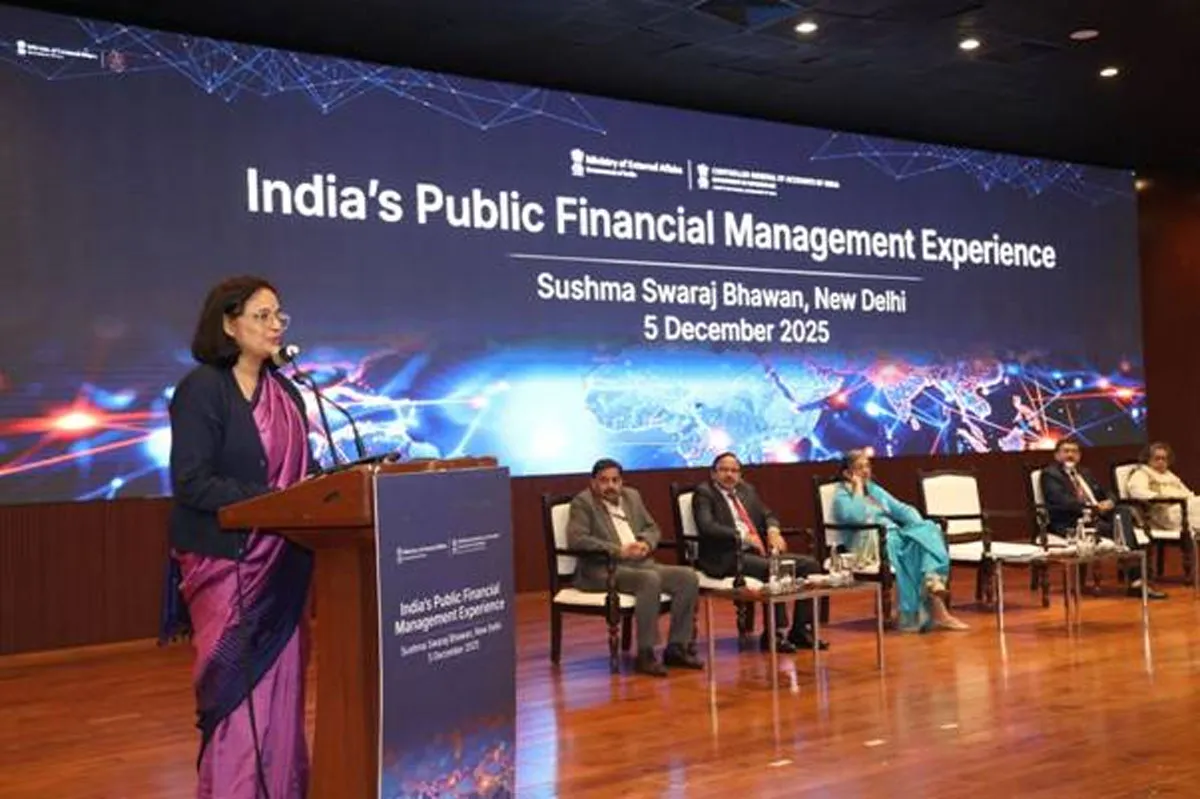
The Office of the Controller General of Accounts (CGA), Ministry of Finance, in collaboration with the Ministry of External Affairs (MEA), hosted a high-level seminar in New Delhi on India’s Public Financial Management (PFM) experience for countries of the Global South. Senior diplomats, heads of Missions and PFM specialists from partner nations including Guyana, Cuba, Mauritius, Maldives, Timor-Leste and Fiji participated. Many of these countries are already working with India through development cooperation and Digital Public Infrastructure (DPI) partnerships.

Designed as a platform for technical dialogue and knowledge sharing, the seminar enabled participating countries to exchange experiences on treasury reform, fund-flow systems, audit frameworks and public expenditure management. Delegates engaged actively, seeking detailed clarifications on India’s digital-first PFM systems and sharing their own reform journeys — reflecting a growing convergence of challenges across the Global South.

In her keynote address, Smt Anuradha Thakur, Secretary, Department of Economic Affairs, outlined India’s macro-fiscal reforms over the past decade. She emphasised that effective implementation mechanisms are as important as policy frameworks, and that India’s public finance management is anchored in digital systems. These reforms have delivered substantial fiscal savings, expanding space for capital expenditure while maintaining discipline.

She highlighted the Public Financial Management System (PFMS) as India’s unified, real-time platform for monitoring fund flows from the Union Government to states, agencies and beneficiaries. She also underscored the institutional role of the Civil Accounts Organisation in managing PFMS.

Smt Thakur noted that integrating PFMS with digital payments and Direct Benefit Transfer (DBT) has ensured subsidies and welfare support reach citizens directly, minimising leakages. Digital tools such as e-invoicing, e-way bills and faceless tax assessments have widened the tax base and reduced evasion, strengthening revenues without increasing tax rates. She added that India’s fiscal consolidation journey shows the value of rules-based policy, mandatory disclosures and strong federal coordination.

Speaking on behalf of the MEA, Secretary (Economic Relations) Shri Sudhakar Dalela commended India’s globally recognised DPI achievements, including digital identity, instant payments and secure data-sharing. He highlighted India’s growing role in sharing digital public goods and PFM tools with countries across Africa, Latin America and Asia through MoUs, pilot implementations and capacity-building efforts. He reaffirmed India’s commitment to long-term, customised partnerships under MEA’s Development Partnership Administration.

Earlier, Controller General of Accounts Smt TCA Kalyani emphasised India’s ethos of custodial integrity and the centrality of treasury discipline in governance. She discussed how PFMS has transformed fund routing through real-time visibility, automated reconciliation and citizen-verified delivery. She also shared experiences with DBT implementation, Single Nodal Agency models and liquidity consolidation, reaffirming India’s readiness to help partner nations design transparent and efficient PFM systems.

Technical sessions featured presentations on FRBM reforms, GST implementation, the Government e-Marketplace, digital PFM architecture, India Stack DPIs, DBT mechanisms and external audit practices. Delegates sought detailed insights into reconciliation frameworks, digital treasury models, procurement transparency and payment verification systems. Many Missions also shared domestic challenges and expressed interest in adopting parts of India’s digital architecture.

The seminar also served as a precursor to India’s proposal to establish a Public Financial Management Forum or Alliance for the Global South, aimed at institutionalising dialogue, capacity-sharing and co-creation of PFM reforms. The envisaged platform will cover treasury modernisation, liquidity management, DPI-enabled PFM tools, citizen benefit delivery and accountability frameworks.

The seminar concluded with a shared commitment to strengthening public finance systems across the Global South through digital innovation, institutional reforms and long-term collaboration with India.

The Office of the Controller General of Accounts (CGA), Ministry of Finance, in collaboration with the Ministry of External Affairs (MEA), hosted a high-level seminar in New Delhi on India’s Public Financial Management (PFM) experience for countries of the Global South. Senior diplomats, heads of Missions and PFM specialists from partner nations including Guyana, Cuba, Mauritius, Maldives, Timor-Leste and Fiji participated. Many of these countries are already working with India through development cooperation and Digital Public Infrastructure (DPI) partnerships. Designed as a platform for technical dialogue and knowledge sharing, the seminar enabled participating countries to exchange experiences on treasury reform, fund-flow systems, audit frameworks and public expenditure management. Delegates engaged actively, seeking detailed clarifications on India’s digital-first PFM systems and sharing their own reform journeys — reflecting a growing convergence of challenges across the Global South. In her keynote address, Smt Anuradha Thakur, Secretary, Department of Economic Affairs, outlined India’s macro-fiscal reforms over the past decade. She emphasised that effective implementation mechanisms are as important as policy frameworks, and that India’s public finance management is anchored in digital systems. These reforms have delivered substantial fiscal savings, expanding space for capital expenditure while maintaining discipline. She highlighted the Public Financial Management System (PFMS) as India’s unified, real-time platform for monitoring fund flows from the Union Government to states, agencies and beneficiaries. She also underscored the institutional role of the Civil Accounts Organisation in managing PFMS. Smt Thakur noted that integrating PFMS with digital payments and Direct Benefit Transfer (DBT) has ensured subsidies and welfare support reach citizens directly, minimising leakages. Digital tools such as e-invoicing, e-way bills and faceless tax assessments have widened the tax base and reduced evasion, strengthening revenues without increasing tax rates. She added that India’s fiscal consolidation journey shows the value of rules-based policy, mandatory disclosures and strong federal coordination. Speaking on behalf of the MEA, Secretary (Economic Relations) Shri Sudhakar Dalela commended India’s globally recognised DPI achievements, including digital identity, instant payments and secure data-sharing. He highlighted India’s growing role in sharing digital public goods and PFM tools with countries across Africa, Latin America and Asia through MoUs, pilot implementations and capacity-building efforts. He reaffirmed India’s commitment to long-term, customised partnerships under MEA’s Development Partnership Administration. Earlier, Controller General of Accounts Smt TCA Kalyani emphasised India’s ethos of custodial integrity and the centrality of treasury discipline in governance. She discussed how PFMS has transformed fund routing through real-time visibility, automated reconciliation and citizen-verified delivery. She also shared experiences with DBT implementation, Single Nodal Agency models and liquidity consolidation, reaffirming India’s readiness to help partner nations design transparent and efficient PFM systems. Technical sessions featured presentations on FRBM reforms, GST implementation, the Government e-Marketplace, digital PFM architecture, India Stack DPIs, DBT mechanisms and external audit practices. Delegates sought detailed insights into reconciliation frameworks, digital treasury models, procurement transparency and payment verification systems. Many Missions also shared domestic challenges and expressed interest in adopting parts of India’s digital architecture. The seminar also served as a precursor to India’s proposal to establish a Public Financial Management Forum or Alliance for the Global South, aimed at institutionalising dialogue, capacity-sharing and co-creation of PFM reforms. The envisaged platform will cover treasury modernisation, liquidity management, DPI-enabled PFM tools, citizen benefit delivery and accountability frameworks. The seminar concluded with a shared commitment to strengthening public finance systems across the Global South through digital innovation, institutional reforms and long-term collaboration with India.

Next Story
Infrastructure Transport

Lucknow Metro East-West Corridor Consultancy Contract Awarded

The Uttar Pradesh Metro Rail Corporation has awarded the first construction-related consultancy contract for the Lucknow Metro East West Corridor to a joint venture of AYESA Ingenieria Arquitectura SAU and AYESA India Pvt Ltd. The firm was declared the lowest bidder for the Detailed Design Consultant contract for Lucknow Metro Line-2 under Phase 1B and the contract was recommended following the financial bid. The contract is valued at Rs 159.0 million (mn), covering design services for the corridor. Lucknow Metro Line-2 envisages the construction of an 11.165 kilometre corridor connecting Cha..

Next Story
Infrastructure Urban

Div Com Kashmir Urges Fast Tracking Of Jhelum Water Transport Project

The Divisional Commissioner of Kashmir has called for the fast-tracking of the Jhelum water transport project, urging district administrations and relevant agencies to accelerate planning and clearances. In a meeting convened at the divisional headquarters, the commissioner instructed officials from irrigation, public health engineering and municipal departments to prioritise the project and coordinate survey and design work. The directive emphasised removal of administrative bottlenecks and close monitoring to ensure timely mobilisation of resources and contractors. Officials were told to in..

Next Story
Infrastructure Urban

Interarch Reports Strong Q3 And Nine Month Results

Interarch Building Solutions Limited reported unaudited results for the third quarter and nine months ended 31 December 2025, recording strong revenue growth driven by execution and a robust order book. Net revenue for the third quarter rose by 43.7 per cent to Rs 5.225 billion (bn), compared with Rs 3.636 bn a year earlier, reflecting heightened demand in pre-engineered building projects. The company’s total order book as at 31 January 2026 stood at Rs 16.85 bn, supporting near-term visibility. EBITDA excluding other income for the quarter increased by 43.2 per cent to Rs 503 million (mn),..

Advertisement

Subscribe to Our Newsletter

Get daily newsletters around different themes from Construction world.

STAY CONNECTED

Advertisement

Advertisement

Advertisement

Open In App