India’s Electronics Output Grows Sixfold Amid Policy Push
ECONOMY & POLICY

India’s Electronics Output Grows Sixfold Amid Policy Push

Electronics and semiconductors have become foundational industries for India, underpinning economic activity across nearly every sector and shaping the daily lives of citizens. The Government’s policy framework is guided by the Prime Minister’s vision of Atma Nirbhar Bharat and Make in India, with a systematic approach to strengthening manufacturing across the entire electronics and semiconductor value chain.

PLI Programmes Driving Manufacturing Growth

To accelerate domestic production, the Government launched the Production Linked Incentive (PLI) scheme for large-scale electronics manufacturing in 2020, targeting mobile phones and key components. The scheme has attracted investment of Rs 14.065 billion.

A separate PLI scheme for IT hardware is promoting the manufacturing of laptops, tablets, servers and ultra-small form factor devices, drawing investment of Rs 846 million to date. Reforms in taxation, customs duty and FDI have further strengthened the ecosystem.

India Emerges as a Major Electronics Producer

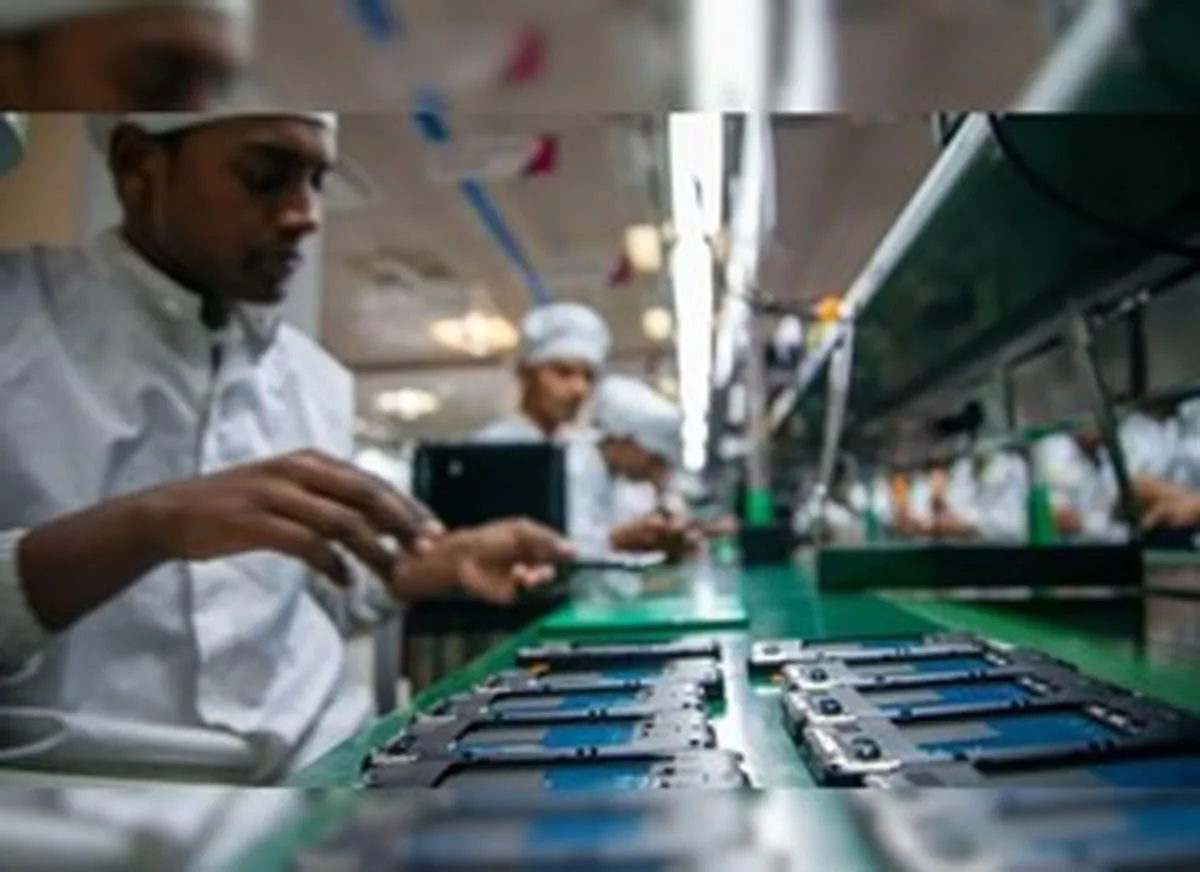
Due to sustained policy support, India’s electronics manufacturing output has grown nearly sixfold over the past 11 years — rising from Rs 190 billion in 2014–15 to Rs 1.132 trillion in 2024–25.

Mobile manufacturing has expanded sharply, with the number of units increasing from two to more than 300. Since the launch of the PLI for large-scale electronics, mobile production has risen from Rs 220 billion in 2020–21 to Rs 550 billion.

Exports have also surged. Electronics exports have increased eightfold from Rs 38 billion in 2014–15 to Rs 326 billion in 2024–25, making electronics India’s third-largest export category. Mobile exports alone have jumped from Rs 22 billion to over Rs 220 billion.

The electronics sector now employs an estimated 2.5 million people.

Deepening the Value Chain: ECMS Scheme

To strengthen upstream capabilities, the Government launched the Electronics Components Manufacturing Scheme (ECMS) in 2025, focusing on printed circuit boards, electrical and mechanical components, camera modules and more. Against expected proposals of Rs 59.35 billion, the Government received investment commitments totalling Rs 115 billion.

Semicon India: Building a Complete Semiconductor Ecosystem

Building on the electronics manufacturing boom, the Government launched the Semicon India Programme in 2022 to develop an end-to-end semiconductor ecosystem — including chip design, fabrication, assembly, testing and packaging — along with skilled talent.

In under three years, ten units with investment totalling Rs 160 billion have been approved. These include silicon fabs, silicon carbide fabs, advanced and memory packaging facilities, supplying chips for appliances, industrial electronics, automotive, telecom, aerospace and power electronics.

To leverage India’s strength in chip design, the Design Linked Incentive (DLI) scheme is supporting 24 chip and SoC designs for sectors including satellite communications, drones, surveillance, IoT, lighting, AI devices, telecom and smart metering.

Under the Chips to Start-ups programme, design tools have been provided to 394 universities and start-ups. Designers from more than 46 universities have already fabricated chips at Semiconductor Laboratory, Mohali.

Almost all major global semiconductor design companies now operate design centres in India, with cutting-edge technologies — including 2 nm chips — being designed by Indian engineers.

Ecosystem Expansion and Supply Chain Development

Encouraged by Government policies and strong domestic demand, companies in specialised gases, materials, components, tools and warehousing are expanding their presence in India. Policy measures related to domestic content requirements, BIS standards and taxation are helping develop a resilient local supply chain.

According to DGCIS data, India imported electronic goods worth USD 98.6 billion in FY 2024–25 and exported around USD 38.5 billion. Despite this gap, India is rapidly emerging as a trusted global partner in electronics and semiconductors due to coordinated policy efforts.

This information was provided by Shri Ashwini Vaishnaw, Union Minister for Electronics and Information Technology, in the Rajya Sabha on 5 December 2025.

Electronics and semiconductors have become foundational industries for India, underpinning economic activity across nearly every sector and shaping the daily lives of citizens. The Government’s policy framework is guided by the Prime Minister’s vision of Atma Nirbhar Bharat and Make in India, with a systematic approach to strengthening manufacturing across the entire electronics and semiconductor value chain. PLI Programmes Driving Manufacturing Growth To accelerate domestic production, the Government launched the Production Linked Incentive (PLI) scheme for large-scale electronics manufacturing in 2020, targeting mobile phones and key components. The scheme has attracted investment of Rs 14.065 billion. A separate PLI scheme for IT hardware is promoting the manufacturing of laptops, tablets, servers and ultra-small form factor devices, drawing investment of Rs 846 million to date. Reforms in taxation, customs duty and FDI have further strengthened the ecosystem. India Emerges as a Major Electronics Producer Due to sustained policy support, India’s electronics manufacturing output has grown nearly sixfold over the past 11 years — rising from Rs 190 billion in 2014–15 to Rs 1.132 trillion in 2024–25. Mobile manufacturing has expanded sharply, with the number of units increasing from two to more than 300. Since the launch of the PLI for large-scale electronics, mobile production has risen from Rs 220 billion in 2020–21 to Rs 550 billion. Exports have also surged. Electronics exports have increased eightfold from Rs 38 billion in 2014–15 to Rs 326 billion in 2024–25, making electronics India’s third-largest export category. Mobile exports alone have jumped from Rs 22 billion to over Rs 220 billion. The electronics sector now employs an estimated 2.5 million people. Deepening the Value Chain: ECMS Scheme To strengthen upstream capabilities, the Government launched the Electronics Components Manufacturing Scheme (ECMS) in 2025, focusing on printed circuit boards, electrical and mechanical components, camera modules and more. Against expected proposals of Rs 59.35 billion, the Government received investment commitments totalling Rs 115 billion. Semicon India: Building a Complete Semiconductor Ecosystem Building on the electronics manufacturing boom, the Government launched the Semicon India Programme in 2022 to develop an end-to-end semiconductor ecosystem — including chip design, fabrication, assembly, testing and packaging — along with skilled talent. In under three years, ten units with investment totalling Rs 160 billion have been approved. These include silicon fabs, silicon carbide fabs, advanced and memory packaging facilities, supplying chips for appliances, industrial electronics, automotive, telecom, aerospace and power electronics. To leverage India’s strength in chip design, the Design Linked Incentive (DLI) scheme is supporting 24 chip and SoC designs for sectors including satellite communications, drones, surveillance, IoT, lighting, AI devices, telecom and smart metering. Under the Chips to Start-ups programme, design tools have been provided to 394 universities and start-ups. Designers from more than 46 universities have already fabricated chips at Semiconductor Laboratory, Mohali. Almost all major global semiconductor design companies now operate design centres in India, with cutting-edge technologies — including 2 nm chips — being designed by Indian engineers. Ecosystem Expansion and Supply Chain Development Encouraged by Government policies and strong domestic demand, companies in specialised gases, materials, components, tools and warehousing are expanding their presence in India. Policy measures related to domestic content requirements, BIS standards and taxation are helping develop a resilient local supply chain. According to DGCIS data, India imported electronic goods worth USD 98.6 billion in FY 2024–25 and exported around USD 38.5 billion. Despite this gap, India is rapidly emerging as a trusted global partner in electronics and semiconductors due to coordinated policy efforts. This information was provided by Shri Ashwini Vaishnaw, Union Minister for Electronics and Information Technology, in the Rajya Sabha on 5 December 2025.

Next Story
Infrastructure Urban

Centre Boosts FPO Growth With New Credit And Market Support

The Government is implementing the Central Sector Scheme on the formation and promotion of 10,000 Farmer Producer Organisations (FPOs), under which all 10,000 FPOs have now been registered. The scheme provides Rs 1.8 million per FPO for three years as management support, a matching equity grant of up to Rs 1.5 million, and a credit guarantee of up to Rs 0.02 billion through eligible lending institutions. It also offers assistance for training, market linkages and alignment with other schemes. FPOs receive support to obtain input licences for seed, fertiliser and pesticide supplies, as well as..

Next Story
Infrastructure Urban

PM-KISAN Drives Farm Income Gains And Rural Stability

The PM-KISAN scheme, a central sector initiative launched in February 2019, aims to support the financial needs of farmers holding cultivable land. Under the scheme, Rs 6,000 per year is transferred in three equal instalments to Aadhaar-seeded bank accounts through Direct Benefit Transfer. Eligibility is based primarily on cultivable landholding, with certain exclusions for individuals of higher economic status. A farmer-centric digital infrastructure ensures scheme benefits reach farmers across India without intermediaries. With full transparency in registration and verification, the Governm..

Next Story
Infrastructure Urban

Govt Extends Pro Tem Security Certificate To Two Years

In a further push to improve ease of doing business and ensure continuity for the telecom industry, the National Centre for Communication Security (NCCS) under the Department of Telecommunications has extended the validity of the Pro Tem Security Certification from six months to two years. The Pro Tem Certification, initially launched in October 2024 with a six-month validity, was designed to prevent business disruption for IP Router and Wi-Fi CPE products, which became subject to mandatory security certification from 1 October 2024. Under this certification, OEMs submit a declaration confirm..

Advertisement

Subscribe to Our Newsletter

Get daily newsletters around different themes from Construction world.

STAY CONNECTED

Advertisement

Advertisement

Advertisement

Advertisement

Open In App