ISRO’s IMAT Success Boosts Readiness for Maiden Gaganyaan Mission
ECONOMY & POLICY

ISRO’s IMAT Success Boosts Readiness for Maiden Gaganyaan Mission

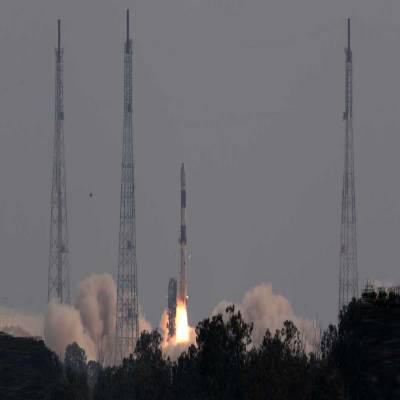
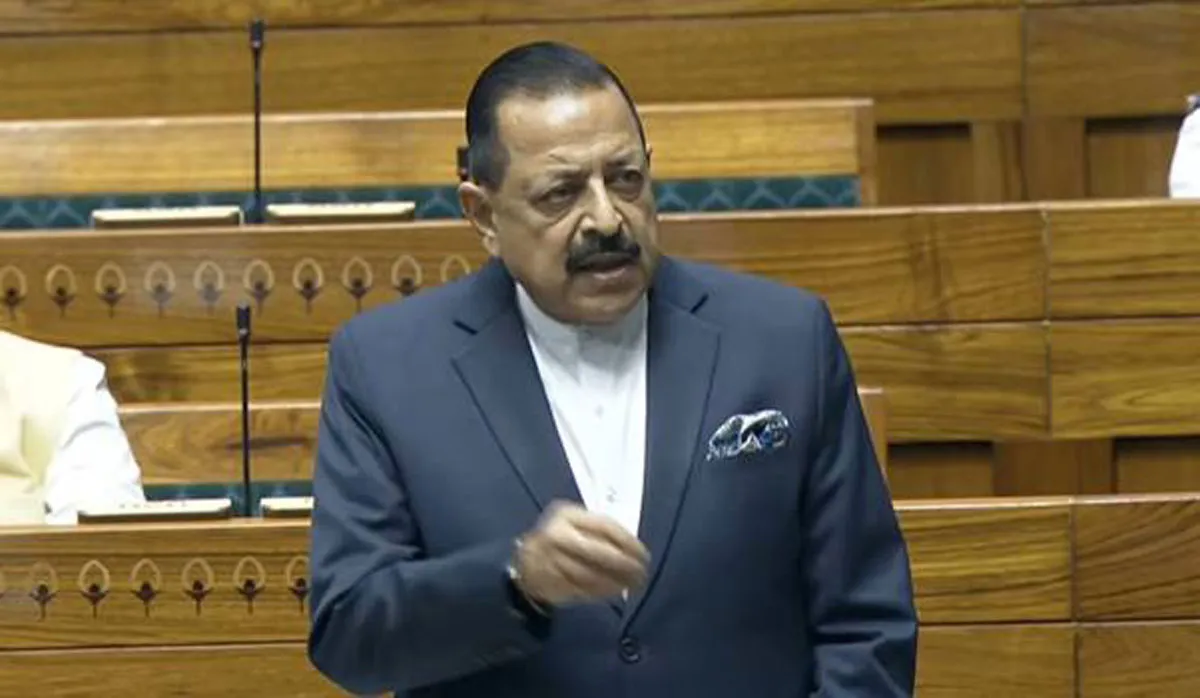
Union Minister of State for Science and Technology Dr Jitendra Singh informed Parliament that ISRO has achieved a key milestone in its preparations for India’s first human space mission with the successful completion of the Integrated Main Parachute Airdrop Test (IMAT). He said in the Lok Sabha that the test forms a central part of the qualification campaign for the Crew Module’s parachute-based deceleration system, one of the most vital elements in human-rating the mission.
According to Dr. Jitendra Singh, the IMAT recreated one of the most demanding descent conditions by intentionally delaying the disreefing sequence between the two main parachutes. This scenario generated asymmetric loads, and the system’s ability to withstand the resulting stress was successfully demonstrated. He noted that the positive outcome of this high-stress test moves the programme significantly closer to meeting the Government’s target of launching the first crewed Gaganyaan mission by early 2027.
Responding to parliamentarians’ questions on oversight and independent verification, Dr. Singh said that ISRO’s Crew Module parachute system undergoes multiple layers of external review. These include the Design Review Team, the Independent Assessment Committee and the National Advisory Panel for Human Rating & Certification – bodies comprising senior experts who examine every test result and design refinement.
On transparency concerns, the Minister added that ISRO continues to share key developments, including the outcomes of major qualification tests like IMAT, and will maintain this practice throughout the programme.
He further assured the House that crew safety remains the highest priority. As part of astronaut preparedness, training modules cover emergency simulations, survival tactics for off-nominal landings, operation of emergency kits and psychological conditioning. He also highlighted that the Human Rating Certification Board and the National Advisory Panel maintain strict oversight to ensure mission risks stay within globally accepted norms.
Dr. Singh said each successful test strengthens system reliability, crew readiness and recovery preparedness ahead of India’s historic human spaceflight.
News source: PIB

Union Minister of State for Science and Technology Dr Jitendra Singh informed Parliament that ISRO has achieved a key milestone in its preparations for India’s first human space mission with the successful completion of the Integrated Main Parachute Airdrop Test (IMAT). He said in the Lok Sabha that the test forms a central part of the qualification campaign for the Crew Module’s parachute-based deceleration system, one of the most vital elements in human-rating the mission.According to Dr. Jitendra Singh, the IMAT recreated one of the most demanding descent conditions by intentionally delaying the disreefing sequence between the two main parachutes. This scenario generated asymmetric loads, and the system’s ability to withstand the resulting stress was successfully demonstrated. He noted that the positive outcome of this high-stress test moves the programme significantly closer to meeting the Government’s target of launching the first crewed Gaganyaan mission by early 2027.Responding to parliamentarians’ questions on oversight and independent verification, Dr. Singh said that ISRO’s Crew Module parachute system undergoes multiple layers of external review. These include the Design Review Team, the Independent Assessment Committee and the National Advisory Panel for Human Rating & Certification – bodies comprising senior experts who examine every test result and design refinement.On transparency concerns, the Minister added that ISRO continues to share key developments, including the outcomes of major qualification tests like IMAT, and will maintain this practice throughout the programme.He further assured the House that crew safety remains the highest priority. As part of astronaut preparedness, training modules cover emergency simulations, survival tactics for off-nominal landings, operation of emergency kits and psychological conditioning. He also highlighted that the Human Rating Certification Board and the National Advisory Panel maintain strict oversight to ensure mission risks stay within globally accepted norms.Dr. Singh said each successful test strengthens system reliability, crew readiness and recovery preparedness ahead of India’s historic human spaceflight.News source: PIB

Next Story
Infrastructure Urban

Gyanesh Kumar Takes Charge as Chair of International IDEA Council

Chief Election Commissioner of India Gyanesh Kumar has assumed the Chairship of the Council of Member States of the International Institute for Democracy and Electoral Assistance for 2026. The ceremony in Stockholm was also attended by India’s Ambassador to Sweden, Anurag Bhushan. India, a founding member of International IDEA, has long contributed to the organisation’s governance and global democratic dialogue, and the new Chairship signals broad recognition of the Election Commission of India as a trusted and innovative election management institution.During his visit, Kumar held discuss..

Next Story
Infrastructure Energy

Coal Mines Boost Local Growth and Support India’s Energy Self-reliance

The Magadh and Amrapali coal mines in Jharkhand are playing a pivotal role in strengthening India’s energy security, contributing nearly half of Central Coalfields Limited’s total coal production in 2024–25. Both mines support the broader goal of ensuring steady coal availability for the power sector under the vision of Aatmanirbhar Bharat. Magadh has estimated mineable reserves of 854.91 million tonnes, while Amrapali holds 456.34 million tonne. For FY 2025–26, the two are expected to generate net sales revenues of Rs 28.12 billion and Rs 23.67 billion respectively. Local development ..

Next Story
Infrastructure Energy

Coal Sector Boosts Output while Tightening Green and Safety Standards

India’s coal sector is set for a significant expansion, with a national raw coal production target of 1,157 million tonnes for 2025–26. Of this, Coal India is expected to produce 875 million tonnes, Singareni Collieries Company 72 million tonnes, and captive and commercial miners 210 million tonnes. The Ministry of Coal has also outlined a longer-term goal of raising domestic output to 1.5 billion tonnes by 2029–30 to meet rising energy demand and reduce reliance on imports.Coal producing PSUs continue to operate under strict environmental standards. Every new or expanding project underg..

Advertisement

Subscribe to Our Newsletter

Get daily newsletters around different themes from Construction world.

STAY CONNECTED

Advertisement

Advertisement

Advertisement

Advertisement

Get CW App