Jindal Stainless Reports 13.11% Dip in Q1FY25 Profit
ECONOMY & POLICY

Jindal Stainless Reports 13.11% Dip in Q1FY25 Profit

Jindal Stainless announced a 13.11% year-on-year (Y-o-Y) decline in net profit to ?6.48 billion for the April-to-June quarter (Q1FY25), down from ?7.46 billion in the corresponding period last year. The company's revenue from operations on a consolidated basis stood at ?94.30 billion, marking a 7.4% Y-o-Y decrease. Sequentially, revenue saw a slight dip of 0.3%, while net profit increased by 29.4%.

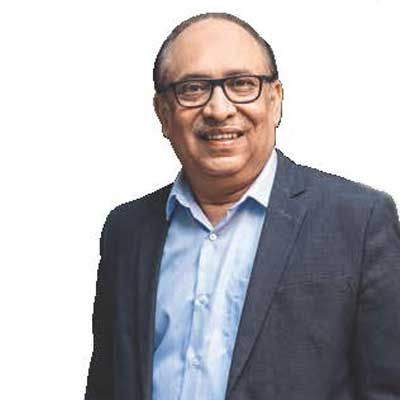
The board of Jindal Stainless has given in-principle approval to raise ?50 billion through equity and/or debt instruments. Managing Director Abhyuday Jindal stated that this resolution is aimed at preparing the company for various growth opportunities, both organic and inorganic.

?The domestic market is expected to expand, with newer sectors anticipated to grow even faster, driving increased demand in the stainless steel industry,? Jindal remarked.

The ongoing Red Sea issue has extended transit times and increased freight costs from India to the US and Europe, the company?s primary markets. ?The bigger impact this quarter was the availability and cost of containers,? Jindal explained during a media interaction post-results. The company is transitioning from container shipping to break-bulk to mitigate these challenges.

To counteract export disruptions, Jindal Stainless has increased sales in Southeast Asia and the Middle East and is exploring entry into the Japanese market. Despite the export challenges, the domestic market has shown steady growth, bolstered by government infrastructure investments. ?We are extremely positive on domestic demand, especially following the Budget outlay on infrastructure, railways, and defence,? Jindal noted.

Sales volumes for the company rose by 5.4% Y-o-Y. Jindal remains optimistic about export recovery, particularly in Europe, although the overall export guidance stays at 10-15%.

Jindal also emphasized the company's interest in partnering with the government on skill development initiatives and is exploring how to leverage government internship schemes for upskilling the stainless steel community.

Jindal Stainless announced a 13.11% year-on-year (Y-o-Y) decline in net profit to ?6.48 billion for the April-to-June quarter (Q1FY25), down from ?7.46 billion in the corresponding period last year. The company's revenue from operations on a consolidated basis stood at ?94.30 billion, marking a 7.4% Y-o-Y decrease. Sequentially, revenue saw a slight dip of 0.3%, while net profit increased by 29.4%. The board of Jindal Stainless has given in-principle approval to raise ?50 billion through equity and/or debt instruments. Managing Director Abhyuday Jindal stated that this resolution is aimed at preparing the company for various growth opportunities, both organic and inorganic. ?The domestic market is expected to expand, with newer sectors anticipated to grow even faster, driving increased demand in the stainless steel industry,? Jindal remarked. The ongoing Red Sea issue has extended transit times and increased freight costs from India to the US and Europe, the company?s primary markets. ?The bigger impact this quarter was the availability and cost of containers,? Jindal explained during a media interaction post-results. The company is transitioning from container shipping to break-bulk to mitigate these challenges. To counteract export disruptions, Jindal Stainless has increased sales in Southeast Asia and the Middle East and is exploring entry into the Japanese market. Despite the export challenges, the domestic market has shown steady growth, bolstered by government infrastructure investments. ?We are extremely positive on domestic demand, especially following the Budget outlay on infrastructure, railways, and defence,? Jindal noted. Sales volumes for the company rose by 5.4% Y-o-Y. Jindal remains optimistic about export recovery, particularly in Europe, although the overall export guidance stays at 10-15%. Jindal also emphasized the company's interest in partnering with the government on skill development initiatives and is exploring how to leverage government internship schemes for upskilling the stainless steel community.

Next Story
Equipment

BKT Partners All Teams in India’s Women’s T20 League

Balkrishna Industries (BKT), a global leader in the off-highway tyre market, announced its association as the Official Tyre Partner for all five teams competing in India’s premier women’s T20 championship – Mumbai Indians, Royal Challengers Bangalore, Delhi Capitals, Gujarat Giants, and UP Warriorz – for the upcoming season. This move reinforces BKT’s commitment to using sport as a platform for inclusion, opportunity, and long-term development.These partnerships reflect BKT’s belief in the transformative power of sport, particularly in advancing women’s participation and creating..

Next Story
Infrastructure Energy

Rajesh Power Secures 65 MW BESS Project in Gujarat

Rajesh Power Services has recently secured a 65 MW / 130 MWh standalone Battery Energy Storage System (BESS) project in Gujarat, marking its entry into utility-scale energy storage. The company received a Letter of Intent from Gujarat Urja Vikas Nigam for the project, which will be developed at Virpore under a tariff-based competitive bidding mechanism supported by Viability Gap Funding through the Power System Development Fund.The project is expected to be executed within 18 months from the signing of the Battery Energy Storage Purchase Agreement. With the ability to supply 65 MW of power for..

Next Story
Infrastructure Energy

ONGC Forms JV with MOL for Ethane Shipping Operations

Oil and Natural Gas Corporation (Oil and Natural Gas Corporation) has recently entered the ethane shipping segment through joint venture agreements with M/s Mitsui O.S.K. Lines Ltd (Mitsui O.S.K. Lines), Japan. The agreements involve equity participation in two joint venture entities—Bharat Ethane One IFSC Private Limited and Bharat Ethane Two IFSC Private Limited—registered at GIFT City, Gandhinagar.Under the arrangement, ONGC will subscribe to 2,00,000 equity shares of Rs 100 each in both entities, resulting in a 50 per cent equity holding in each joint venture, with the remaining stake ..

Advertisement

Subscribe to Our Newsletter

Get daily newsletters around different themes from Construction world.

STAY CONNECTED

Advertisement

Advertisement

Advertisement

Advertisement

Open In App