Karnataka Signs Rs 3.50-Bn Pact for Critical Minerals Refining Hub
ECONOMY & POLICY

Karnataka Signs Rs 3.50-Bn Pact for Critical Minerals Refining Hub

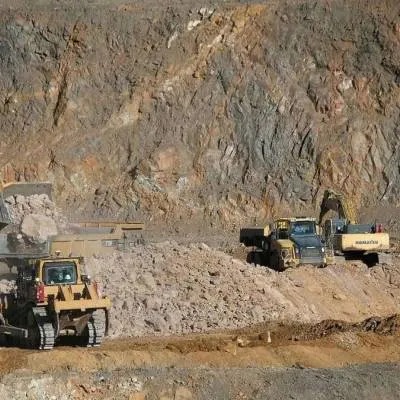
Karnataka has signed an MoU with Bengaluru-based MiniMines Cleantech Solutions to establish a Rs 3.50-billion Giga Critical Minerals Refining Complex in the city. The agreement, inked with the Department of Electronics, IT & Biotechnology, aims to strengthen India’s supply chain for high-purity materials crucial to electric mobility, clean energy and strategic sectors.

The proposed complex is projected to supply refined materials worth Rs 5–6 billion annually, reducing dependence on imports for industries such as electric vehicles, renewable energy, aerospace, defence and electronics. In its statement, the company said the project’s first phase will feature a refining capacity of 15,000 MTPA, generating an annual throughput of 13,400 tonne. It added that each Rs 10 million of MiniMines’ output is expected to create nearly Rs 30 million of downstream industrial value across associated supply chains.

The facility will deploy MiniMines’ patented Hybrid-Hydrometallurgy (HHM) process for lithium-ion battery recycling and will integrate the company’s developing HydroMag REE Loop technology for recovering rare-earth magnets. It will also house an R&D and training centre focused on workforce development, technology transfer and innovation in circular mineral processing.

Anupam Kumar, Co-founder and CEO, MiniMines, said the agreement marks a key step in strengthening India’s capability in critical mineral processing. “With this refining complex, we aim to build a domestic ecosystem capable of supplying high-purity materials needed for batteries, magnets and other clean energy technologies,” he said. “Our focus is to recover value from waste streams and reduce the country’s dependence on imported raw materials. We will be extracting in India and supplying to the world.”

The project is expected to generate more than 1,500 direct and indirect jobs and contribute around Rs 13 billion in annual turnover and nearly Rs 2 billion in GST revenue. Karnataka Minister for IT/BT and Panchayati Raj and Rural Development Priyank Kharge said MiniMines’ work in critical minerals and rare-earth recycling is a pivotal move toward self-reliance and a more sustainable future.

News source: The Hans India


Karnataka has signed an MoU with Bengaluru-based MiniMines Cleantech Solutions to establish a Rs 3.50-billion Giga Critical Minerals Refining Complex in the city. The agreement, inked with the Department of Electronics, IT & Biotechnology, aims to strengthen India’s supply chain for high-purity materials crucial to electric mobility, clean energy and strategic sectors.The proposed complex is projected to supply refined materials worth Rs 5–6 billion annually, reducing dependence on imports for industries such as electric vehicles, renewable energy, aerospace, defence and electronics. In its statement, the company said the project’s first phase will feature a refining capacity of 15,000 MTPA, generating an annual throughput of 13,400 tonne. It added that each Rs 10 million of MiniMines’ output is expected to create nearly Rs 30 million of downstream industrial value across associated supply chains.The facility will deploy MiniMines’ patented Hybrid-Hydrometallurgy (HHM) process for lithium-ion battery recycling and will integrate the company’s developing HydroMag REE Loop technology for recovering rare-earth magnets. It will also house an R&D and training centre focused on workforce development, technology transfer and innovation in circular mineral processing.Anupam Kumar, Co-founder and CEO, MiniMines, said the agreement marks a key step in strengthening India’s capability in critical mineral processing. “With this refining complex, we aim to build a domestic ecosystem capable of supplying high-purity materials needed for batteries, magnets and other clean energy technologies,” he said. “Our focus is to recover value from waste streams and reduce the country’s dependence on imported raw materials. We will be extracting in India and supplying to the world.”The project is expected to generate more than 1,500 direct and indirect jobs and contribute around Rs 13 billion in annual turnover and nearly Rs 2 billion in GST revenue. Karnataka Minister for IT/BT and Panchayati Raj and Rural Development Priyank Kharge said MiniMines’ work in critical minerals and rare-earth recycling is a pivotal move toward self-reliance and a more sustainable future.News source: The Hans India

Next Story
Infrastructure Urban

Rosatom Delivers Nuclear Fuel for Kudankulam Unit 3

Rosatom has recently supplied nuclear fuel for the initial loading of the VVER-1000 reactor core at Unit 3 of the Kudankulam Nuclear Power Plant, marking a key milestone in the second stage of the Russian-designed nuclear power project in southern India.The fuel was supplied by Rosatom’s Nuclear Fuel Division, managed by TVEL, and manufactured at the Novosibirsk Chemical Concentrates Plant. The delivery includes the initial reactor load along with reserve fuel assemblies and is part of a long-term contract covering the entire operational life of Units 3 and 4.Building on operational experien..

Next Story
Infrastructure Transport

CBL International Enables First LNG Bunkering at Xiaomo Port

CBL International recently completed the first-ever LNG bunkering operation at Xiaomo Port, supplying liquefied natural gas to vessels operated by BYD in support of its maritime decarbonisation strategy. The operation was facilitated through a physical supplier in collaboration with China National Offshore Oil Corporation (CNOOC), which supported the port’s inaugural LNG bunkering activity. The milestone represents a strategic expansion of CBL International's sustainable fuel offerings beyond biofuels, while also diversifying revenue streams. As global shipping intensifies efforts to cut em..

Next Story
Infrastructure Urban

Aimtron, Aurassure Partner for IoT Weather Systems

Aimtron Electronics has recently entered into an OEM manufacturing engagement with Aurassure to produce new-age, IoT-enabled weather and environmental monitoring systems in India. The collaboration supports the growing demand for real-time environmental intelligence across urban, industrial and infrastructure applications. The engagement comes as global focus on climate-risk management and data-driven planning accelerates. The global weather monitoring systems market, valued at around USD 2.1 billion in 2024, is projected to reach nearly USD 4.8 billion by 2034, driven by the rapid adoption o..

Advertisement

Subscribe to Our Newsletter

Get daily newsletters around different themes from Construction world.

STAY CONNECTED

Advertisement

Advertisement

Advertisement

Advertisement

Open In App