Kinara Capital Seeks Majority Stake Sale To Raise Funds
ECONOMY & POLICY

Kinara Capital Seeks Majority Stake Sale To Raise Funds

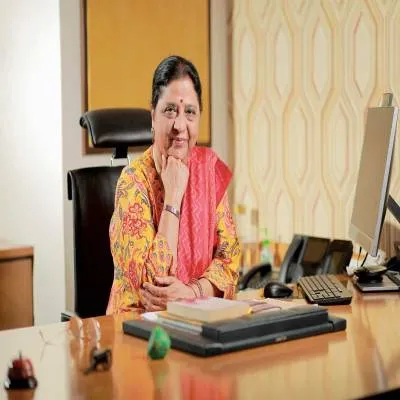
Crisis-hit non-bank financier Kinara Capital Pvt Ltd is seeking strategic investors—including fintech firms and other non-banking financial companies—to infuse fresh capital in exchange for a majority stake, founder and chief executive Hardika Shah said.

Shah aims to raise “a few hundred crores” by selling a controlling stake, enabling the company to restart lending operations. She noted that potential investors would likely want full strategic control, though discussions remain preliminary and names have not been disclosed.

Debt Crisis Deepens Backed by Gaja Capital and British International Investment, Kinara Capital provides secured and unsecured loans to small businesses and has been grappling with a liquidity crunch for several months. The firm reported its first-ever loss in 2024–25 due to rising bad loans. Matters worsened in July when a private-sector bank set off its loan against balances in Kinara’s account, prompting other lenders to issue recall notices. Subsequent credit downgrades pushed the lender into default-grade ratings.

Shah said Kinara has around 20 domestic and 11 international lenders, with total debt standing at Rs 14 billion as of August, nearly 70 per cent of which is owed to overseas creditors. Attempts to raise capital or sell portions of the loanbook failed to generate cash. “We just completely lost all liquidity,” Shah said, noting that potential equity proposals did not materialise.

In October 2022, the lender raised Rs 2 billion led by British International Investment, projecting growth to Rs 60 billion by 2025. Kinara was valued at Rs 10.6 billion as at 30 December 2024, according to Tracxn.

Operations At A Standstill Kinara has stopped issuing fresh loans and is prioritising recovery of existing dues. Shah said operations will resume once new capital is secured. The lender’s assets under management stood at Rs 28.31 billion at the end of 2024–25, down from Rs 31.42 billion the previous year.

Kinara has now reached a settlement with most domestic lenders, who will recover their principal and some interest. Foreign lenders had agreed to a standstill, and repayments have recently resumed. Shah added that the firm will continue to explore loan portfolio sales to generate liquidity for international lenders.

In August, Care Ratings downgraded Kinara after delays in servicing principal and interest on its non-convertible debentures. The rating agency flagged persistent slippages at 8 per cent in 2024–25, matching 2023–24 levels, alongside deterioration in asset quality and increased liquidity stress.

Kinara is among several non-bank lenders cleaning up their balance sheets after a boom in unsecured loans. As reported on 28 October, lenders such as Kinara Capital, Lendingkart, Aye Finance and Ashv Finance have scaled back unsecured lending following tighter regulatory scrutiny and reduced funding access. Many have resorted to selling or securitising unsecured loan portfolios or are considering such measures.

"Join industry leaders at RAHSTA Expo, India's premier platform for roads, highways and traffic infrastructure. Register now to explore innovations, network with experts and shape the future of mobility."

Crisis-hit non-bank financier Kinara Capital Pvt Ltd is seeking strategic investors—including fintech firms and other non-banking financial companies—to infuse fresh capital in exchange for a majority stake, founder and chief executive Hardika Shah said. Shah aims to raise “a few hundred crores” by selling a controlling stake, enabling the company to restart lending operations. She noted that potential investors would likely want full strategic control, though discussions remain preliminary and names have not been disclosed. Debt Crisis Deepens Backed by Gaja Capital and British International Investment, Kinara Capital provides secured and unsecured loans to small businesses and has been grappling with a liquidity crunch for several months. The firm reported its first-ever loss in 2024–25 due to rising bad loans. Matters worsened in July when a private-sector bank set off its loan against balances in Kinara’s account, prompting other lenders to issue recall notices. Subsequent credit downgrades pushed the lender into default-grade ratings. Shah said Kinara has around 20 domestic and 11 international lenders, with total debt standing at Rs 14 billion as of August, nearly 70 per cent of which is owed to overseas creditors. Attempts to raise capital or sell portions of the loanbook failed to generate cash. “We just completely lost all liquidity,” Shah said, noting that potential equity proposals did not materialise. In October 2022, the lender raised Rs 2 billion led by British International Investment, projecting growth to Rs 60 billion by 2025. Kinara was valued at Rs 10.6 billion as at 30 December 2024, according to Tracxn. Operations At A Standstill Kinara has stopped issuing fresh loans and is prioritising recovery of existing dues. Shah said operations will resume once new capital is secured. The lender’s assets under management stood at Rs 28.31 billion at the end of 2024–25, down from Rs 31.42 billion the previous year. Kinara has now reached a settlement with most domestic lenders, who will recover their principal and some interest. Foreign lenders had agreed to a standstill, and repayments have recently resumed. Shah added that the firm will continue to explore loan portfolio sales to generate liquidity for international lenders. In August, Care Ratings downgraded Kinara after delays in servicing principal and interest on its non-convertible debentures. The rating agency flagged persistent slippages at 8 per cent in 2024–25, matching 2023–24 levels, alongside deterioration in asset quality and increased liquidity stress. Kinara is among several non-bank lenders cleaning up their balance sheets after a boom in unsecured loans. As reported on 28 October, lenders such as Kinara Capital, Lendingkart, Aye Finance and Ashv Finance have scaled back unsecured lending following tighter regulatory scrutiny and reduced funding access. Many have resorted to selling or securitising unsecured loan portfolios or are considering such measures.

Next Story
Real Estate

Pecan Realty Completes Rs 1.5 Billion Transactions

Pecan Realty has recently completed four institutional transactions worth over Rs 1.5 billion over the past two years, strengthening its position as an execution-led real estate platform. The deals include resolution-led acquisitions, structured finance transactions and capital partnerships across its development portfolio.The transactions covered acquisitions through the National Company Law Tribunal process and helped provide repayment or exits to both private and public sector lenders. The company said the deals demonstrate its ability to resolve complex project situations, work with instit..

Next Story
Real Estate

SNN Estates Expands North Bengaluru Housing Project

SNN Estates has announced an expansion of its SNN Estates Felicity residential project in North Bengaluru following strong buyer demand, with 75 per cent of the first-phase inventory sold within three days of launch.The developer will add 76 apartments in the new phase, taking the project's estimated revenue potential to around Rs 1,000 crore upon completion of Phase 2.Spread across 6.5 acres in Rachenahalli, near Manyata Tech Park, the project comprises 604 apartments in 1.5, 2, 2.5, 3 and 4 BHK configurations. The development includes a 50,000-sq-ft clubhouse with amenities such as sports co..

Next Story
Infrastructure Urban

SCG Drives ASEAN Industrial Transformation Strategy

SCG is strengthening its focus on ASEAN as a key growth region by advancing industrial transformation, enhancing competitiveness and building resilient regional value chains. Thammasak Sethaudom, President and Chief Executive Officer, SCG, highlighted the need for industries to continuously develop capabilities, strengthen resilience and deepen regional cooperation to achieve sustainable long-term growth.SCG views ASEAN as an important growth engine alongside China, supported by favourable demographics, trade connectivity and investment flows. With ASEAN’s GDP projected to grow by around 4.7..

Advertisement

Subscribe to Our Newsletter

Get daily newsletters around different themes from Construction world.

STAY CONNECTED

Advertisement

Advertisement

Advertisement