



KVIC Disburses Rs 3 Billion in Subsidies via PMEGP
ECONOMY & POLICY

KVIC Disburses Rs 3 Billion in Subsidies via PMEGP

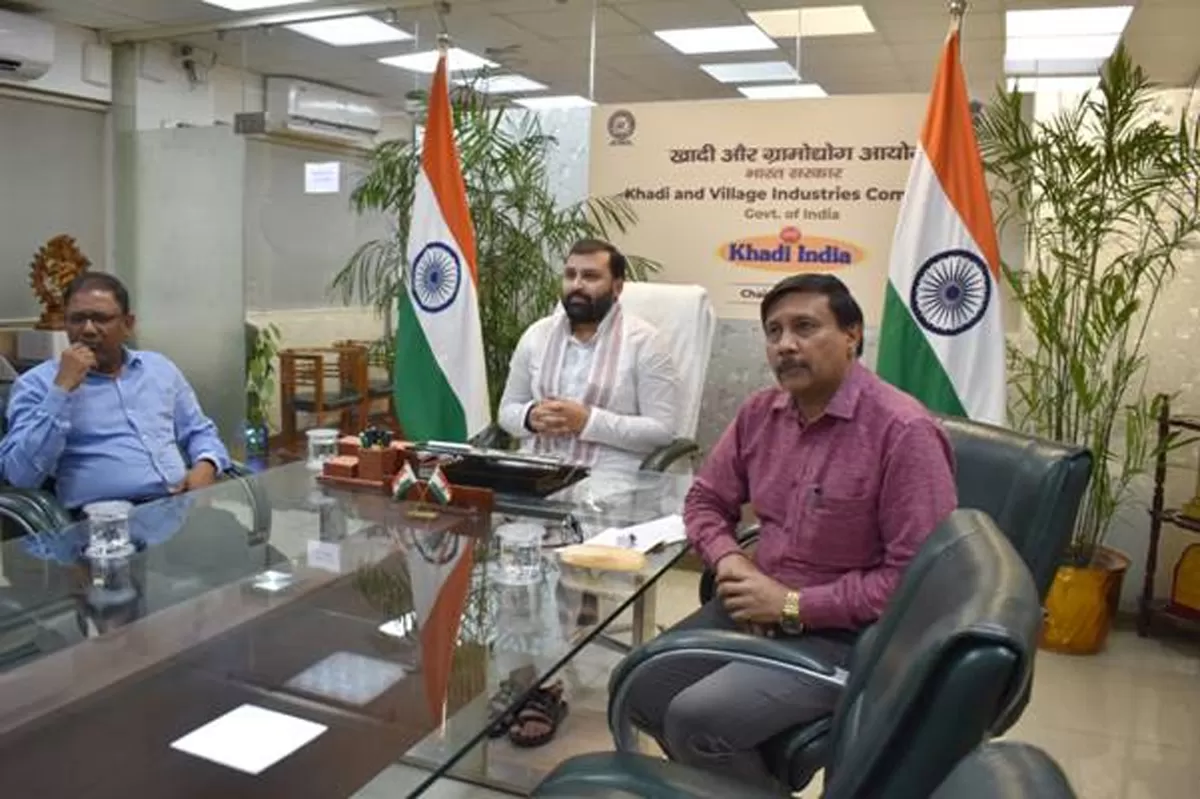
The Khadi and Village Industries Commission (KVIC) has disbursed Rs 3 billion in margin money subsidies to 11,480 service-sector beneficiaries across India under the Prime Minister’s Employment Generation Programme (PMEGP). This move follows the sanctioning of loan amounts totalling Rs 9.06 billion. The online disbursement was initiated on 17 June 2025 by KVIC Chairman Manoj Kumar, along with senior officials, from the Rajghat office in New Delhi.

Chairman Kumar remarked that under Prime Minister Narendra Modi’s leadership, PMEGP has become a powerful tool for fostering employment and self-reliance in India’s villages. He described the scheme as more than financial assistance—calling it a social movement connecting youth, women, and artisans with entrepreneurship opportunities.

Subsidies were distributed across six regions:

  • Central Zone (Uttar Pradesh, Madhya Pradesh, Chhattisgarh, Uttarakhand): Rs 720 million for 2,403 projects, against Rs 2.18 billion in loans.
  • East Zone (Bihar, Jharkhand, Odisha, West Bengal, Andaman & Nicobar Islands): Rs 220 million for 996 projects, with loans of Rs 710 million.
  • North Zone (Punjab, Haryana, Himachal Pradesh, J&K, Ladakh, Rajasthan, Chandigarh): Rs 610 million for 2,713 projects, alongside Rs 1.84 billion in loans.
  • Northeast Zone (Assam, Manipur, Meghalaya, Mizoram, Nagaland, Sikkim, Tripura): Rs 20 million for 81 projects.
  • South Zone (Andhra Pradesh, Telangana, Karnataka, Tamil Nadu, Kerala, Puducherry): Rs 1.16 billion for 4,565 projects, matched with Rs 3.43 billion in loans.
  • West Zone (Maharashtra, Gujarat, Goa): Rs 260 million for 722 projects, alongside Rs 820 million in loans.

Since inception, the PMEGP scheme has supported the creation of over 1.018 million micro-enterprises, securing loans of Rs 733.48 billion and subsidy assistance of Rs 271.66 billion. The programme has generated direct and indirect employment for more than 9 million people, making it a flagship initiative in promoting self-employment and rural entrepreneurship.

This latest round of subsidy disbursement reaffirms KVIC’s pivotal role in catalysing economic development at the grassroots level. By empowering underserved communities with financial and institutional support, the PMEGP continues to realise the vision of a self-reliant and economically vibrant India.


The Khadi and Village Industries Commission (KVIC) has disbursed Rs 3 billion in margin money subsidies to 11,480 service-sector beneficiaries across India under the Prime Minister’s Employment Generation Programme (PMEGP). This move follows the sanctioning of loan amounts totalling Rs 9.06 billion. The online disbursement was initiated on 17 June 2025 by KVIC Chairman Manoj Kumar, along with senior officials, from the Rajghat office in New Delhi.Chairman Kumar remarked that under Prime Minister Narendra Modi’s leadership, PMEGP has become a powerful tool for fostering employment and self-reliance in India’s villages. He described the scheme as more than financial assistance—calling it a social movement connecting youth, women, and artisans with entrepreneurship opportunities.Subsidies were distributed across six regions:Central Zone (Uttar Pradesh, Madhya Pradesh, Chhattisgarh, Uttarakhand): Rs 720 million for 2,403 projects, against Rs 2.18 billion in loans.East Zone (Bihar, Jharkhand, Odisha, West Bengal, Andaman & Nicobar Islands): Rs 220 million for 996 projects, with loans of Rs 710 million.North Zone (Punjab, Haryana, Himachal Pradesh, J&K, Ladakh, Rajasthan, Chandigarh): Rs 610 million for 2,713 projects, alongside Rs 1.84 billion in loans.Northeast Zone (Assam, Manipur, Meghalaya, Mizoram, Nagaland, Sikkim, Tripura): Rs 20 million for 81 projects.South Zone (Andhra Pradesh, Telangana, Karnataka, Tamil Nadu, Kerala, Puducherry): Rs 1.16 billion for 4,565 projects, matched with Rs 3.43 billion in loans.West Zone (Maharashtra, Gujarat, Goa): Rs 260 million for 722 projects, alongside Rs 820 million in loans.Since inception, the PMEGP scheme has supported the creation of over 1.018 million micro-enterprises, securing loans of Rs 733.48 billion and subsidy assistance of Rs 271.66 billion. The programme has generated direct and indirect employment for more than 9 million people, making it a flagship initiative in promoting self-employment and rural entrepreneurship.This latest round of subsidy disbursement reaffirms KVIC’s pivotal role in catalysing economic development at the grassroots level. By empowering underserved communities with financial and institutional support, the PMEGP continues to realise the vision of a self-reliant and economically vibrant India.

Next Story
Technology

AI-Enabled Workflows Lift Profitability and Productivity

Organisations modernising frontline workflows with artificial intelligence, automation and real-time data are reporting stronger financial performance, higher productivity and improved employee engagement, according to a global study by Zebra Technologies and Oxford Economics.The research covered 1,000 senior leaders across retail, manufacturing, transportation and logistics in the US, Mexico, the UK, Germany, India, Japan, Australia and New Zealand.In transportation and logistics, 54 per cent of companies that improved picking and packing operations reported faster operational performance, wh..

Next Story
Real Estate

India Leads Global AI Readiness but Implementation Lags

Indian companies lead global averages across all eight artificial intelligence readiness indicators tracked by JLL, but only 19 per cent have started making changes to their workplaces, according to the JLL 2026 Future of Work Survey.The study found that 77 per cent of Indian business leaders expect AI to change their office requirements, creating a 58-percentage-point gap between awareness and implementation. The survey covered more than 2,200 CEOs, CFOs and real estate leaders across 21 countries during the first quarter of 2026.Despite concerns over automation, 58 per cent of Indian leaders..

Next Story
Equipment

Three WOLFF Cranes Build Riyadh Cable-Stayed Bridges

Three WOLFF 180 B luffing jib cranes are supporting the construction of two cable-stayed bridges alongside the existing Wadi Laban Bridge in Riyadh, Saudi Arabia. The project is being developed for the Royal Commission for Riyadh City and executed by the ICRC joint venture comprising IC Ictas and Al Rashid Trading & Contracting Company.The cranes are handling lifting operations including formwork, reinforcement, concrete placement, work platforms, surveying equipment and other construction materials. Each crane is fitted with a 40 m jib, reaches a hook height of 157 m and offers a maximum ..

Advertisement

Subscribe to Our Newsletter

Get daily newsletters around different themes from Construction world.

STAY CONNECTED

Advertisement

Advertisement

Advertisement














