Maharashtra Launches India’s First SO2 Emissions Trading Scheme
ECONOMY & POLICY

Maharashtra Launches India’s First SO2 Emissions Trading Scheme

The Maharashtra government has launched India’s first sulphur dioxide (SO2) Emissions Trading Scheme in partnership with the Emissions Market Accelerator (EMA), seeking to reduce industrial pollution through a market-based system. The initiative follows the implementation and evaluation of the world’s first particulate matter (PM2.5) pollution market in Surat in 2019.

EMA is a collaboration between the Energy Policy Institute at the University of Chicago and the Abdul Latif Jameel Poverty Action Lab to expand emissions markets across the Global South. The Maharashtra Pollution Control Board (MPCB), which is implementing the scheme, has partnered with the University of Chicago Trust to incorporate artificial intelligence into environmental inspections.

The launch came nearly seven months after the MPCB began mock trading for the SO2 market. Its proponents said the scheme could improve air quality for approximately 130 mn people in Maharashtra. Environment and Climate Change Minister Pankaja Munde said technology, including AI, would help the state monitor industrial pollution more intelligently while encouraging industry participation and supporting both environmental protection and economic growth.

The scheme covers 17 industrial sectors. The MPCB will set emission limits for participating industries and distribute permits, with each permit authorising the release of a specified quantity of SO2. Industries must monitor and report their emissions through Continuous Emissions Monitoring Systems and surrender permits equivalent to their actual emissions at the end of each compliance period.

Industries that emit less than their allocation can sell surplus permits, while those exceeding their limits can buy additional permits. This gives companies a choice between investing in emission-control measures and purchasing permits to meet compliance requirements. EMA said permit trading would create financial incentives for cleaner production and technological innovation.

MPCB chairman Siddhesh Ramdas Kadam described the initiative as a major achievement for the state and said the approach was intended to develop alongside industry. EMA director Michael Greenstone said emissions markets could reduce pollution while lowering compliance costs and supporting economic growth. EMA co-chair Balaji Srinivasan said US emissions trading had cut pollution by 96 per cent, while J-PAL South Asia deputy executive director Tithee Mukhoppadhyay said the Surat pilot showed that pollution reductions need not harm economic growth.

The Maharashtra government has launched India’s first sulphur dioxide (SO2) Emissions Trading Scheme in partnership with the Emissions Market Accelerator (EMA), seeking to reduce industrial pollution through a market-based system. The initiative follows the implementation and evaluation of the world’s first particulate matter (PM2.5) pollution market in Surat in 2019. EMA is a collaboration between the Energy Policy Institute at the University of Chicago and the Abdul Latif Jameel Poverty Action Lab to expand emissions markets across the Global South. The Maharashtra Pollution Control Board (MPCB), which is implementing the scheme, has partnered with the University of Chicago Trust to incorporate artificial intelligence into environmental inspections. The launch came nearly seven months after the MPCB began mock trading for the SO2 market. Its proponents said the scheme could improve air quality for approximately 130 mn people in Maharashtra. Environment and Climate Change Minister Pankaja Munde said technology, including AI, would help the state monitor industrial pollution more intelligently while encouraging industry participation and supporting both environmental protection and economic growth. The scheme covers 17 industrial sectors. The MPCB will set emission limits for participating industries and distribute permits, with each permit authorising the release of a specified quantity of SO2. Industries must monitor and report their emissions through Continuous Emissions Monitoring Systems and surrender permits equivalent to their actual emissions at the end of each compliance period. Industries that emit less than their allocation can sell surplus permits, while those exceeding their limits can buy additional permits. This gives companies a choice between investing in emission-control measures and purchasing permits to meet compliance requirements. EMA said permit trading would create financial incentives for cleaner production and technological innovation. MPCB chairman Siddhesh Ramdas Kadam described the initiative as a major achievement for the state and said the approach was intended to develop alongside industry. EMA director Michael Greenstone said emissions markets could reduce pollution while lowering compliance costs and supporting economic growth. EMA co-chair Balaji Srinivasan said US emissions trading had cut pollution by 96 per cent, while J-PAL South Asia deputy executive director Tithee Mukhoppadhyay said the Surat pilot showed that pollution reductions need not harm economic growth.

Related Stories

Gold Stories
Next Story
Infrastructure Transport

Signature Global Consortium Wins 475-Acre Raigad Parcel for Rs. 1.94 bn

Signature Global has emerged as the successful bidder for a 474.66-acre land parcel in Maharashtra’s Raigad district for Rs. 1.94 bn through an online auction conducted under the asset monetisation process of PACL. The acquisition marks the Gurugram-based developer’s entry into the Mumbai Metropolitan Region (MMR). The consortium was led by Maa Vaishno Net-Tech, a wholly owned subsidiary of Signature Global. Under the consortium arrangement, 35 per cent equity in the subsidiary will be diluted, subject to necessary approvals, with the other partners acquiring the stake. Signature Global wi..

Next Story
Real Estate

K Raheja Corp to Develop 165-Acre Township in Mumbai MMR

Mumbai-based real estate developer K Raheja Corp has entered into a joint development agreement with landowners to develop a 165-acre mixed-use township in Panvel, within the Mumbai Metropolitan Region. The agreement provides for revenue sharing between the developer and the landowners. Real estate data analytics firm CRE Matrix reviewed the joint development agreement, which was registered earlier this month. The document covers a large land parcel in Panvel, a growing development centre in the Mumbai Metropolitan Region and an important part of the wider Mumbai property market. Under the arr..

Next Story
Infrastructure Urban

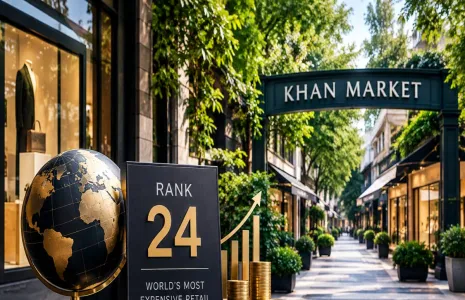
Khan Market Ranks 24th Among World's Most Expensive Retail Streets

Delhi’s Khan Market has retained its 24th position among the world’s most expensive high-street retail locations, with annual rents rising 14 per cent year-on-year to about USD 238 per sq ft, according to real estate consultant Cushman & Wakefield. The market remains India’s most expensive high street. New York City’s Upper Fifth Avenue reclaimed the top position globally, overtaking London’s New Bond Street. Annual rents on the New York street increased 35 per cent to USD 2,700 per sq ft, after it ranked third in 2025. New Bond Street was second at USD 2,230 per sq ft, while Milanâ€..

Advertisement

Subscribe to Our Newsletter

Get daily newsletters around different themes from Construction world.

STAY CONNECTED

Advertisement

SPECIAL OFFER
QR Code