
Marriott unveils ambitious South Asia expansion
ECONOMY & POLICY

Marriott unveils ambitious South Asia expansion

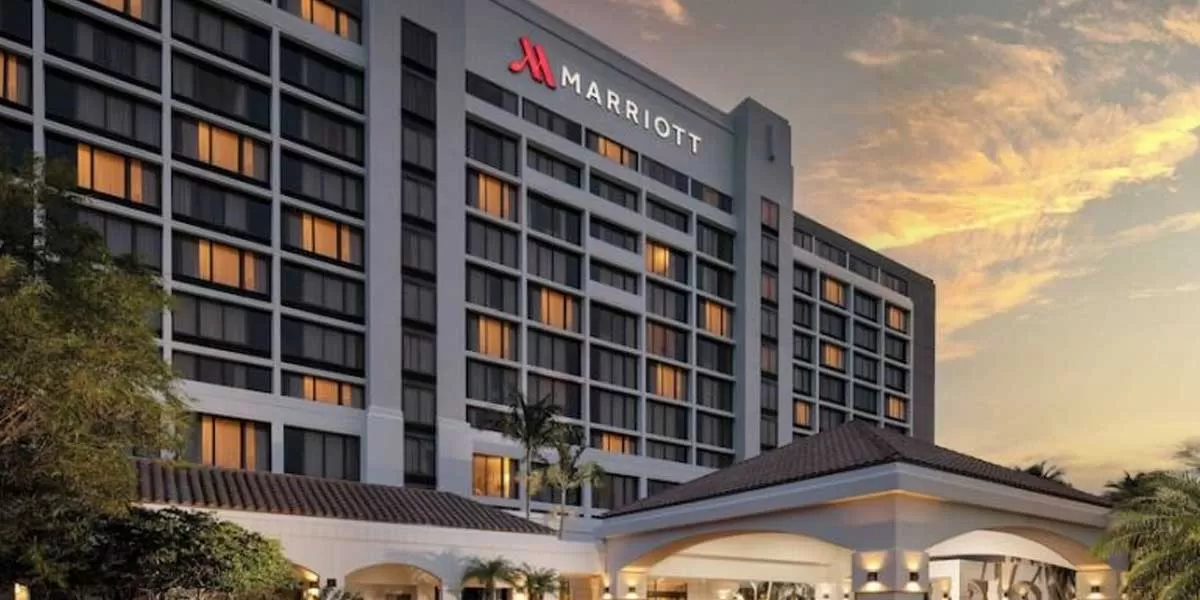
Marriott International, acknowledged as the world's largest hotel chain based on the number of rooms, restated its enduring commitment to South Asia. The commitment involves the inclusion of over 4,600 rooms in the development pipeline, a result of signing 28 hotel deals in 2023 and the ongoing deals this year. South Asia, as defined by Marriott, encompasses India, Nepal, Bhutan, Bangladesh, and Sri Lanka.

The company emphasised that this plan reflects its expansion strategy in the region, where it presently manages a portfolio of 160 operational properties spanning 17 distinct brands. Specifically, in India, Marriott oversees operations in 148 hotels.

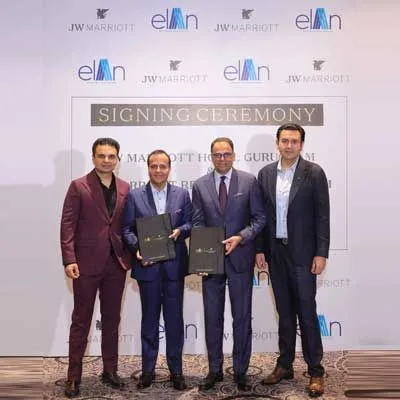
For the year 2024, Marriott envisions the opening of 14 hotels. This projection follows the introduction of the Moxy brand in South Asia in early January 2024. Furthermore, the company disclosed its intention to launch The Ritz-Carlton brand with The Ritz-Carlton, Amila Hills in Shimla, slated to open in May 2029. Expanding its luxury presence in India is also part of the plan, with the addition of JW Marriott Surat Resort and Spa and JW Marriott Sohna Resort and Spa in Delhi-NCR.

Rajeev Menon, President, Asia Pacific excluding China, Marriott International, asserted, "Marriott International's strategic expansion in South Asia solidifies our commitment to accentuate the strong growth within the region's travel and tourism sector." He highlighted the company's diverse brand portfolio, the award-winning travel program Marriott Bonvoy, and robust distribution platforms, positioning them well to provide experiences and benefits for guests and stakeholders in the region.

Kiran Andicot, Regional Vice President Development, South Asia at Marriott International, conveyed that the chain's primary focus remains on seizing opportunities in key gateway cities, strategic commercial centres, and major resort destinations in the region.

Marriott International, acknowledged as the world's largest hotel chain based on the number of rooms, restated its enduring commitment to South Asia. The commitment involves the inclusion of over 4,600 rooms in the development pipeline, a result of signing 28 hotel deals in 2023 and the ongoing deals this year. South Asia, as defined by Marriott, encompasses India, Nepal, Bhutan, Bangladesh, and Sri Lanka. The company emphasised that this plan reflects its expansion strategy in the region, where it presently manages a portfolio of 160 operational properties spanning 17 distinct brands. Specifically, in India, Marriott oversees operations in 148 hotels. For the year 2024, Marriott envisions the opening of 14 hotels. This projection follows the introduction of the Moxy brand in South Asia in early January 2024. Furthermore, the company disclosed its intention to launch The Ritz-Carlton brand with The Ritz-Carlton, Amila Hills in Shimla, slated to open in May 2029. Expanding its luxury presence in India is also part of the plan, with the addition of JW Marriott Surat Resort and Spa and JW Marriott Sohna Resort and Spa in Delhi-NCR. Rajeev Menon, President, Asia Pacific excluding China, Marriott International, asserted, Marriott International's strategic expansion in South Asia solidifies our commitment to accentuate the strong growth within the region's travel and tourism sector. He highlighted the company's diverse brand portfolio, the award-winning travel program Marriott Bonvoy, and robust distribution platforms, positioning them well to provide experiences and benefits for guests and stakeholders in the region. Kiran Andicot, Regional Vice President Development, South Asia at Marriott International, conveyed that the chain's primary focus remains on seizing opportunities in key gateway cities, strategic commercial centres, and major resort destinations in the region.

Next Story
Infrastructure Transport

MMRDA advances 250 m on Orange Gate–Marine Drive tunnel

The Mumbai Metropolitan Region Development Authority (MMRDA) has completed 250 m of underground tunnelling for the Orange Gate–Marine Drive Urban Road Tunnel using India’s largest slurry shield tunnel boring machine (TBM) deployed for an urban road project.The project involves twin tunnels extending over 7 km beneath critical transport corridors, including Central Railway, Western Railway and Metro Line 3. The work requires high-precision engineering to navigate densely developed urban infrastructure.Once completed, the tunnel is expected to reduce travel time between Orange Gate and Marin..

Next Story
Infrastructure Urban

Hindustan Zinc Pays Rs 188.46 Billion in FY26

Hindustan Zinc contributed Rs 188.46 billion to the public exchequer in FY 2025-26, according to its 9th Tax Transparency Report. The contribution, equivalent to 46 per cent of the company’s revenue, included direct and indirect taxes, government royalties, dividends to the Government of India, withholding taxes and other statutory levies.The company’s five-year cumulative contribution to the exchequer stood at Rs 915.72 billion. In FY26, Hindustan Zinc reported revenue of Rs 408.44 billion, EBITDA of Rs 221.62 billion and profit after tax of Rs 138.32 billion. It also achieved its highest..

Next Story
Infrastructure Urban

World of Concrete India 2026 Opens in Mumbai

Informa Markets in India will host the 12th edition of World of Concrete India 2026 from 3–5 June 2026 at the Bombay Exhibition Centre, Mumbai. The specialised B2B exhibition will bring together manufacturers, suppliers, contractors, developers, architects, consultants, infrastructure companies, project leaders and government stakeholders.The event is expected to feature over 350 brands and more than 18,000 trade professionals. It will cover concrete and cement, dry mortar, precast technologies, formwork, construction chemicals, industrial and commercial flooring, scaffolding, safety solutio..

Advertisement

Subscribe to Our Newsletter

Get daily newsletters around different themes from Construction world.

STAY CONNECTED

Advertisement

Advertisement

Advertisement