MHI Meeting On Financing For Electric Buses And Trucks
ECONOMY & POLICY

MHI Meeting On Financing For Electric Buses And Trucks

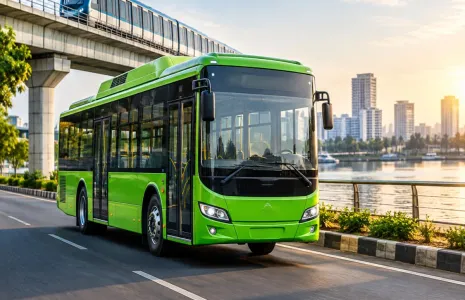
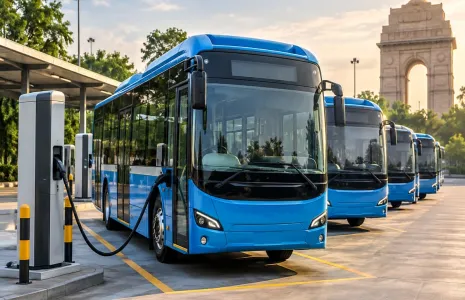
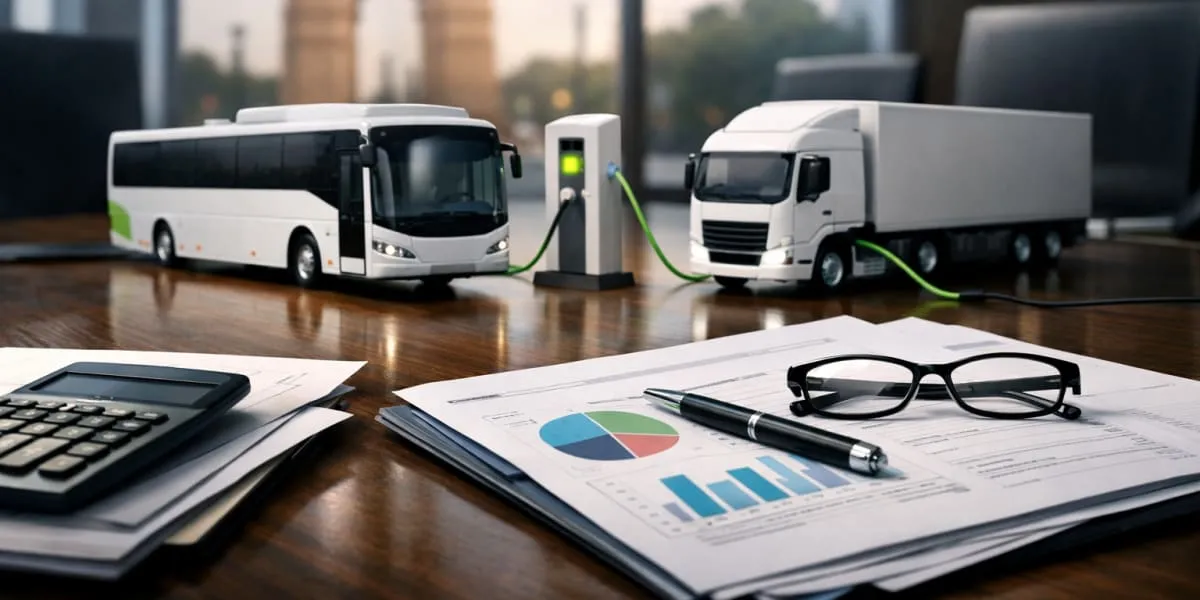
The Ministry of Heavy Industries (MHI) held a high-level meeting under the chairmanship of Shri Kamran Rizvi, Secretary of the ministry, on 29 April 2026 in New Delhi to deliberate financing mechanisms to accelerate adoption of electric buses (e-buses) and electric trucks (e-trucks) in the private sector. The meeting focused on understanding financing challenges, assessing the current status of financing for these vehicles and identifying potential solutions and government support required.

Participants examined critical interventions to enable electric vehicle financing. Key support mechanisms under consideration included partial credit guarantee schemes to de-risk lending by financial institutions and interest subvention mechanisms intended to lower the cost of borrowing for private sector buyers.

Public transport, particularly buses, forms the backbone of mobility across India while trucks are central to freight movement and carry a substantial share of domestic goods. The commercial vehicle segment contributes significantly to road transport emissions, fuel consumption and particulate matter pollution, making electrification of buses and trucks essential for meeting the nation's decarbonisation targets and the Net Zero by 2070 goal.

The meeting saw wide participation from stakeholders across the financial and industrial ecosystem, including the Department of Financial Services and the World Bank India. Major public and private banks attended alongside non-banking financial companies and apex institutions such as the Small Industries Development Bank of India and the National Investment and Infrastructure Fund, in addition to bus operators, truck operators, original equipment manufacturers and industry bodies.

The initiative reflects the ministry's proactive approach towards enabling the transition to electric mobility in the commercial vehicle segment by bringing government departments, multilateral institutions, financial entities and industry stakeholders together. The ministry intends to develop actionable financing solutions that address key barriers to adoption, thereby supporting energy security, emission reduction and indigenous advanced manufacturing under the vision of Aatmanirbhar Bharat and ViksitBharat@2047.

The Ministry of Heavy Industries (MHI) held a high-level meeting under the chairmanship of Shri Kamran Rizvi, Secretary of the ministry, on 29 April 2026 in New Delhi to deliberate financing mechanisms to accelerate adoption of electric buses (e-buses) and electric trucks (e-trucks) in the private sector. The meeting focused on understanding financing challenges, assessing the current status of financing for these vehicles and identifying potential solutions and government support required. Participants examined critical interventions to enable electric vehicle financing. Key support mechanisms under consideration included partial credit guarantee schemes to de-risk lending by financial institutions and interest subvention mechanisms intended to lower the cost of borrowing for private sector buyers. Public transport, particularly buses, forms the backbone of mobility across India while trucks are central to freight movement and carry a substantial share of domestic goods. The commercial vehicle segment contributes significantly to road transport emissions, fuel consumption and particulate matter pollution, making electrification of buses and trucks essential for meeting the nation's decarbonisation targets and the Net Zero by 2070 goal. The meeting saw wide participation from stakeholders across the financial and industrial ecosystem, including the Department of Financial Services and the World Bank India. Major public and private banks attended alongside non-banking financial companies and apex institutions such as the Small Industries Development Bank of India and the National Investment and Infrastructure Fund, in addition to bus operators, truck operators, original equipment manufacturers and industry bodies. The initiative reflects the ministry's proactive approach towards enabling the transition to electric mobility in the commercial vehicle segment by bringing government departments, multilateral institutions, financial entities and industry stakeholders together. The ministry intends to develop actionable financing solutions that address key barriers to adoption, thereby supporting energy security, emission reduction and indigenous advanced manufacturing under the vision of Aatmanirbhar Bharat and ViksitBharat@2047.

Next Story
Infrastructure Transport

MMRDA Removes 1.14 lakh m of Metro Barricades

In a bid to ease congestion and improve urban mobility during monsoon, MMRDA has undertaken one of the largest coordinated barricade removal and monsoon preparedness drives across its ongoing metro and infrastructure projects.With substantial progress achieved in viaduct and structural works across multiple metro corridors, barricades from completed stretches beneath metro viaducts are being systematically removed, restoring maximum possible road space before the monsoon. Wider carriageways across key arterial roads are expected to improve traffic flow, reduce congestion, support better rainwa..

Next Story
Infrastructure Transport

Pune Division to Remove All Diamond Crossings by Year-End

The Pune railway division has announced plans to remove all 16 diamond crossings by the end of 2026 as part of a major yard remodelling project following the derailment of a Vande Bharat Express at Pune Junction on April 27. Railway authorities said the replacements aim to improve safety and streamline train operations across the busy station. The decision followed a Central Railway finding that the accident involved a non-standard diamond crossing and highlighted the need for replacement. Regular maintenance of existing crossings will continue until the replacement work is completed. Official..

Next Story
Infrastructure Urban

Goa Declares 80 Million Square Metres No Development Zone

The Goa state government has declared 80 million square metres (mn) of land a no development zone, designating the area as protected from new construction. The notification reclassifies tracts across the state under a no development category for planning and regulatory purposes. The declaration signals a formal halt to new building permits within the defined zone. Authorities indicated that maps will be issued to show broad boundaries while detailed surveys will refine precise limits. The move transfers responsibility for enforcement to local planning authorities and relevant departments, whic..

Advertisement

Subscribe to Our Newsletter

Get daily newsletters around different themes from Construction world.

STAY CONNECTED

Advertisement

Advertisement

Advertisement