Minister Urges Timely Completion of Urban Infrastructure Works
ECONOMY & POLICY

Minister Urges Timely Completion of Urban Infrastructure Works

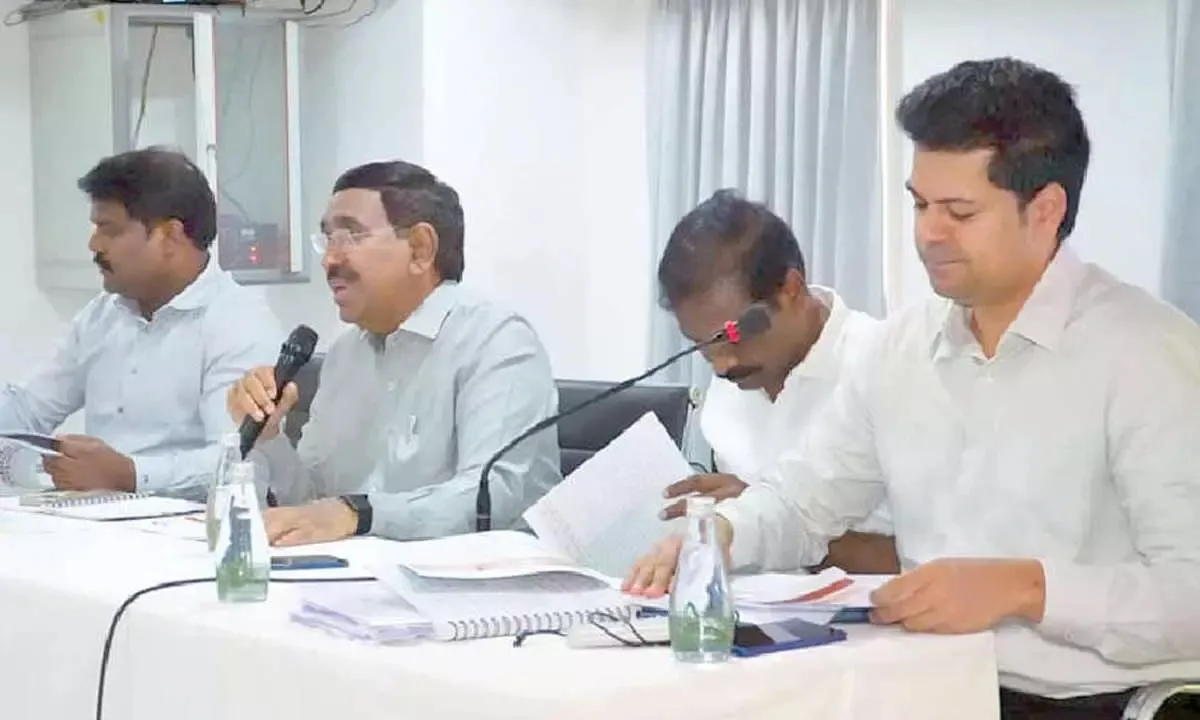
Municipal Administration and Urban Development Minister P Narayana has directed municipal commissioners to prioritise and expedite essential urban infrastructure projects, ensuring their timely completion across towns and cities in the state.

Speaking at a three-day workshop held at the Directorate of Municipal Administration, attended by commissioners and engineers from 77 municipalities, the minister emphasised that works related to solid and liquid waste management, drainage, roads, and streetlighting must be executed in a planned and systematic manner.

On the opening day, officials from 29 municipalities participated in discussions focused on completing key infrastructure projects by 2029.

Narayana urged officials to accelerate progress and maintain strict adherence to timelines. He informed that 8.5 million metric tonnes of legacy waste had already been cleared, while the remaining 2 million tonnes would be removed by December-end. From January onwards, all solid waste will be fully processed, he said.

To achieve zero dumping yards, the government is setting up six new waste-to-energy plants, in addition to the two existing facilities. The minister also stressed the development of comprehensive drainage networks capable of managing both domestic wastewater and rainwater.

Under the AMRUT 2.0 scheme, plans have been finalised to provide drinking water to 90 per cent of households in municipalities within two years. Narayana instructed officials to utilise funds from AMRUT, the Asian Infrastructure Investment Bank (AIIB), the Urban Infrastructure Development Fund (UIDF), and municipal budgets to prioritise drainage, road, and streetlight works.

On the housing front, Narayana directed that completed TIDCO houses should be allocated to beneficiaries every Saturday without delay. He set a target to complete 100 per cent of TIDCO housing construction by June next year.

The minister will continue to attend the workshop sessions over the next two days, engaging with officials from the remaining municipalities to review progress and address implementation challenges.

Also present at the event were Sampath Kumar, Director of Municipal Administration; Sunil Kumar Reddy, Managing Director of TIDCO; and Prabhakara Rao, Engineer-in-Chief of the Public Health Department.

Narayana reaffirmed that urban development remains a top government priority, aiming to build cleaner, well-planned, and sustainable cities that enhance the quality of life for residents.

Municipal Administration and Urban Development Minister P Narayana has directed municipal commissioners to prioritise and expedite essential urban infrastructure projects, ensuring their timely completion across towns and cities in the state. Speaking at a three-day workshop held at the Directorate of Municipal Administration, attended by commissioners and engineers from 77 municipalities, the minister emphasised that works related to solid and liquid waste management, drainage, roads, and streetlighting must be executed in a planned and systematic manner. On the opening day, officials from 29 municipalities participated in discussions focused on completing key infrastructure projects by 2029. Narayana urged officials to accelerate progress and maintain strict adherence to timelines. He informed that 8.5 million metric tonnes of legacy waste had already been cleared, while the remaining 2 million tonnes would be removed by December-end. From January onwards, all solid waste will be fully processed, he said. To achieve zero dumping yards, the government is setting up six new waste-to-energy plants, in addition to the two existing facilities. The minister also stressed the development of comprehensive drainage networks capable of managing both domestic wastewater and rainwater. Under the AMRUT 2.0 scheme, plans have been finalised to provide drinking water to 90 per cent of households in municipalities within two years. Narayana instructed officials to utilise funds from AMRUT, the Asian Infrastructure Investment Bank (AIIB), the Urban Infrastructure Development Fund (UIDF), and municipal budgets to prioritise drainage, road, and streetlight works. On the housing front, Narayana directed that completed TIDCO houses should be allocated to beneficiaries every Saturday without delay. He set a target to complete 100 per cent of TIDCO housing construction by June next year. The minister will continue to attend the workshop sessions over the next two days, engaging with officials from the remaining municipalities to review progress and address implementation challenges. Also present at the event were Sampath Kumar, Director of Municipal Administration; Sunil Kumar Reddy, Managing Director of TIDCO; and Prabhakara Rao, Engineer-in-Chief of the Public Health Department. Narayana reaffirmed that urban development remains a top government priority, aiming to build cleaner, well-planned, and sustainable cities that enhance the quality of life for residents.

Next Story
Infrastructure Urban

Implementation Status of Jal Jeevan Mission

Since August 2019 the Government has implemented Jal Jeevan Mission to provide assured potable water through household tap connections in rural India. At the start of the mission only 32.3 million (mn) rural households, representing 16.7 per cent, were reported to have tap water connections. States and union territories have reported that 125.8 mn additional rural households have since been provided with tap connections. As a result, of about 193.6 mn rural households roughly 158.2 mn, or 81.71 per cent, are reported to have tap water supply at home.\n\nThe State, district and village level st..

Next Story
Infrastructure Urban

Jal Jeevan Mission Reaches Eighty One Per Cent Rural Coverage

The Government reported substantial progress under the Jal Jeevan Mission, launched in August 2019 to provide tap water to every rural household. At launch only 32.3 million (mn) rural households had tap connections and states and Union territories reported provision of 125.8 mn additional households by March 2026. Consequently, out of about 193.6 mn rural households around 158.2 mn, or 81.71 per cent, are reported to have tap water at home. The Finance Minister announced extension of the mission until 2028 in the 2025-26 budget speech. The Swachh Bharat Mission Grameen, launched in October 20..

Next Story
Infrastructure Urban

Empowering Local Governance for Sustainable Rural Water Supply

The Ministry of Jal Shakti has aligned the Jal Jeevan Mission (JJM) with the 73rd Amendment to strengthen village level planning and community ownership of water supply. Gram Panchayats, village water and sanitation committees and Pani Samitis are to plan, implement, manage and maintain piped water systems, with gram sabha processes formalising handover and oversight. Implementation support agencies including non government organisations, community based organisations and self help groups have been empanelled to train local committees and promote women participation. Under JJM, the department ..

Advertisement

Subscribe to Our Newsletter

Get daily newsletters around different themes from Construction world.

STAY CONNECTED

Advertisement

Advertisement

Advertisement