Modi Government Splits Housing Ministry Into Two Departments
ECONOMY & POLICY

Modi Government Splits Housing Ministry Into Two Departments

The Modi government has divided the Ministry of Housing and Urban Affairs (MoHUA) into two departments, creating a new unit focused on Delhi and the National Capital Region. The change transfers responsibility for managing lands and buildings in Delhi, except those under the Ministry of Defence, Ministry of Railways, Department of Atomic Energy and Department of Space, to the new department. MoHUA is led by Cabinet Minister Manohar Lal Khattar and Minister of State Tokhan Sahu and is supported by a secretary, two additional secretaries and seven joint secretaries.

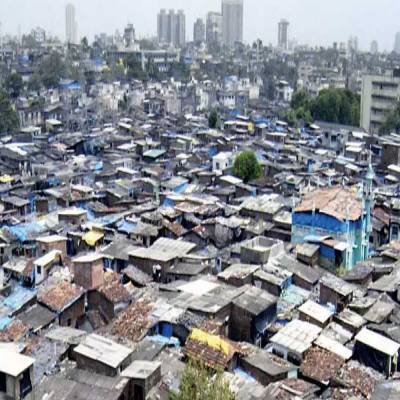
The Delhi-focused department will oversee the Delhi Development Authority, the Central Public Works Department and the administration of government estates, including hostels, and will handle allocation of accommodation in Vigyan Bhawan. It will take charge of the Central Vista redevelopment, the Master Plan of Delhi and related coordination, slum clearance, erection of memorials and development of government colonies, as well as the Delhi Water Supply and Sewage Disposal Undertaking of the Municipal Corporation of Delhi.

The remit will extend to planning and development of the National Capital Region and administration of the National Capital Region Planning Board Act, 1985. The new department will oversee the National Capital Regional Transport Corporation that runs the Regional Rapid Transit System and the Delhi Metro Rail Corporation, and will administer laws including the Delhi Hotels (Control of Accommodation) Act, 1949, the Delhi Rent Control Act, 1958 and the Delhi Urban Art Commission Act, 1973.

The Department of Urban Development will handle planning and coordination of urban transport, including buses, roads, tramways and fares for rail based urban systems, and will oversee town and country planning and the development of metropolitan areas and municipal corporations outside Delhi. It will formulate housing policy and programmes except rural housing, implement urban employment and poverty alleviation programmes and administer the Real Estate (Regulation and Development) Act, 2016. The change follows earlier mergers and restructurings since the ministry originated in 1952 and was merged into MoHUA in 2017.

The Modi government has divided the Ministry of Housing and Urban Affairs (MoHUA) into two departments, creating a new unit focused on Delhi and the National Capital Region. The change transfers responsibility for managing lands and buildings in Delhi, except those under the Ministry of Defence, Ministry of Railways, Department of Atomic Energy and Department of Space, to the new department. MoHUA is led by Cabinet Minister Manohar Lal Khattar and Minister of State Tokhan Sahu and is supported by a secretary, two additional secretaries and seven joint secretaries. The Delhi-focused department will oversee the Delhi Development Authority, the Central Public Works Department and the administration of government estates, including hostels, and will handle allocation of accommodation in Vigyan Bhawan. It will take charge of the Central Vista redevelopment, the Master Plan of Delhi and related coordination, slum clearance, erection of memorials and development of government colonies, as well as the Delhi Water Supply and Sewage Disposal Undertaking of the Municipal Corporation of Delhi. The remit will extend to planning and development of the National Capital Region and administration of the National Capital Region Planning Board Act, 1985. The new department will oversee the National Capital Regional Transport Corporation that runs the Regional Rapid Transit System and the Delhi Metro Rail Corporation, and will administer laws including the Delhi Hotels (Control of Accommodation) Act, 1949, the Delhi Rent Control Act, 1958 and the Delhi Urban Art Commission Act, 1973. The Department of Urban Development will handle planning and coordination of urban transport, including buses, roads, tramways and fares for rail based urban systems, and will oversee town and country planning and the development of metropolitan areas and municipal corporations outside Delhi. It will formulate housing policy and programmes except rural housing, implement urban employment and poverty alleviation programmes and administer the Real Estate (Regulation and Development) Act, 2016. The change follows earlier mergers and restructurings since the ministry originated in 1952 and was merged into MoHUA in 2017.

Related Stories

Gold Stories

Next Story
Real Estate

A Concrete Statement in Jubilee Hills

The Jubilee Hills residence is an exploration of structure as architecture, where mathematical precision, exposed concrete, and engineering discipline come together to create a bold and enduring built form.Constructed with Blushfarbe, HAACE’s bespoke concrete finish, the project demanded exceptional control, as every visible structural element was also required to perform as the final architectural surface. Deep reinforced concrete roof frames extend into the vertical façade, while precision-cast fluted surfaces, rhythmic vertical fins, circular columns, and a cantilevered staircase create ..

Next Story
Infrastructure Energy

Hindustan Zinc raises renewable power share to 22 per cent

Hindustan Zinc has increased the share of renewable energy in its overall power consumption to 22 per cent, up from around 18 per cent in FY26, as it advances towards sourcing 70 per cent of its power requirements from renewable sources by FY28.During FY26, the company generated 892 million units of green power, up from 632 million units in FY25. It has also expanded its round-the-clock renewable power arrangement with Serentica Renewables from 450 MW to 530 MW to support the transition.Hindustan Zinc is strengthening its renewable energy portfolio through solar, wind and energy storage soluti..

Next Story
Resources

Crompton unveils new brand identity and super-premium platform

Crompton Greaves Consumer Electricals Ltd. has unveiled a new master brand identity as part of its Crompton 2.0 transformation, alongside the launch of its super-premium brand Crompton Rhion and the strengthening of its Energion platform.The refreshed identity introduces Cephyr, a new emblem inspired by sapphire and Zephyrus, the Greek wind, representing Crompton’s evolution towards a design-led, consumer-centric brand. The new brand promise, ‘Amazing, Every Day’, is supported by a new sonic identity that will be rolled out across advertising, digital platforms, products and retail envir..

Advertisement

Subscribe to Our Newsletter

Get daily newsletters around different themes from Construction world.

STAY CONNECTED

Advertisement