+
MoPSW Strengthens Monitoring and Preparedness in West Asia
ECONOMY & POLICY

MoPSW Strengthens Monitoring and Preparedness in West Asia

The Ministry of Ports, Shipping and Waterways has strengthened monitoring and preparedness in response to the evolving maritime situation in West Asia, aiming to safeguard Indian seafarers, secure Indian vessels and maintain trade. A high?level inter?ministerial review was chaired by the Secretary, MoPSW, and attended by representatives of the Ministry of External Affairs, the Directorate General of Foreign Trade (DGFT) and the Ministry of Petroleum and Natural Gas, and industry bodies. The meeting followed an earlier assessment by the Union Minister.

MoPSW informed stakeholders of measures being taken and has activated a 24?hour helpline at the Directorate General of Shipping (DGS) to support seafarers and coordinate responses. A monitoring cell at MoPSW will track developments and issue situation reports. Precautionary guidance was issued through DGS Circular No. 08 of 2026 dated 28 February 2026 and DGS Circular 08 of 2024, while DGS Circular No. 09 of 2026 advises registration with the Embassy of India in Tehran and submission of crew details to the Directorate.

Indian?flagged ships have been reported safe and no confirmed detention, boarding or casualty has been recorded. All 35 Indian?flagged vessels in the Persian Gulf region, including 24 west of the Strait of Hormuz and 11 east including the Gulf of Oman and adjoining areas, and three vessels in the Gulf of Aden are being tracked through the Long Range Identification and Tracking (LRIT) National Data Centre at hourly intervals with regular situation reports. Monitoring covers foreign?flagged vessels carrying Indian seafarers to sustain situational awareness.

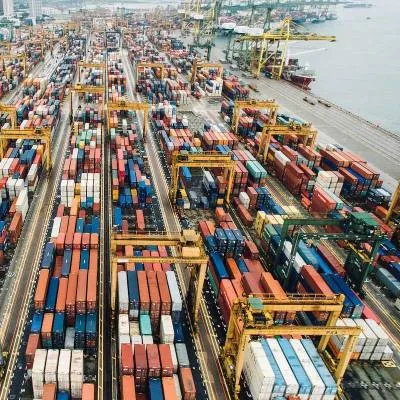
Major ports have been directed to assist trade operations and minimise hardships for exporters, with measures to monitor vessel movements, assess developments in real time and report vessel and cargo status. Additional storage has been arranged where required and refrigerated and perishable consignments are being prioritised for handling. Shipping companies, vessel operators and recruitment and placement licensees have been advised to exercise caution in crew deployment, undertake voyage?specific risk assessments and maintain communication with seafarers as the Ministry continues to coordinate with relevant ministries and stakeholders.

The Ministry of Ports, Shipping and Waterways has strengthened monitoring and preparedness in response to the evolving maritime situation in West Asia, aiming to safeguard Indian seafarers, secure Indian vessels and maintain trade. A high?level inter?ministerial review was chaired by the Secretary, MoPSW, and attended by representatives of the Ministry of External Affairs, the Directorate General of Foreign Trade (DGFT) and the Ministry of Petroleum and Natural Gas, and industry bodies. The meeting followed an earlier assessment by the Union Minister. MoPSW informed stakeholders of measures being taken and has activated a 24?hour helpline at the Directorate General of Shipping (DGS) to support seafarers and coordinate responses. A monitoring cell at MoPSW will track developments and issue situation reports. Precautionary guidance was issued through DGS Circular No. 08 of 2026 dated 28 February 2026 and DGS Circular 08 of 2024, while DGS Circular No. 09 of 2026 advises registration with the Embassy of India in Tehran and submission of crew details to the Directorate. Indian?flagged ships have been reported safe and no confirmed detention, boarding or casualty has been recorded. All 35 Indian?flagged vessels in the Persian Gulf region, including 24 west of the Strait of Hormuz and 11 east including the Gulf of Oman and adjoining areas, and three vessels in the Gulf of Aden are being tracked through the Long Range Identification and Tracking (LRIT) National Data Centre at hourly intervals with regular situation reports. Monitoring covers foreign?flagged vessels carrying Indian seafarers to sustain situational awareness. Major ports have been directed to assist trade operations and minimise hardships for exporters, with measures to monitor vessel movements, assess developments in real time and report vessel and cargo status. Additional storage has been arranged where required and refrigerated and perishable consignments are being prioritised for handling. Shipping companies, vessel operators and recruitment and placement licensees have been advised to exercise caution in crew deployment, undertake voyage?specific risk assessments and maintain communication with seafarers as the Ministry continues to coordinate with relevant ministries and stakeholders.

Next Story
Infrastructure Urban

Implementation Status of Jal Jeevan Mission

Since August 2019 the Government has implemented Jal Jeevan Mission to provide assured potable water through household tap connections in rural India. At the start of the mission only 32.3 million (mn) rural households, representing 16.7 per cent, were reported to have tap water connections. States and union territories have reported that 125.8 mn additional rural households have since been provided with tap connections. As a result, of about 193.6 mn rural households roughly 158.2 mn, or 81.71 per cent, are reported to have tap water supply at home.\n\nThe State, district and village level st..

Next Story
Infrastructure Urban

Jal Jeevan Mission Reaches Eighty One Per Cent Rural Coverage

The Government reported substantial progress under the Jal Jeevan Mission, launched in August 2019 to provide tap water to every rural household. At launch only 32.3 million (mn) rural households had tap connections and states and Union territories reported provision of 125.8 mn additional households by March 2026. Consequently, out of about 193.6 mn rural households around 158.2 mn, or 81.71 per cent, are reported to have tap water at home. The Finance Minister announced extension of the mission until 2028 in the 2025-26 budget speech. The Swachh Bharat Mission Grameen, launched in October 20..

Next Story
Infrastructure Urban

Empowering Local Governance for Sustainable Rural Water Supply

The Ministry of Jal Shakti has aligned the Jal Jeevan Mission (JJM) with the 73rd Amendment to strengthen village level planning and community ownership of water supply. Gram Panchayats, village water and sanitation committees and Pani Samitis are to plan, implement, manage and maintain piped water systems, with gram sabha processes formalising handover and oversight. Implementation support agencies including non government organisations, community based organisations and self help groups have been empanelled to train local committees and promote women participation. Under JJM, the department ..

Advertisement

Subscribe to Our Newsletter

Get daily newsletters around different themes from Construction world.

STAY CONNECTED

Advertisement

Advertisement

Advertisement