



+
MSCB Chief Urges Shift in MSME Lending Approach
ECONOMY & POLICY

MSCB Chief Urges Shift in MSME Lending Approach

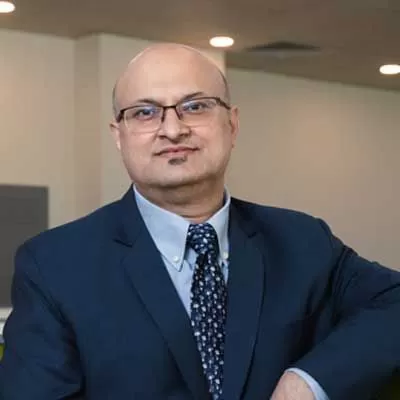
Vidyadhar Anaskar, Chairman of the Maharashtra State Cooperative Bank (MSCB), has called for a fundamental shift in the way cooperative banks lend to micro, small and medium enterprises (MSMEs). Speaking at the 2025 Banking and MSME Sector Conclave in Pune, Anaskar advocated for a transition from collateral-based lending to project-focused financing models.

Highlighting current flaws in the lending system, Anaskar criticised the widespread requirement for personal property as collateral, arguing that it contradicts the very spirit of MSME support. He stressed the need to realign banking practices to better serve India’s entrepreneurial base.

The event, jointly organised by Sahakar Bharati and the Global Indian Origin Network, brought together key stakeholders to discuss MSME financing challenges and sectoral reforms. Dinesh Gandhi, Chairman of Sahakar Bharati, underscored the sector's importance, noting that it sustains around 110 million families and plays a vital role in employment generation.

Anaskar also pointed to the housing segment as a lucrative opportunity for cooperative banks due to its stable repayment prospects and collateral reliability. He contrasted this with commercial real estate, which remains outside the Reserve Bank of India's priority sector classification due to its dual financing model involving both banks and homebuyers.

He called for better collaboration with auditors and accounting professionals to streamline the project appraisal and financing process.

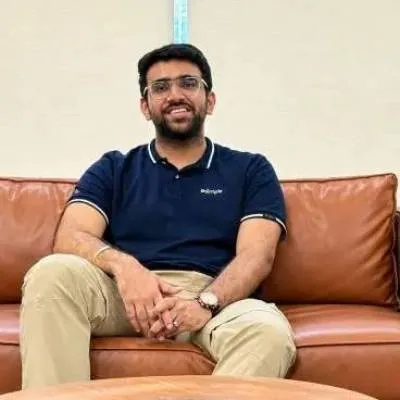
Adding to the discussion, Indraneel Chitale, Managing Partner of Chitale Bandhu Mithaiwale, highlighted the bureaucratic hurdles that impede first-generation entrepreneurs. He emphasised that excessive paperwork in the loan application process diverts focus from business development, urging banks to reduce administrative red tape to help enterprises grow efficiently.

The conclave reflected a growing consensus on the need for financial reforms to foster a more inclusive and supportive MSME ecosystem in India.

Vidyadhar Anaskar, Chairman of the Maharashtra State Cooperative Bank (MSCB), has called for a fundamental shift in the way cooperative banks lend to micro, small and medium enterprises (MSMEs). Speaking at the 2025 Banking and MSME Sector Conclave in Pune, Anaskar advocated for a transition from collateral-based lending to project-focused financing models.Highlighting current flaws in the lending system, Anaskar criticised the widespread requirement for personal property as collateral, arguing that it contradicts the very spirit of MSME support. He stressed the need to realign banking practices to better serve India’s entrepreneurial base.The event, jointly organised by Sahakar Bharati and the Global Indian Origin Network, brought together key stakeholders to discuss MSME financing challenges and sectoral reforms. Dinesh Gandhi, Chairman of Sahakar Bharati, underscored the sector's importance, noting that it sustains around 110 million families and plays a vital role in employment generation.Anaskar also pointed to the housing segment as a lucrative opportunity for cooperative banks due to its stable repayment prospects and collateral reliability. He contrasted this with commercial real estate, which remains outside the Reserve Bank of India's priority sector classification due to its dual financing model involving both banks and homebuyers.He called for better collaboration with auditors and accounting professionals to streamline the project appraisal and financing process.Adding to the discussion, Indraneel Chitale, Managing Partner of Chitale Bandhu Mithaiwale, highlighted the bureaucratic hurdles that impede first-generation entrepreneurs. He emphasised that excessive paperwork in the loan application process diverts focus from business development, urging banks to reduce administrative red tape to help enterprises grow efficiently.The conclave reflected a growing consensus on the need for financial reforms to foster a more inclusive and supportive MSME ecosystem in India.

Related Stories

Gold Stories
Next Story
Infrastructure Transport

Mumbai-Ahmedabad Bullet Train’s Surat-Vapi Section Set for 2027

The first section of the Mumbai-Ahmedabad Bullet Train corridor, linking Surat and Vapi, is targeted to begin services in 2027. Construction is expected to be completed by December 2026, while Railway Minister Ashwini Vaishnaw has indicated that an inauguration could take place around the middle of 2027. The National High Speed Rail Corporation (NHSRCL) said the train being manufactured in India is expected to reach the tracks around April or May 2027. The train will undergo extensive testing before the section is opened for passenger services. The project began construction in 2021 and includ..

Next Story
Infrastructure Transport

Indian Railways Approves Four Projects Worth Rs. 7.36 bn Across Four States

Indian Railways has approved four projects with a combined value of Rs. 7.36 bn across Uttar Pradesh, Maharashtra, Andhra Pradesh and Gujarat. The programme covers train protection, signalling, electric traction supply and a road overbridge, with each project assigned to a different railway zone. In Uttar Pradesh, Rs. 2.52 bn has been approved to extend the Kavach 4.0 automatic train protection system across 607.7 km in the Lucknow Division of North Eastern Railway. The system monitors train movements and can apply the brakes if a driver fails to observe a signal or exceeds a safe speed. The w..

Next Story
Infrastructure Urban

Chandru Raheja Sells 1.49% Stake in Mindspace REIT for Rs. 5 bn

Billionaire Chandru Lachmandas Raheja has sold a 1.49 per cent holding in Mindspace Business Parks REIT for Rs. 5 bn through a bulk deal on the BSE. The transaction involved 9.9 mn units and was executed at an average price of Rs. 505 per unit, according to exchange data. Following the sale, units of Mindspace Business Parks REIT were trading 0.18 per cent lower at Rs. 504.05 on Tuesday. Exchange data did not identify the buyers involved in the transaction. Raheja is the chairman of real estate company K Raheja Corp. The sale involved 99,00,990 units, representing 1.49 per cent of the Mumbai-b..

Advertisement

Subscribe to Our Newsletter

Get daily newsletters around different themes from Construction world.

STAY CONNECTED

Advertisement

SPECIAL OFFER
QR Code