+
Naveen Jindal Group To Set Up 18 GW Nuclear Projects In Nine States
ECONOMY & POLICY

Naveen Jindal Group To Set Up 18 GW Nuclear Projects In Nine States

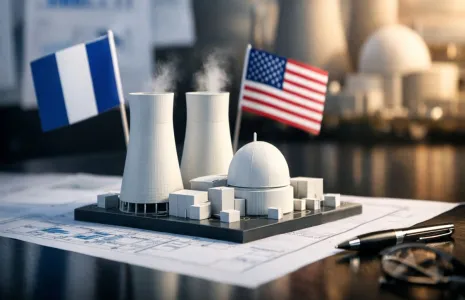
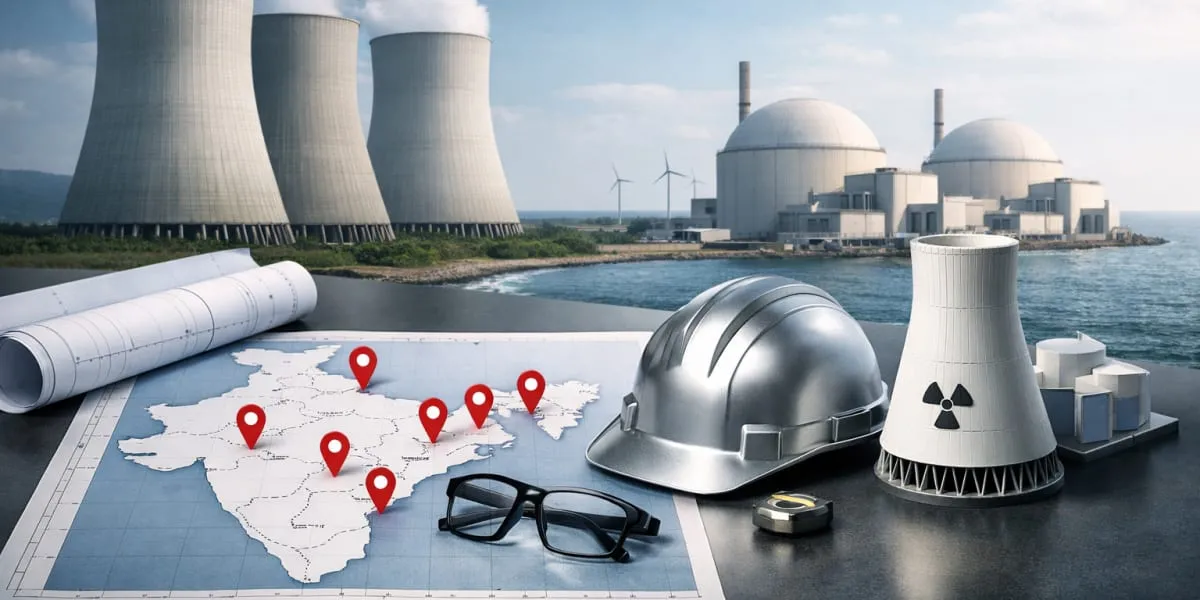
Naveen Jindal Group is exploring multiple locations in nine states to develop 18 gigawatt (GW) of nuclear capacity through Jindal Nuclear Power Private Limited, a 100 per cent subsidiary of Jindal Renewables. The group has engaged with state governments and is evaluating coastal and inland sites, considering Gujarat, Odisha, Andhra Pradesh, Tamil Nadu, Jharkhand and Chhattisgarh among others. The initiative forms part of an energy diversification drive aimed at supporting the government’s target of 100 GW nuclear capacity by 2047.

Site assessments are being conducted on parameters that include land availability, water resources, geological and seismic suitability, transmission connectivity and regulatory readiness, the group indicated. Long-term project viability and access to cooling water and grid links are central to the selection process. The group is also in talks with various technology partners to finalise technical arrangements.

The plan envisages deployment of large modular reactors (LMRs) of 700 megawatt (MW) and above across the projects, with each plant sized to accommodate multiple reactor modules. The group official said the choice of reactors aims to combine scalable capacity with standardised designs to speed deployment. Project timelines are expected to span around three years from concept to commissioning for each unit.

Industry estimates cited by the group put capital expenditure at about Rs 150 bn–Rs 200 bn to establish one GW plant, where billion (bn) denotes 1,000 million. On the basis of those figures, building 18 GW would imply investments in the range of about Rs 2.7 tn–Rs 3.6 tn, where trillion (tn) denotes 1,000 billion. The group has indicated that it is engaging potential investors and technology suppliers as it advances feasibility studies.

Naveen Jindal Group is exploring multiple locations in nine states to develop 18 gigawatt (GW) of nuclear capacity through Jindal Nuclear Power Private Limited, a 100 per cent subsidiary of Jindal Renewables. The group has engaged with state governments and is evaluating coastal and inland sites, considering Gujarat, Odisha, Andhra Pradesh, Tamil Nadu, Jharkhand and Chhattisgarh among others. The initiative forms part of an energy diversification drive aimed at supporting the government’s target of 100 GW nuclear capacity by 2047. Site assessments are being conducted on parameters that include land availability, water resources, geological and seismic suitability, transmission connectivity and regulatory readiness, the group indicated. Long-term project viability and access to cooling water and grid links are central to the selection process. The group is also in talks with various technology partners to finalise technical arrangements. The plan envisages deployment of large modular reactors (LMRs) of 700 megawatt (MW) and above across the projects, with each plant sized to accommodate multiple reactor modules. The group official said the choice of reactors aims to combine scalable capacity with standardised designs to speed deployment. Project timelines are expected to span around three years from concept to commissioning for each unit. Industry estimates cited by the group put capital expenditure at about Rs 150 bn–Rs 200 bn to establish one GW plant, where billion (bn) denotes 1,000 million. On the basis of those figures, building 18 GW would imply investments in the range of about Rs 2.7 tn–Rs 3.6 tn, where trillion (tn) denotes 1,000 billion. The group has indicated that it is engaging potential investors and technology suppliers as it advances feasibility studies.

Related Stories

Gold Stories

Next Story
Infrastructure Urban

Third Parties Can Move Court Against Unauthorised Construction

The Calcutta High Court (High Court) Circuit Bench at Port Blair held that a third party or public?spirited citizen can approach the writ court when municipal authorities fail to act against unauthorised construction, noting the burden on civic amenities and safety hazards. The Division Bench (Bench) of Justice Shampa Sarkar and Justice Arjun Ray Mukherjee upheld demolition directions for unauthorised portions of a hotel in Sri Vijaya Puram, subject to the regularisation scheme. The Bench rejected the appellant's locus contention. The Bench relied on the Supreme Court decision in Deepak Kumar ..

Next Story
Infrastructure Urban

Rs 16.67 bn Plan to Transform Srinagar Airport by 2031

The Jammu and Kashmir administration has submitted a proposal for a Rs 16.67 billion (bn) expansion of the Civil Enclave at Srinagar International Airport with a target completion year of 2031. The proposal was approved by the Cabinet Committee on Economic Affairs on 24 February 2026 and forwarded to the Ministry of Home Affairs with detailed project parameters and cost estimates. The stated intention is to lift annual passenger handling markedly to address rising travel demand and to modernise core terminal infrastructure. The scheme envisages the construction of a new Integrated Terminal Bui..

Next Story
Infrastructure Energy

India Pushes Self-Reliance In Critical Minerals

Minister of State for Coal and Mines Satish Chandra Dubey said at an industry roadshow in Raipur that India has made continuous efforts to become self-reliant in critical minerals to secure domestic industrial and clean energy supply chains. The roadshow was intended to connect state authorities with industry leaders to address operational and technical aspects. The event facilitated dialogue between entrepreneurs and officials to explain technical matters. The engagement comes against the backdrop of the National Critical Mineral Mission (NCMM), introduced for a seven-year period from 2024-25..

Advertisement

Subscribe to Our Newsletter

Get daily newsletters around different themes from Construction world.

STAY CONNECTED

Advertisement

SPECIAL OFFER
QR Code