NDMC Clears Rs 3.1 Billion Push for Civic, Cultural Upgrades
ECONOMY & POLICY

NDMC Clears Rs 3.1 Billion Push for Civic, Cultural Upgrades

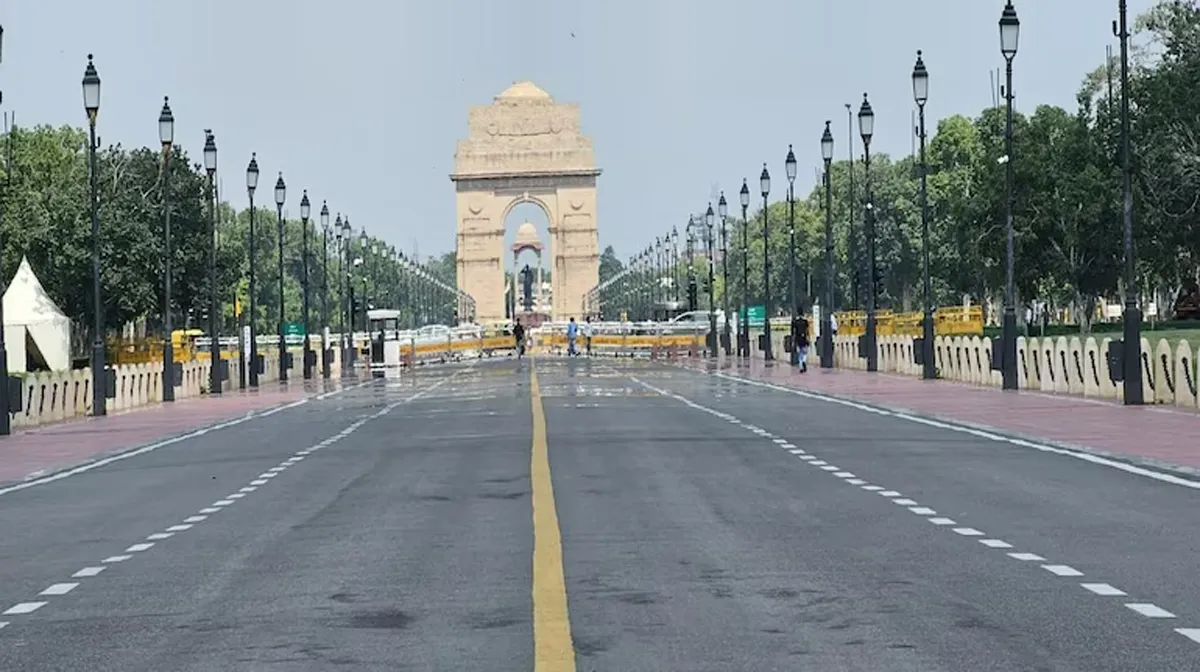
The New Delhi Municipal Council (NDMC) has approved a sweeping set of development proposals totalling over Rs 3.1 billion, including plans for a night food bazaar at Connaught Place and India Gate, smart electricity metering, school redevelopment, road resurfacing, and public housing upgrades.
The decisions were finalised at a council meeting chaired by Delhi minister Parvesh Sahib Singh Verma and attended by MP Bansuri Swaraj, NDMC Chairperson Keshav Chandra, Vice-Chairman Kuljeet Singh Chahal, MLA Virender Singh Kadian, and other members.
A major highlight was the in-principle approval of a Night Food Bazaar, with 50–60 food trucks proposed to operate between 10:30 pm and 1 am. Inspired by Indore’s Sarafa Bazaar and Ahmedabad’s Manek Chowk, the project aims to create vibrant and safe late-night dining spaces for residents and visitors.

Among major infrastructure initiatives, NDMC approved:
  • Rs 256.9 million for installing smart electricity meters under the Ministry of Power’s Revamped Distribution Sector Scheme (RDSS), using an advanced metering infrastructure model to reduce outages and improve monitoring.
  • Rs 112.9 million for the redevelopment of Navyug School at Pandara Park, including a multipurpose hall and additional classrooms.
  • Rs 78.3 million to set up 346 smart classrooms across 45 NDMC and Navyug primary schools.
The civic body also approved:
  • Over Rs 850 million for resurfacing more than 80 roads, including Connaught Place’s Inner, Middle, and Outer Circles, with technical support from CSIR-CRRI.
  • Rs 131 million for desilting the Kushak and Ring Road nullahs to enhance drainage capacity.
  • Rs 152.9 million to deploy mist-spray systems on 24 major roads to combat dust and air pollution.
  • Construction of a new foot overbridge at Gate No. 5 of the Delhi High Court with Delhi Metro Rail Corporation as project manager.
In the power sector, the NDMC sanctioned:
  • Rs 132 million to replace faulty 33-KV power transformers at several substations.
  • Rs 92.9 million to lay new LT and 11-KV cables with smart feeder pillars in Lodhi Colony to reduce frequent outages.
On employee welfare and healthcare:
  • Rs 77.7 million for upgrading the Balmiki Sadan housing complex at Mandir Marg.
  • Rs 70 million for procurement of allopathic medicines for free distribution through NDMC hospitals.
  • Rs 310.8 million for hiring sewer-cleaning machines with water-recycling technology.

To boost cultural engagement, NDMC will install sculptures and art installations across public spaces and launch an annual cultural calendar.
On the digital governance front, NDMC approved an MoU with BISAG-N to develop citizen-focused online services over the next five years at a cost of Rs 177 million.
The council also declared that NDMC will observe Seva Parv from 17 September to 2 October to commemorate Prime Minister Narendra Modi’s 75th birthday, with programmes themed around public service and civic participation.

Together, these projects represent a multi-sectoral push to improve infrastructure, enrich urban life, and deliver inclusive services in central Delhi. 

The New Delhi Municipal Council (NDMC) has approved a sweeping set of development proposals totalling over Rs 3.1 billion, including plans for a night food bazaar at Connaught Place and India Gate, smart electricity metering, school redevelopment, road resurfacing, and public housing upgrades.The decisions were finalised at a council meeting chaired by Delhi minister Parvesh Sahib Singh Verma and attended by MP Bansuri Swaraj, NDMC Chairperson Keshav Chandra, Vice-Chairman Kuljeet Singh Chahal, MLA Virender Singh Kadian, and other members.A major highlight was the in-principle approval of a Night Food Bazaar, with 50–60 food trucks proposed to operate between 10:30 pm and 1 am. Inspired by Indore’s Sarafa Bazaar and Ahmedabad’s Manek Chowk, the project aims to create vibrant and safe late-night dining spaces for residents and visitors.Among major infrastructure initiatives, NDMC approved:Rs 256.9 million for installing smart electricity meters under the Ministry of Power’s Revamped Distribution Sector Scheme (RDSS), using an advanced metering infrastructure model to reduce outages and improve monitoring.Rs 112.9 million for the redevelopment of Navyug School at Pandara Park, including a multipurpose hall and additional classrooms.Rs 78.3 million to set up 346 smart classrooms across 45 NDMC and Navyug primary schools.The civic body also approved:Over Rs 850 million for resurfacing more than 80 roads, including Connaught Place’s Inner, Middle, and Outer Circles, with technical support from CSIR-CRRI.Rs 131 million for desilting the Kushak and Ring Road nullahs to enhance drainage capacity.Rs 152.9 million to deploy mist-spray systems on 24 major roads to combat dust and air pollution.Construction of a new foot overbridge at Gate No. 5 of the Delhi High Court with Delhi Metro Rail Corporation as project manager.In the power sector, the NDMC sanctioned:Rs 132 million to replace faulty 33-KV power transformers at several substations.Rs 92.9 million to lay new LT and 11-KV cables with smart feeder pillars in Lodhi Colony to reduce frequent outages.On employee welfare and healthcare:Rs 77.7 million for upgrading the Balmiki Sadan housing complex at Mandir Marg.Rs 70 million for procurement of allopathic medicines for free distribution through NDMC hospitals.Rs 310.8 million for hiring sewer-cleaning machines with water-recycling technology.To boost cultural engagement, NDMC will install sculptures and art installations across public spaces and launch an annual cultural calendar.On the digital governance front, NDMC approved an MoU with BISAG-N to develop citizen-focused online services over the next five years at a cost of Rs 177 million.The council also declared that NDMC will observe Seva Parv from 17 September to 2 October to commemorate Prime Minister Narendra Modi’s 75th birthday, with programmes themed around public service and civic participation.Together, these projects represent a multi-sectoral push to improve infrastructure, enrich urban life, and deliver inclusive services in central Delhi. 

Next Story
Infrastructure Urban

Implementation Status of Jal Jeevan Mission

Since August 2019 the Government has implemented Jal Jeevan Mission to provide assured potable water through household tap connections in rural India. At the start of the mission only 32.3 million (mn) rural households, representing 16.7 per cent, were reported to have tap water connections. States and union territories have reported that 125.8 mn additional rural households have since been provided with tap connections. As a result, of about 193.6 mn rural households roughly 158.2 mn, or 81.71 per cent, are reported to have tap water supply at home.\n\nThe State, district and village level st..

Next Story
Infrastructure Urban

Jal Jeevan Mission Reaches Eighty One Per Cent Rural Coverage

The Government reported substantial progress under the Jal Jeevan Mission, launched in August 2019 to provide tap water to every rural household. At launch only 32.3 million (mn) rural households had tap connections and states and Union territories reported provision of 125.8 mn additional households by March 2026. Consequently, out of about 193.6 mn rural households around 158.2 mn, or 81.71 per cent, are reported to have tap water at home. The Finance Minister announced extension of the mission until 2028 in the 2025-26 budget speech. The Swachh Bharat Mission Grameen, launched in October 20..

Next Story
Infrastructure Urban

Empowering Local Governance for Sustainable Rural Water Supply

The Ministry of Jal Shakti has aligned the Jal Jeevan Mission (JJM) with the 73rd Amendment to strengthen village level planning and community ownership of water supply. Gram Panchayats, village water and sanitation committees and Pani Samitis are to plan, implement, manage and maintain piped water systems, with gram sabha processes formalising handover and oversight. Implementation support agencies including non government organisations, community based organisations and self help groups have been empanelled to train local committees and promote women participation. Under JJM, the department ..

Advertisement

Subscribe to Our Newsletter

Get daily newsletters around different themes from Construction world.

STAY CONNECTED

Advertisement

Advertisement

Advertisement