New NMIMS Campus Inaugurated to Boost Education in Mumbai
ECONOMY & POLICY

New NMIMS Campus Inaugurated to Boost Education in Mumbai

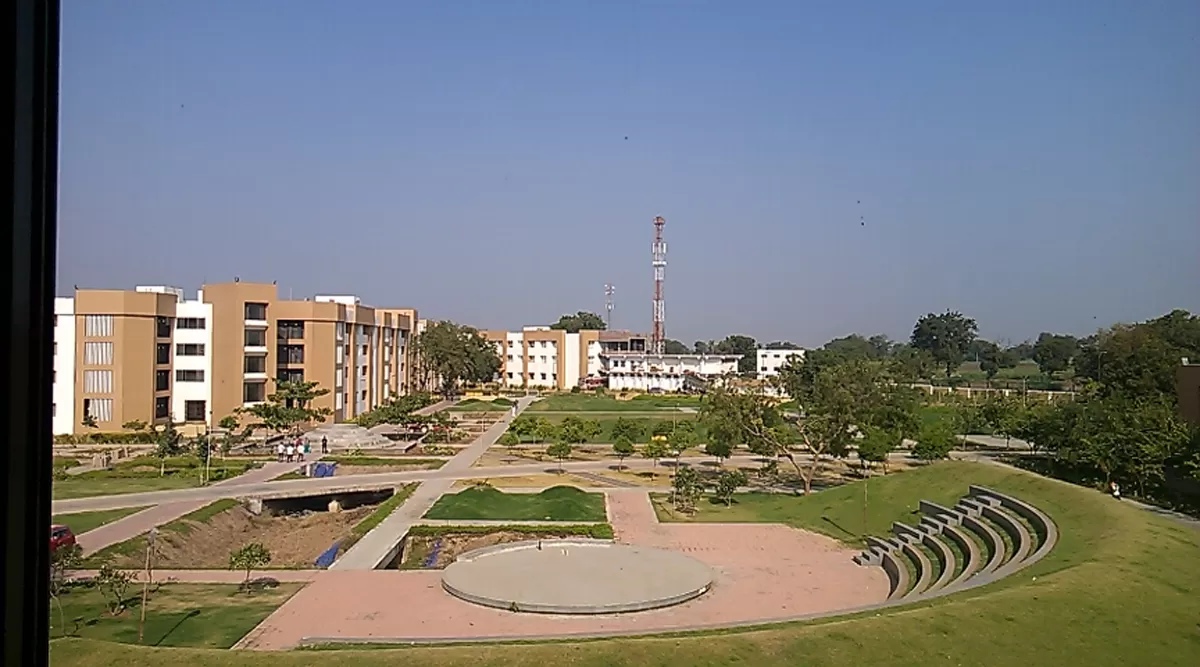
Maharashtra Chief Minister Devendra Fadnavis and Union Education Minister Dharmendra Pradhan inaugurated the newly developed Mukesh Patel School of Technology Management & Engineering and the Narsee Monjee Institute of Management Studies (NMIMS) building in Mumbai, while also performing the Bhoomi Pujan for SVKM’s upcoming educational complex.

The state-of-the-art infrastructure, developed by Shri Vile Parle Kelavani Mandal (SVKM) and NMIMS, includes advanced laboratories focused on Industry 4.0 technologies such as Artificial Intelligence (AI), Augmented and Virtual Reality (AR/VR), and 3D Printing. These developments reaffirm India’s growing commitment to innovation and excellence in higher education.

Speaking at the event, CM Fadnavis stated that the National Education Policy (NEP) 2020 has made India’s educational ethos globally visible. He emphasised the importance of blending Indian fundamentals with global knowledge, adding that human capital is essential for economic growth. “Industry goes where the workforce exists. Hence, investing in talent is vital for building a Viksit Bharat by 2047,” he said.

The Chief Minister noted that NEP has introduced much-needed flexibility into a once-static education system, empowering youth to pursue multidisciplinary and self-directed learning. Highlighting the rise of AI and fast-paced technological change, he encouraged students to “learn, unlearn, and relearn.” Fadnavis also said Mumbai has become the startup capital of India, and promised government support to further strengthen the innovation ecosystem.

Union Minister Dharmendra Pradhan echoed this vision, calling NEP 2020 a “philosophical document” focused on quality and inclusivity. He stressed the importance of using mother tongues and Indian languages, especially in primary education (Classes 1 to 5), citing global examples where native language-based education has led to societal progress.

Pradhan urged youth to pursue competence over credentials, become entrepreneurs instead of job seekers, and use technology to solve real-world problems, contribute to GDP, and uplift marginalised communities. He described Mumbai as the economic engine of India, currently ranked fourth globally, and said India’s educational direction must be rooted in Indian knowledge traditions.

The event also witnessed the presence of SVKM Chancellor Amrish R. Patel, MLAs Ameet Satam, Parag Alavani, and former MLA Kripashankar Singh.

This launch is seen as a major milestone in India’s education journey, showcasing a deepened alignment between policy vision, technological infrastructure, and youth empowerment through innovation-driven learning.

Maharashtra Chief Minister Devendra Fadnavis and Union Education Minister Dharmendra Pradhan inaugurated the newly developed Mukesh Patel School of Technology Management & Engineering and the Narsee Monjee Institute of Management Studies (NMIMS) building in Mumbai, while also performing the Bhoomi Pujan for SVKM’s upcoming educational complex.The state-of-the-art infrastructure, developed by Shri Vile Parle Kelavani Mandal (SVKM) and NMIMS, includes advanced laboratories focused on Industry 4.0 technologies such as Artificial Intelligence (AI), Augmented and Virtual Reality (AR/VR), and 3D Printing. These developments reaffirm India’s growing commitment to innovation and excellence in higher education.Speaking at the event, CM Fadnavis stated that the National Education Policy (NEP) 2020 has made India’s educational ethos globally visible. He emphasised the importance of blending Indian fundamentals with global knowledge, adding that human capital is essential for economic growth. “Industry goes where the workforce exists. Hence, investing in talent is vital for building a Viksit Bharat by 2047,” he said.The Chief Minister noted that NEP has introduced much-needed flexibility into a once-static education system, empowering youth to pursue multidisciplinary and self-directed learning. Highlighting the rise of AI and fast-paced technological change, he encouraged students to “learn, unlearn, and relearn.” Fadnavis also said Mumbai has become the startup capital of India, and promised government support to further strengthen the innovation ecosystem.Union Minister Dharmendra Pradhan echoed this vision, calling NEP 2020 a “philosophical document” focused on quality and inclusivity. He stressed the importance of using mother tongues and Indian languages, especially in primary education (Classes 1 to 5), citing global examples where native language-based education has led to societal progress.Pradhan urged youth to pursue competence over credentials, become entrepreneurs instead of job seekers, and use technology to solve real-world problems, contribute to GDP, and uplift marginalised communities. He described Mumbai as the economic engine of India, currently ranked fourth globally, and said India’s educational direction must be rooted in Indian knowledge traditions.The event also witnessed the presence of SVKM Chancellor Amrish R. Patel, MLAs Ameet Satam, Parag Alavani, and former MLA Kripashankar Singh.This launch is seen as a major milestone in India’s education journey, showcasing a deepened alignment between policy vision, technological infrastructure, and youth empowerment through innovation-driven learning.

Next Story
Infrastructure Transport

India Becomes First to Produce Bio-Bitumen for Roads

India has become the first country in the world to commercially produce bio-bitumen for use in road construction, according to Road, Transport and Highways Minister Nitin Gadkari. Bitumen, a black and viscous hydrocarbon derived from crude oil, is a key binding material in road building, and the bio-based alternative is expected to significantly improve the sector’s environmental footprint.Addressing the CSIR Technology Transfer Ceremony in New Delhi, Mr Gadkari congratulated Council of Scientific and Industrial Research on achieving the milestone, noting that the initiative would help curb ..

Next Story
Infrastructure Urban

HILT Policy Seen Boosting Telangana Revenue Sharply

The Hyderabad Industrial Land Transformation (HILT) Policy is expected to generate around Rs 1.08 billion in revenue for the Telangana state exchequer, according to Deputy Chief Minister Bhatti Vikramarka Mallu. Speaking in the Telangana Legislative Assembly, he said the policy would be implemented within a six-month timeframe in a transparent manner, with uniform rules applicable to all stakeholders. Mr Vikramarka noted that without the HILT Policy, the state would have earned only about Rs 1.2 million per acre. Under the new framework, however, revenue is projected to rise sharply to Rs 70 ..

Next Story
Infrastructure Urban

India Post, MoRD Tie Up to Boost Rural Inclusion

The Department of Posts and the Ministry of Rural Development have signed a Memorandum of Understanding to accelerate rural transformation and expand financial, digital and logistics services for Self-Help Groups (SHGs) and rural households across India. The agreement was signed in the presence of Union Minister of Communications and Development of North Eastern Region Jyotiraditya M. Scindia and Union Minister of Rural Development and Agriculture and Farmers’ Welfare Shivraj Singh Chouhan. The collaboration aligns with the government’s “Dak Sewa, Jan Sewa” vision and seeks to repositi..

Advertisement

Subscribe to Our Newsletter

Get daily newsletters around different themes from Construction world.

STAY CONNECTED

Advertisement

Advertisement

Advertisement

Advertisement

Open In App