NITI Aayog Unveils Roadmap For A Quantum-Powered India
ECONOMY & POLICY

NITI Aayog Unveils Roadmap For A Quantum-Powered India

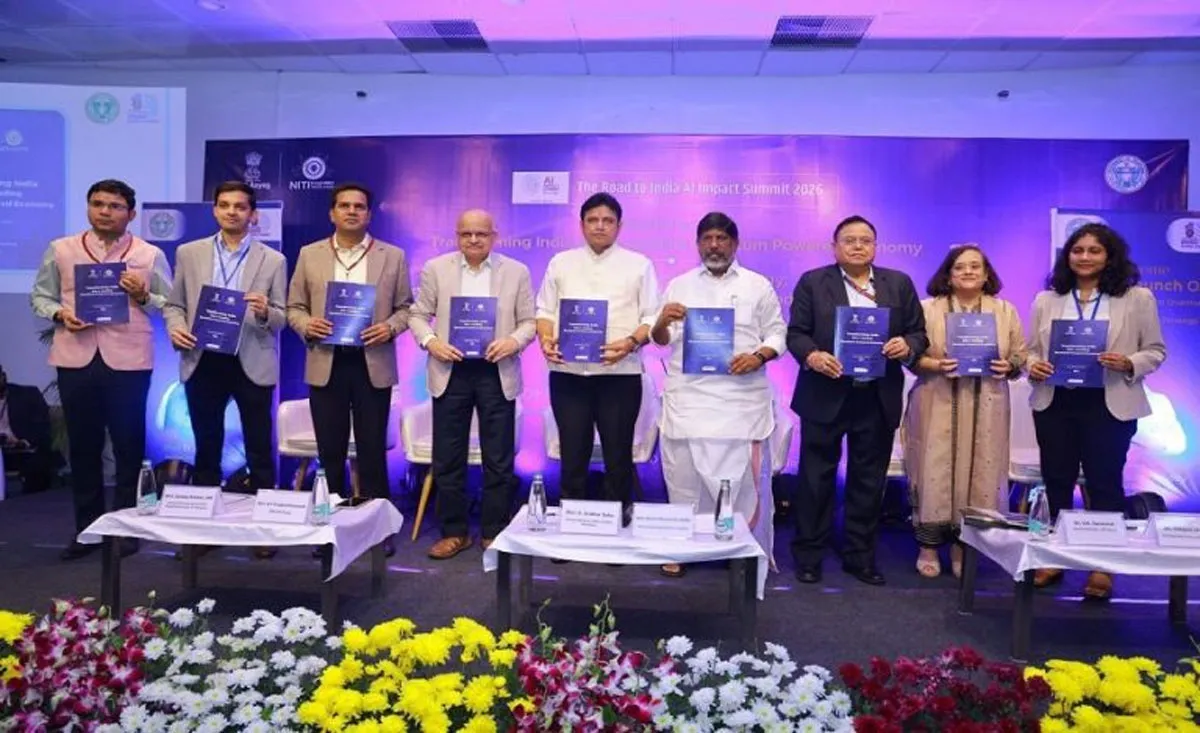
NITI Aayog’s Frontier Tech Hub has released its Roadmap on Transforming India into a Leading Quantum-Powered Economy, outlining an ambitious national vision to position the country at the forefront of next-generation technologies. The roadmap was unveiled by senior leaders including Shri Mallu Bhatti Vikramarka, Deputy Chief Minister of Telangana; Shri D. Sridhar Babu, Telangana’s Minister of IT; Dr V. K. Saraswat, Member, NITI Aayog; Shri B. V. R. Subrahmanyam, CEO, NITI Aayog; Ms Debjani Ghosh, Distinguished Fellow, NITI Aayog; along with other dignitaries.

Quantum technologies are on the cusp of becoming one of the most transformative forces of this era, with the potential to reshape healthcare, finance, logistics, materials, energy and national security. Nations that act decisively now will define the next generation of computing, communications and sensing — and shape the global architecture of innovation and trust.

For India, quantum represents an opportunity not merely to adopt a frontier technology, but to lead it from the outset. It forms the foundation for future advances in artificial intelligence, biotechnology, advanced materials and secure digital infrastructure. The NITI Aayog roadmap details the actions required to realise this ambition by leveraging the National Quantum Mission. It assesses India’s current capabilities, strategic advantages and critical gaps, and identifies interventions to accelerate R&D, commercial deployment and ecosystem development. The roadmap stresses the need for collective ownership across policymakers, industry, scientists, investors and states.

Shri D. Sridhar Babu emphasised that quantum computing marks a turning point where technology begins solving problems once thought impossible — from drug discovery to climate modelling. He noted Telangana’s focus on deep research, skilled talent and pathways for industrial deployment, with a goal of participating in and shaping the quantum future.

Dr V. K. Saraswat highlighted quantum technologies as a strategic driver of economic growth, national security and scientific progress. He stated that achieving developed-nation status by 2047 will require integrating quantum computing, secure communications, precision sensing and advanced materials across major national missions. He also outlined the milestones needed to strengthen capability, expand talent and build globally competitive platforms.

Shri B. V. R. Subrahmanyam remarked that the next five years will determine whether India becomes a global supplier of quantum technologies or remains a dependent consumer. He called for mobilising India’s deep engineering base, digital public infrastructure and talent to create globally trusted quantum platforms.

Ms Debjani Ghosh noted that global competition in quantum is intensifying, and leadership will hinge on building secure value chains, shaping standards and creating export-ready solutions. She stressed the need to scale research infrastructure, streamline innovation-to-market pathways and cultivate talent, positioning India as a trusted quantum partner for the Global South and beyond.

The roadmap was developed by NITI Aayog’s Frontier Tech Hub in collaboration with IBM, with input from an Expert Council comprising leaders from industry and academia. The launch saw strong participation from government, industry and development partners, underscoring a shared commitment to advancing India’s leadership in the emerging quantum economy.

NITI Aayog’s Frontier Tech Hub has released its Roadmap on Transforming India into a Leading Quantum-Powered Economy, outlining an ambitious national vision to position the country at the forefront of next-generation technologies. The roadmap was unveiled by senior leaders including Shri Mallu Bhatti Vikramarka, Deputy Chief Minister of Telangana; Shri D. Sridhar Babu, Telangana’s Minister of IT; Dr V. K. Saraswat, Member, NITI Aayog; Shri B. V. R. Subrahmanyam, CEO, NITI Aayog; Ms Debjani Ghosh, Distinguished Fellow, NITI Aayog; along with other dignitaries. Quantum technologies are on the cusp of becoming one of the most transformative forces of this era, with the potential to reshape healthcare, finance, logistics, materials, energy and national security. Nations that act decisively now will define the next generation of computing, communications and sensing — and shape the global architecture of innovation and trust. For India, quantum represents an opportunity not merely to adopt a frontier technology, but to lead it from the outset. It forms the foundation for future advances in artificial intelligence, biotechnology, advanced materials and secure digital infrastructure. The NITI Aayog roadmap details the actions required to realise this ambition by leveraging the National Quantum Mission. It assesses India’s current capabilities, strategic advantages and critical gaps, and identifies interventions to accelerate R&D, commercial deployment and ecosystem development. The roadmap stresses the need for collective ownership across policymakers, industry, scientists, investors and states. Shri D. Sridhar Babu emphasised that quantum computing marks a turning point where technology begins solving problems once thought impossible — from drug discovery to climate modelling. He noted Telangana’s focus on deep research, skilled talent and pathways for industrial deployment, with a goal of participating in and shaping the quantum future. Dr V. K. Saraswat highlighted quantum technologies as a strategic driver of economic growth, national security and scientific progress. He stated that achieving developed-nation status by 2047 will require integrating quantum computing, secure communications, precision sensing and advanced materials across major national missions. He also outlined the milestones needed to strengthen capability, expand talent and build globally competitive platforms. Shri B. V. R. Subrahmanyam remarked that the next five years will determine whether India becomes a global supplier of quantum technologies or remains a dependent consumer. He called for mobilising India’s deep engineering base, digital public infrastructure and talent to create globally trusted quantum platforms. Ms Debjani Ghosh noted that global competition in quantum is intensifying, and leadership will hinge on building secure value chains, shaping standards and creating export-ready solutions. She stressed the need to scale research infrastructure, streamline innovation-to-market pathways and cultivate talent, positioning India as a trusted quantum partner for the Global South and beyond. The roadmap was developed by NITI Aayog’s Frontier Tech Hub in collaboration with IBM, with input from an Expert Council comprising leaders from industry and academia. The launch saw strong participation from government, industry and development partners, underscoring a shared commitment to advancing India’s leadership in the emerging quantum economy.

Next Story
Infrastructure Urban

Centre Boosts FPO Growth With New Credit And Market Support

The Government is implementing the Central Sector Scheme on the formation and promotion of 10,000 Farmer Producer Organisations (FPOs), under which all 10,000 FPOs have now been registered. The scheme provides Rs 1.8 million per FPO for three years as management support, a matching equity grant of up to Rs 1.5 million, and a credit guarantee of up to Rs 0.02 billion through eligible lending institutions. It also offers assistance for training, market linkages and alignment with other schemes. FPOs receive support to obtain input licences for seed, fertiliser and pesticide supplies, as well as..

Next Story
Infrastructure Urban

PM-KISAN Drives Farm Income Gains And Rural Stability

The PM-KISAN scheme, a central sector initiative launched in February 2019, aims to support the financial needs of farmers holding cultivable land. Under the scheme, Rs 6,000 per year is transferred in three equal instalments to Aadhaar-seeded bank accounts through Direct Benefit Transfer. Eligibility is based primarily on cultivable landholding, with certain exclusions for individuals of higher economic status. A farmer-centric digital infrastructure ensures scheme benefits reach farmers across India without intermediaries. With full transparency in registration and verification, the Governm..

Next Story
Infrastructure Urban

Govt Extends Pro Tem Security Certificate To Two Years

In a further push to improve ease of doing business and ensure continuity for the telecom industry, the National Centre for Communication Security (NCCS) under the Department of Telecommunications has extended the validity of the Pro Tem Security Certification from six months to two years. The Pro Tem Certification, initially launched in October 2024 with a six-month validity, was designed to prevent business disruption for IP Router and Wi-Fi CPE products, which became subject to mandatory security certification from 1 October 2024. Under this certification, OEMs submit a declaration confirm..

Advertisement

Subscribe to Our Newsletter

Get daily newsletters around different themes from Construction world.

STAY CONNECTED

Advertisement

Advertisement

Advertisement

Advertisement

Open In App