NTWB Reviews Trader Welfare, MSME Finance and Export Promotion
ECONOMY & POLICY

NTWB Reviews Trader Welfare, MSME Finance and Export Promotion

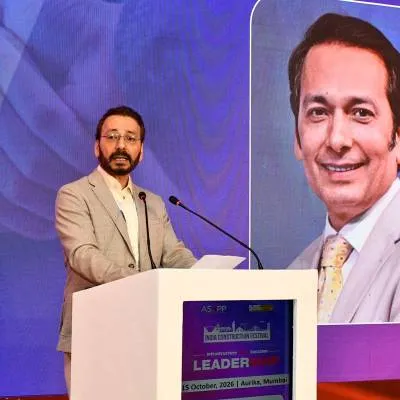
The National Traders’ Welfare Board (NTWB) reviewed measures to strengthen trader welfare, improve ease of doing business, expand access to finance, promote digital adoption and increase exports at its 11th meeting in New Delhi on September 25. The meeting was chaired by NTWB Chairman Sunil J. Singhi.

Members considered the inclusion of traders in micro, small and medium enterprise (MSME) facilitation committees, along with a proposal for a centralised loan portal with 30-day timelines. Discussions also covered reforms to the CIBIL score mechanism and the creation of dedicated grievance helplines for traders.

The Board examined issues related to the Goods and Services Tax (GST), including rationalisation, refund delays, lengthy audits, amnesty schemes, input tax credit anomalies and pending appeals. Other matters included timely payments to government contractors, safeguards against technical penalties and more flexible loan repayment arrangements during lean periods.

Digital initiatives discussed at the meeting included expanding the Open Network for Digital Commerce (ONDC) and DigiDukaan to district-level markets. Members also considered Women Entrepreneurship Facilitation Desks under NITI Aayog, Prevention of Sexual Harassment cells for grievance redressal and stronger mechanisms to address cyber fraud. DigiDukaan, described by the Ministry as an ONDC-backed business-to-business procurement and kirana digitisation initiative, has more than 19,000 retailers operating across Hyderabad and Jaipur.

The Board emphasised increasing export participation among traders and MSMEs through greater awareness and stronger institutional support. Singhi reviewed progress under the Jan Vishwas Act, which rationalises 40,000 compliances, as well as State Traders’ Welfare Boards established in Madhya Pradesh, Punjab, Uttar Pradesh and Tamil Nadu. Written confirmations from Goa and Telangana and progress on District Facilitation Centres were also noted. The meeting covered the Consumer Protection (Amendment) Bill 2026, proposed to take effect from 1 January 2027, and India–UK CETA negotiations, before reaffirming the Board’s focus on policy advocacy, social security and Centre–State coordination.

The National Traders’ Welfare Board (NTWB) reviewed measures to strengthen trader welfare, improve ease of doing business, expand access to finance, promote digital adoption and increase exports at its 11th meeting in New Delhi on September 25. The meeting was chaired by NTWB Chairman Sunil J. Singhi. Members considered the inclusion of traders in micro, small and medium enterprise (MSME) facilitation committees, along with a proposal for a centralised loan portal with 30-day timelines. Discussions also covered reforms to the CIBIL score mechanism and the creation of dedicated grievance helplines for traders. The Board examined issues related to the Goods and Services Tax (GST), including rationalisation, refund delays, lengthy audits, amnesty schemes, input tax credit anomalies and pending appeals. Other matters included timely payments to government contractors, safeguards against technical penalties and more flexible loan repayment arrangements during lean periods. Digital initiatives discussed at the meeting included expanding the Open Network for Digital Commerce (ONDC) and DigiDukaan to district-level markets. Members also considered Women Entrepreneurship Facilitation Desks under NITI Aayog, Prevention of Sexual Harassment cells for grievance redressal and stronger mechanisms to address cyber fraud. DigiDukaan, described by the Ministry as an ONDC-backed business-to-business procurement and kirana digitisation initiative, has more than 19,000 retailers operating across Hyderabad and Jaipur. The Board emphasised increasing export participation among traders and MSMEs through greater awareness and stronger institutional support. Singhi reviewed progress under the Jan Vishwas Act, which rationalises 40,000 compliances, as well as State Traders’ Welfare Boards established in Madhya Pradesh, Punjab, Uttar Pradesh and Tamil Nadu. Written confirmations from Goa and Telangana and progress on District Facilitation Centres were also noted. The meeting covered the Consumer Protection (Amendment) Bill 2026, proposed to take effect from 1 January 2027, and India–UK CETA negotiations, before reaffirming the Board’s focus on policy advocacy, social security and Centre–State coordination.

Related Stories

Gold Stories

Next Story
Equipment

Raimondi Appoints Roland Trading as Terex RT Dealer in Bulgaria

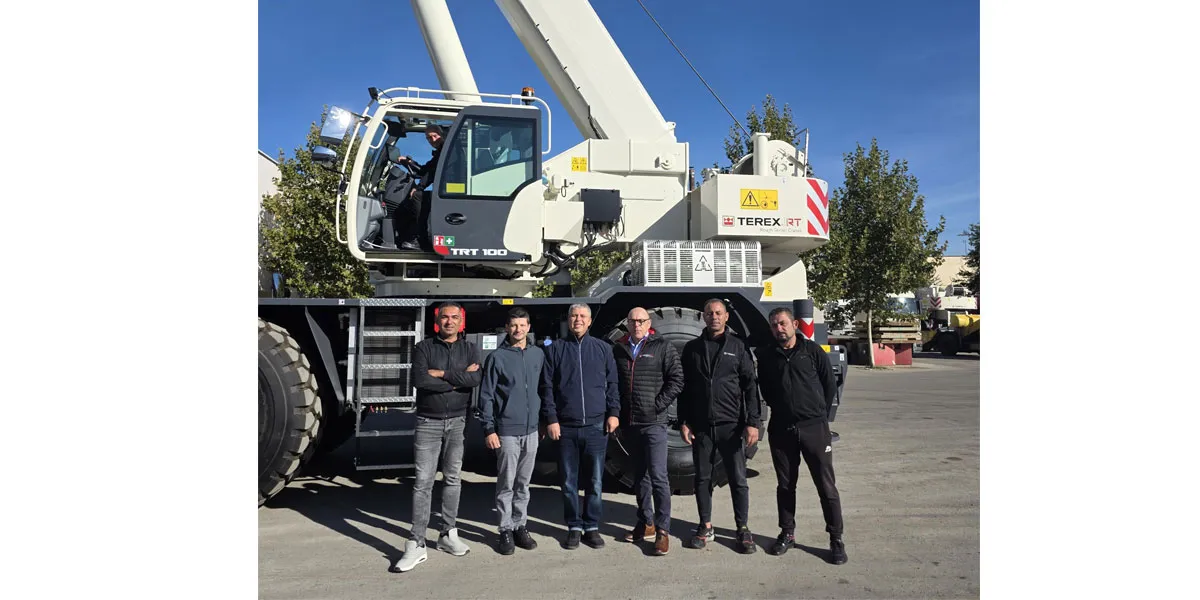
Raimondi Group has recently appointed Roland Trading as the official dealer for its Terex Rough Terrain (RT) crane division in Bulgaria, strengthening its distribution network and customer support capabilities across Eastern Europe. The agreement was marked by the sale of three rough terrain cranes, comprising one TRT 50 and two TRT 100 models.The appointment forms part of Raimondi's strategy to expand its European dealer network and improve access to lifting equipment, technical services and aftermarket support across the region.Roland Trading brings extensive experience with the Terex brand,..

Next Story
Real Estate

India Ranks Among Top 10 Branded Residences Markets: Savills

India has emerged among the world's top 10 markets for branded residences, according to the Savills Branded Residences Report 2026/2027. The report highlights the country's position in the global luxury residential property sector amid growing demand for branded developments.The global branded residences market is expected to record year-on-year growth of 24 per cent by the end of 2026, reflecting continued expansion across major international markets.The Middle East and Africa region is projected to lead annual growth at 51 per cent, followed by Europe at 25 per cent, Asia Pacific at 19 per c..
Next Story
Equipment

Anand Systems Unveils AI Safety System for EOT Cranes

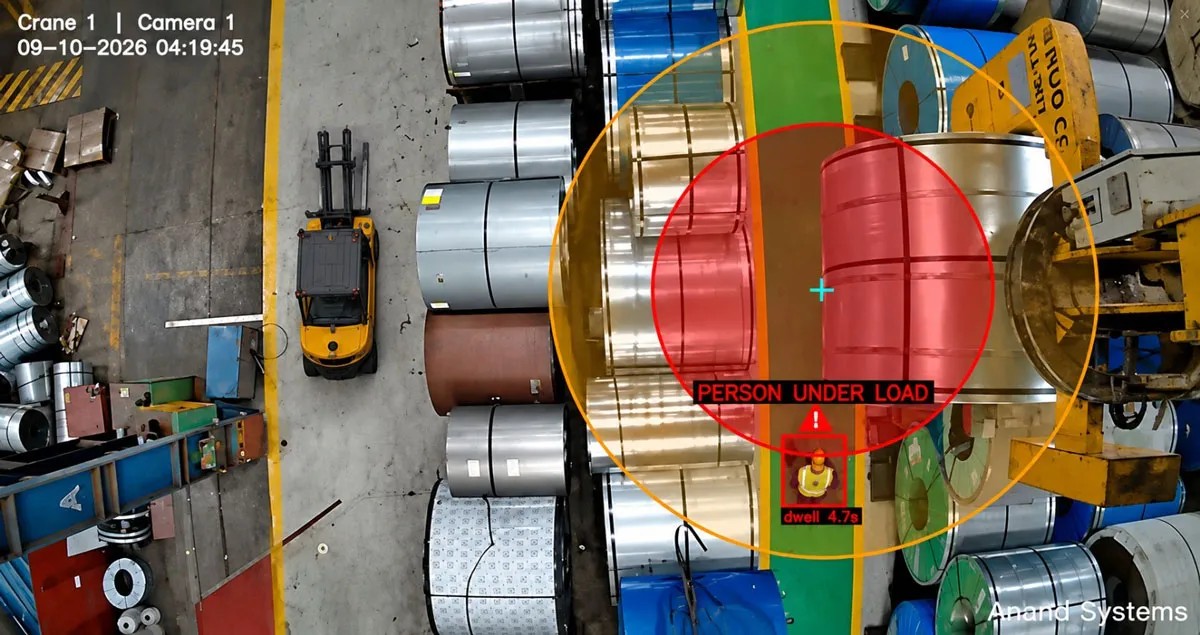
Mumbai-based Anand Systems Engineering has recently introduced an AI-powered Human Detection System designed to improve industrial safety by identifying workers standing or moving beneath suspended crane loads. The technology aims to reduce the risk of crane-related accidents through real-time monitoring, automated warnings and crane control functions.The system uses two industrial cameras mounted on an Electric Overhead Travelling (EOT) crane to monitor the floor beneath the load. An AI model trained on overhead images identifies people and tracks the crane hook, creating two circular danger ..

Advertisement

Subscribe to Our Newsletter

Get daily newsletters around different themes from Construction world.

STAY CONNECTED

Advertisement

SPECIAL OFFER
QR Code