PDUNASS holds training on investment and risk management
ECONOMY & POLICY

PDUNASS holds training on investment and risk management

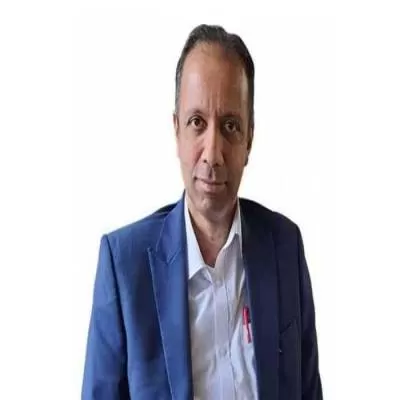
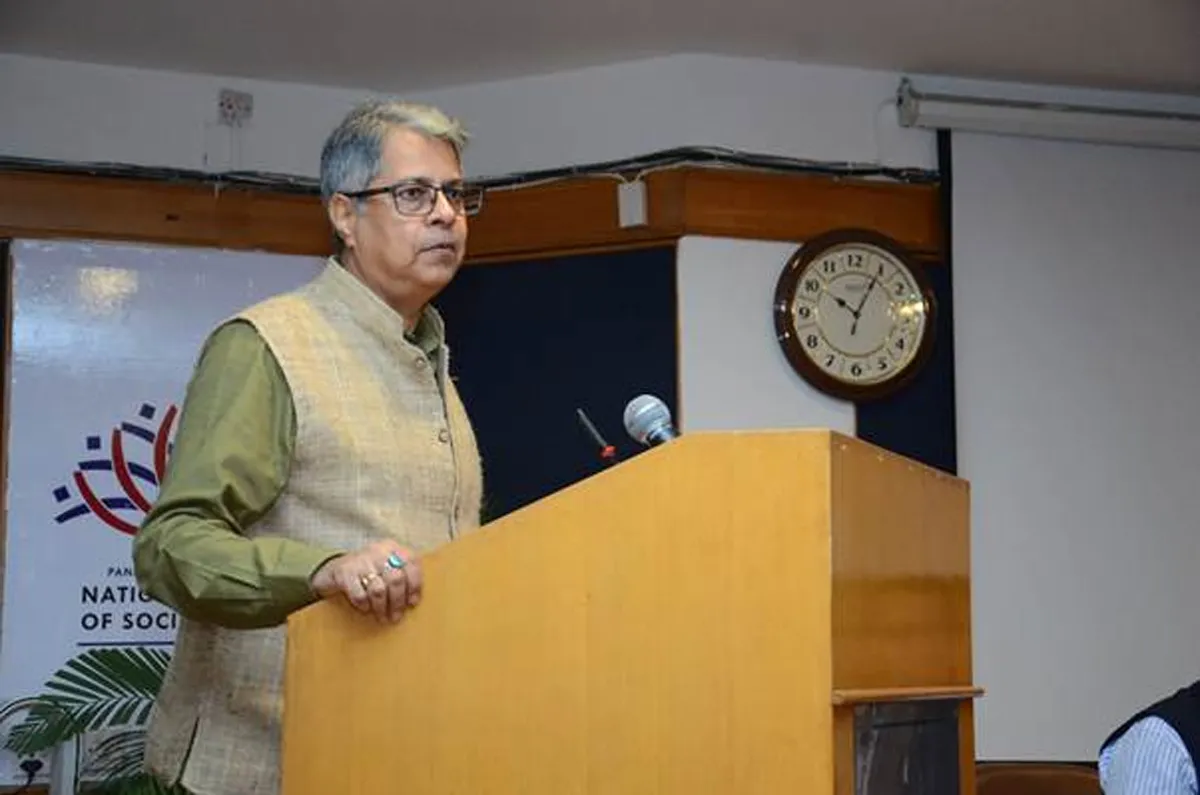
A two-day training programme on Investment and Risk Management for officers of the Employees’ Provident Fund Organisation (EPFO) began today at the Pandit Deendayal Upadhyaya National Academy of Social Security (PDUNASS), New Delhi. The event was inaugurated by Shri Kumar Rohit, Director of PDUNASS, who urged participants from across the country to actively engage and raise questions throughout the sessions.

Shri Rohit said the programme marks a timely and important initiative for the Academy to strengthen officers’ expertise in investment management and financial prudence. He credited Shri Ramesh Krishnamurthi, Central Provident Fund Commissioner (CPFC) and Dean of PDUNASS, for inspiring the initiative and guiding the Academy’s ongoing efforts towards professional development and institutional excellence.

Describing the programme as a forward-looking step in capacity building, Shri Rohit highlighted the example of Shri Vivekanand Gupta, RPFC-II, who has been selected for the Public Financial Asset Management (PFAM) Programme 2025–26 organised by the World Bank and Milken Institute at Bayes Business School, UK, as evidence of the growing international recognition of EPFO officers’ capabilities.

The sessions are being led by Prof. Satish Kumar from ICFAI Business School, Hyderabad, who is serving as the resource person. His lectures cover key topics such as institutional investments, portfolio construction, bond valuation, asset–liability management, and portfolio evaluation within the framework of risk management.

Prof. Kumar emphasised that “an asset cannot be managed if it cannot be valued,” stressing that valuation is central to all investment decisions. He also discussed the pioneering contributions of Harry Markowitz, the father of modern portfolio theory, and William Sharpe, known for the Capital Asset Pricing Model (CAPM) and Sharpe Ratio—both Nobel Laureates in Economics (1990).

Shri Rizwan Uddin, RPFC-I, who serves as the Course Director, advised participants that active engagement and thoughtful inquiry would be key to achieving the programme’s learning goals.

A special team of officers from the Investment and Exemption Divisions of EPFO Headquarters has been nominated to attend the course, along with PDUNASS faculty and other officers from across India.

The programme underscores PDUNASS’s continued commitment to upskilling EPFO officers, strengthening financial governance, and promoting sound investment practices in line with global standards.

A two-day training programme on Investment and Risk Management for officers of the Employees’ Provident Fund Organisation (EPFO) began today at the Pandit Deendayal Upadhyaya National Academy of Social Security (PDUNASS), New Delhi. The event was inaugurated by Shri Kumar Rohit, Director of PDUNASS, who urged participants from across the country to actively engage and raise questions throughout the sessions. Shri Rohit said the programme marks a timely and important initiative for the Academy to strengthen officers’ expertise in investment management and financial prudence. He credited Shri Ramesh Krishnamurthi, Central Provident Fund Commissioner (CPFC) and Dean of PDUNASS, for inspiring the initiative and guiding the Academy’s ongoing efforts towards professional development and institutional excellence. Describing the programme as a forward-looking step in capacity building, Shri Rohit highlighted the example of Shri Vivekanand Gupta, RPFC-II, who has been selected for the Public Financial Asset Management (PFAM) Programme 2025–26 organised by the World Bank and Milken Institute at Bayes Business School, UK, as evidence of the growing international recognition of EPFO officers’ capabilities. The sessions are being led by Prof. Satish Kumar from ICFAI Business School, Hyderabad, who is serving as the resource person. His lectures cover key topics such as institutional investments, portfolio construction, bond valuation, asset–liability management, and portfolio evaluation within the framework of risk management. Prof. Kumar emphasised that “an asset cannot be managed if it cannot be valued,” stressing that valuation is central to all investment decisions. He also discussed the pioneering contributions of Harry Markowitz, the father of modern portfolio theory, and William Sharpe, known for the Capital Asset Pricing Model (CAPM) and Sharpe Ratio—both Nobel Laureates in Economics (1990). Shri Rizwan Uddin, RPFC-I, who serves as the Course Director, advised participants that active engagement and thoughtful inquiry would be key to achieving the programme’s learning goals. A special team of officers from the Investment and Exemption Divisions of EPFO Headquarters has been nominated to attend the course, along with PDUNASS faculty and other officers from across India. The programme underscores PDUNASS’s continued commitment to upskilling EPFO officers, strengthening financial governance, and promoting sound investment practices in line with global standards.

Next Story
Infrastructure Energy

Delhi HC Stays PGCIL Order against KEC International

KEC International has informed stock exchanges of a significant legal development concerning its eligibility to participate in tenders floated by Power Grid Corporation of India (PGCIL), in a disclosure made under Regulation 30 of the SEBI (Listing Obligations and Disclosure Requirements) Regulations.The update follows the company’s earlier intimation dated November 18, 2025, regarding an order issued by PGCIL that excluded KEC International from participating in its tenders for a period of nine months. Challenging the said order, the company filed a writ petition before the Hon’ble High C..

Next Story
Building Material

LANXESS Advances Pigment Solutions for New-Age Concrete Technologies

LANXESS is deepening its engagement with next-generation concrete technologies by advancing research into the performance of iron oxide pigments across emerging construction applications, including self-compacting concrete (SCC), geopolymers and 3D-printed concrete. Through extensive investigations and long-term weathering tests, iron oxide pigments have proven their suitability for a wide range of concrete construction materials, though their use in new formulations requires a thorough understanding of construction chemistry and material interactions.According to Oliver Fleschentraeger, Techn..

Next Story
Infrastructure Urban

JHS Svendgaard to Invest Rs 250 Million in Kala Amb Expansion

JHS Svendgaard Laboratories (JHS), a leading Indian manufacturer of oral care products, has announced an investment of Rs 250 million to expand its manufacturing footprint in Kala Amb, Himachal Pradesh. The investment is aimed at strengthening production capacity, introducing advanced technologies and supporting the company’s next phase of growth in response to rising domestic and global demand.As part of the expansion plan, JHS will construct a new 100,000 sq ft manufacturing facility on its existing five-acre land parcel at Kala Amb. The project is expected to be executed over a two-year p..

Advertisement

Subscribe to Our Newsletter

Get daily newsletters around different themes from Construction world.

STAY CONNECTED

Advertisement

Advertisement

Advertisement

Advertisement

Open In App