PM to inaugurate several projects of Mahanadi Coalfields
ECONOMY & POLICY

PM to inaugurate several projects of Mahanadi Coalfields

In line with the principles of PM GatiShakti National Master Plan for providing multi-model connectivity and to reduce logistics cost by enhancing efficiency, the Ministry of Coal has undertaken large scale infrastructure augmentation to further step up efficient evacuation of coal. With an objective to augment railway network in coal producing areas, Joint Venture of CIL, IRCON and Government of Odisha have been formed as ?Mahanadi Coal Rail Ltd.? CIL has funded critical rail infrastructure projects for laying of additional rail lines, doubling of existing rail lines, construction of Rail-over-Rail (ROR), Y-curves etc.

Across subsidiaries, CIL has planned to set up mechanised coal transportation infrastructure from pit-head to railway loading point by construction of First Mile Connectivity (FMC) projects. Total over 100 FMC projects for all larger mines have been planned. These projects on one hand improve the loading efficiency, reduce loading time and on the other hand contribute in reducing emission and pollution.

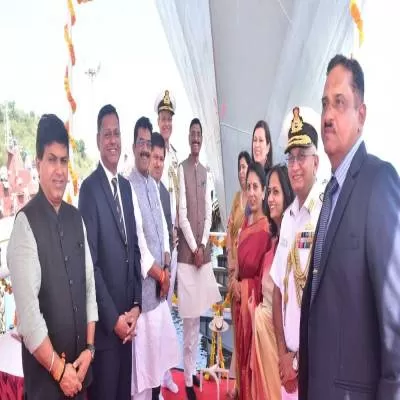
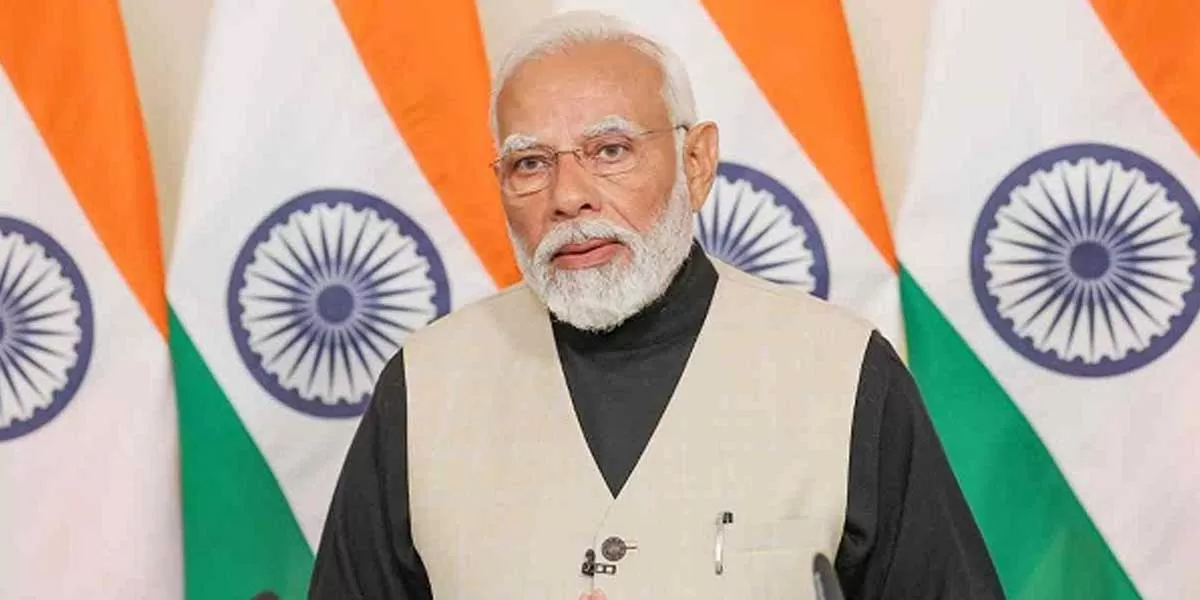
Prime Minister, Narendra Modi will inaugurate pivotal projects of Mahanadi Coalfields Limited (MCL) in Odisha on February 3, 2024. Among these is the Bhubaneswari Phase-I, a First Mile Connectivity (FMC) project in Talcher Coalfields, Angul district, built at a cost of Rs 3.35 billion will reduce rake loading time to approximately 50 minutes, introduce eco-friendly transportation, decrease greenhouse gas emissions, and reduce coal transportation costs.

Another important project is the Lajkura Rapid Loading System (RLS), constructed at an investment of about Rs 3.75 billion. This system is designed to enhance coal quality and supply, achieving a loading time of around 50 minutes, embracing eco-friendly transportation, minimising greenhouse gas emissions, and reducing overall coal transportation costs. These endeavours not only significantly alleviate environmental impact but also create valuable employment opportunities for the local youth.

In addition to these milestone projects, the Prime Minister will also inaugurate IB Valley Washery, built at a cost of over Rs 5.5 billion in Jharsuguda district of Odisha. This project will mark a paradigm shift in coal processing for quality, signifying innovation and sustainability raising the bar for coal quality standards and aligning with India's vision for cleaner and more efficient energy solutions.

Furthermore, the Prime Minister will dedicate a 50 km long second track of the Jharsuguda-Barpali-Sardega rail line Phase-1 to the nation, built by Mahanadi Coalfields Limited (MCL) with an investment of Rs 8.78 billion. This expansion is poised to significantly enhance rail infrastructure, facilitating seamless transportation and ensuring efficient coal supply chains.

With a combined investment of approximately Rs 21.45 billion, these endeavours underscore the government's commitment to strengthening coal infrastructure for a consistent and efficient energy supply. These projects are expected to bring significant benefits to the coal industry in Odisha and contribute to the country's energy security.

In line with the principles of PM GatiShakti National Master Plan for providing multi-model connectivity and to reduce logistics cost by enhancing efficiency, the Ministry of Coal has undertaken large scale infrastructure augmentation to further step up efficient evacuation of coal. With an objective to augment railway network in coal producing areas, Joint Venture of CIL, IRCON and Government of Odisha have been formed as ?Mahanadi Coal Rail Ltd.? CIL has funded critical rail infrastructure projects for laying of additional rail lines, doubling of existing rail lines, construction of Rail-over-Rail (ROR), Y-curves etc. Across subsidiaries, CIL has planned to set up mechanised coal transportation infrastructure from pit-head to railway loading point by construction of First Mile Connectivity (FMC) projects. Total over 100 FMC projects for all larger mines have been planned. These projects on one hand improve the loading efficiency, reduce loading time and on the other hand contribute in reducing emission and pollution. Prime Minister, Narendra Modi will inaugurate pivotal projects of Mahanadi Coalfields Limited (MCL) in Odisha on February 3, 2024. Among these is the Bhubaneswari Phase-I, a First Mile Connectivity (FMC) project in Talcher Coalfields, Angul district, built at a cost of Rs 3.35 billion will reduce rake loading time to approximately 50 minutes, introduce eco-friendly transportation, decrease greenhouse gas emissions, and reduce coal transportation costs. Another important project is the Lajkura Rapid Loading System (RLS), constructed at an investment of about Rs 3.75 billion. This system is designed to enhance coal quality and supply, achieving a loading time of around 50 minutes, embracing eco-friendly transportation, minimising greenhouse gas emissions, and reducing overall coal transportation costs. These endeavours not only significantly alleviate environmental impact but also create valuable employment opportunities for the local youth. In addition to these milestone projects, the Prime Minister will also inaugurate IB Valley Washery, built at a cost of over Rs 5.5 billion in Jharsuguda district of Odisha. This project will mark a paradigm shift in coal processing for quality, signifying innovation and sustainability raising the bar for coal quality standards and aligning with India's vision for cleaner and more efficient energy solutions. Furthermore, the Prime Minister will dedicate a 50 km long second track of the Jharsuguda-Barpali-Sardega rail line Phase-1 to the nation, built by Mahanadi Coalfields Limited (MCL) with an investment of Rs 8.78 billion. This expansion is poised to significantly enhance rail infrastructure, facilitating seamless transportation and ensuring efficient coal supply chains. With a combined investment of approximately Rs 21.45 billion, these endeavours underscore the government's commitment to strengthening coal infrastructure for a consistent and efficient energy supply. These projects are expected to bring significant benefits to the coal industry in Odisha and contribute to the country's energy security.

Next Story
Infrastructure Transport

Large Format Store Planned At M G Road Metro Station

M G Road station in Bengaluru is set to host the city’s first large-format commercial and experience space, with planning led by Bangalore Metro Rail Corporation Limited. BMRCL has invited proposals to develop and operate a central business district destination at the Purple?Pink Line interchange. The plan positions the station as a commercial hub designed to serve a broad commuter base across the city. The proposal is part of a broader effort to activate transit nodes commercially. Tender documents set a minimum monthly rental of Rs 0.944 million (mn), inclusive of GST, for the large-format..

Next Story
Infrastructure Energy

Government Cancels Auction Of Eleven Critical Mineral Blocks

The government has cancelled the auction of 11 critical and strategic mineral blocks after receiving a poor investor response and failing to attract a sufficient number of qualified bidders. The decision represents a setback to plans to ramp up domestic exploration and production of critical minerals amid global supply chain disruptions and rising demand for materials used in clean energy and advanced technologies. The mines ministry issued an annulment notice setting out the reasons for the cancellations. The annulment notice indicated that the auction process for five mineral blocks was canc..

Next Story
Infrastructure Energy

Gujarat Pushes Biogas Growth With 193 Operational Units

Gujarat has operationalised 193 biogas plants across the state and is planning to add 60 more units as part of a broader push to scale up clean and sustainable energy solutions. The existing plants, established under various government-supported schemes, process organic waste including cattle dung and agricultural residue to produce biogas and a nutrient-rich slurry. The output is mainly used for cooking and other energy needs in rural and semi-urban communities, while also improving local waste management practices. The Gujarat Energy Development Agency (GEDA) is leading the initiative and is..

Advertisement

Subscribe to Our Newsletter

Get daily newsletters around different themes from Construction world.

STAY CONNECTED

Advertisement

Advertisement

Advertisement