
PMC Set to Crack Down on Plastic Manufacturers
ECONOMY & POLICY

PMC Set to Crack Down on Plastic Manufacturers

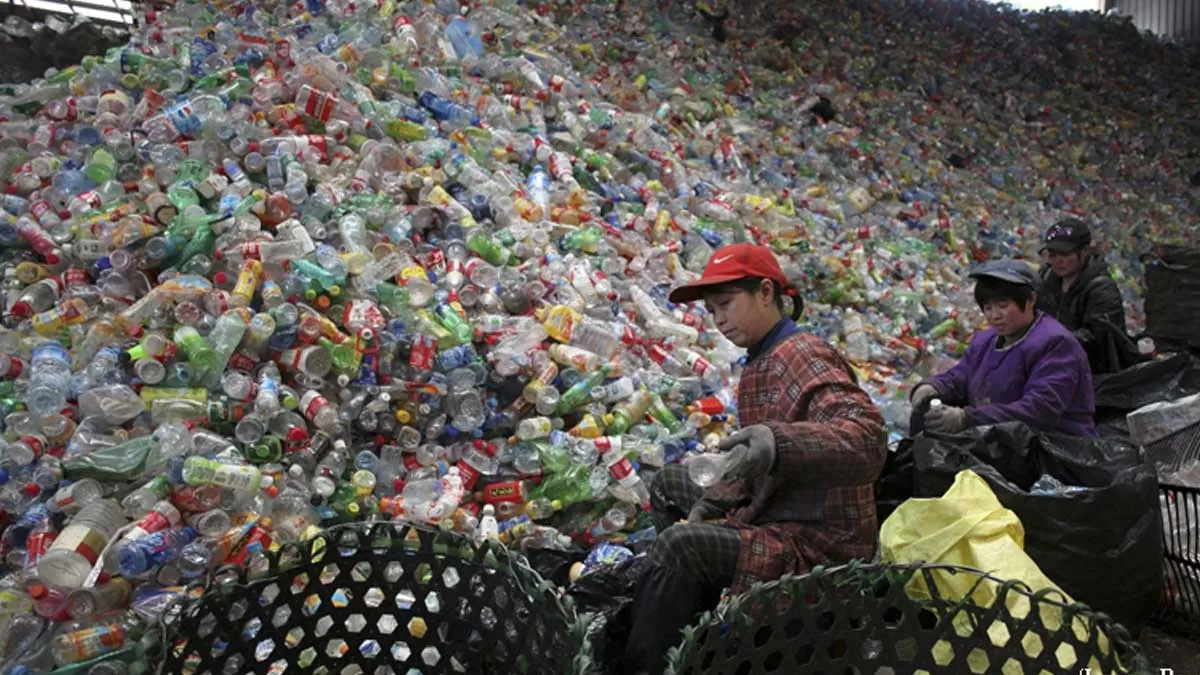
In a significant move to intensify its battle against plastic pollution, the Pune Municipal Corporation (PMC) is gearing up to confront manufacturers for the first time. Officials revealed that the PMC's solid waste management (SWM) department has submitted a groundbreaking proposal to civic chief Rajendra Bhosale. This proposal, also forwarded to the PMC legal department, outlines plans to take action against units producing single-use plastic both within and outside the municipal limits, with cooperation from other governing bodies.

Sandip Kadam, head of the PMC solid waste management department, emphasized the importance of targeting the source of illegal plastic products to prevent their circulation in the market. He stated, "Though there are special teams to check the sale, exchange, and use of banned plastic, green signal to the proposal will help target the source of illegal plastic products and prevent it from entering the market."

The move comes in the wake of the Maharashtra government's proactive stance on plastic regulation. The state declared a ban on plastics in March 2018, subsequently implementing the Plastic Waste Management Rules, in 2016. Reinforcing this, the Maharashtra Pollution Control Board (MPCB) issued a notification on March 12, directing the civic body to ramp up vigilance on the production, sale, usage, and exchange of banned single-use plastic.

PMC's enforcement measures include fines of ?5,000 for first-time offenders, ?10,000 for second-time violations, and ?25,000 for third-time or repeated offenders. A civic official disclosed that since January 2024, PMC has collected 823 kg of illegal plastic. This crackdown marks a pivotal step in PMC's ongoing efforts to combat plastic pollution and safeguard the environment for future generations.

"Join industry leaders at RAHSTA Expo, India's premier platform for roads, highways and traffic infrastructure. Register now to explore innovations, network with experts and shape the future of mobility."

In a significant move to intensify its battle against plastic pollution, the Pune Municipal Corporation (PMC) is gearing up to confront manufacturers for the first time. Officials revealed that the PMC's solid waste management (SWM) department has submitted a groundbreaking proposal to civic chief Rajendra Bhosale. This proposal, also forwarded to the PMC legal department, outlines plans to take action against units producing single-use plastic both within and outside the municipal limits, with cooperation from other governing bodies. Sandip Kadam, head of the PMC solid waste management department, emphasized the importance of targeting the source of illegal plastic products to prevent their circulation in the market. He stated, Though there are special teams to check the sale, exchange, and use of banned plastic, green signal to the proposal will help target the source of illegal plastic products and prevent it from entering the market. The move comes in the wake of the Maharashtra government's proactive stance on plastic regulation. The state declared a ban on plastics in March 2018, subsequently implementing the Plastic Waste Management Rules, in 2016. Reinforcing this, the Maharashtra Pollution Control Board (MPCB) issued a notification on March 12, directing the civic body to ramp up vigilance on the production, sale, usage, and exchange of banned single-use plastic. PMC's enforcement measures include fines of ?5,000 for first-time offenders, ?10,000 for second-time violations, and ?25,000 for third-time or repeated offenders. A civic official disclosed that since January 2024, PMC has collected 823 kg of illegal plastic. This crackdown marks a pivotal step in PMC's ongoing efforts to combat plastic pollution and safeguard the environment for future generations.

Next Story
Technology

Crushing Goes Green

If the past few years have seen sustainability emerge as a buzzword in the design of commercial spaces, the next few years will see the focus shift to ‘experience’. Workplaces that prioritise superior employee experiences consistently report stronger talent attraction and higher retention rates and productivity, while using resources sustainably.First things first; what sort of experiences are expected from a workplace?As Vandana Dhawan Saxena, Founder and Design Principal, Studio IV Designs, explains, “Offices have grown into environments that need to support various kinds of experience..

Next Story
Real Estate

The Great Workplace Reset

If the past few years have seen sustainability emerge as a buzzword in the design of commercial spaces, the next few years will see the focus shift to ‘experience’. Workplaces that prioritise superior employee experiences consistently report stronger talent attraction and higher retention rates and productivity, while using resources sustainably.First things first; what sort of experiences are expected from a workplace?As Vandana Dhawan Saxena, Founder and Design Principal, Studio IV Designs, explains, “Offices have grown into environments that need to support various kinds of experience..

Next Story
Infrastructure Transport

Tunnels and Bridges: Critical Links

Scores of point-to-point road connectivity projects across India have improved mobility and reduced travel time. But a shortcoming of point-to-point roads is that they don’t always unlock the full economic potential of the regions being connected, by creating opportunities for manufacturing, investments and employment along the route, thereby, effectively supporting India’s long-term growth ambitions.Consequently, the past decade in particular has seen a shift to corridor-led development, wherein infrastructure is planned as part of a larger economic ecosystem, explains Satyanarayan Purohi..

Advertisement

Subscribe to Our Newsletter

Get daily newsletters around different themes from Construction world.

STAY CONNECTED

Advertisement

Advertisement

Advertisement