

PWD unit to monitor Barapullah Ph-III delays
ECONOMY & POLICY

PWD unit to monitor Barapullah Ph-III delays

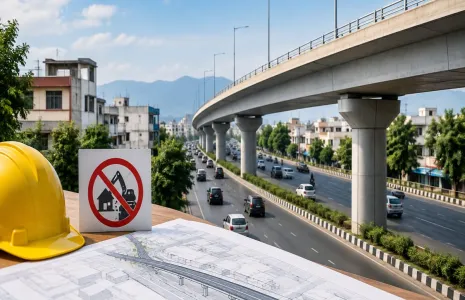
The Public Works Department announced its intention to closely monitor the progress of the delayed Barapullah Phase-III project. It was decided to establish a monitoring unit tasked with submitting progress reports to senior government officials. Barapullah Phase-III, plagued by issues such as land acquisition and green clearance, is nearing its deadline. The project aims to facilitate seamless connectivity between Mayur Vihar-1 and Sarai Kale Khan, integrating with the existing Barapullah Phase I to provide uninterrupted connectivity between east Delhi and AIIMS. Phase III, covering a 3.5km stretch, commenced in April 2015 with an expected completion date of October 2017, yet remains unfinished.

According to a recent directive from the Public Works Department, a separate monitoring unit will be established under the supervision of the chief engineer of the flyover zone. This unit will provide regular updates to seniors regarding the progress of the delayed project. An official stated, "The scope of work includes estimating the completion date, verifying the deployment of necessary resources and manpower, and identifying major obstacles requiring attention from the secretariat." This directive was issued by special secretary Shashanka Ala.

The monitoring will also encompass critical timelines and other aspects of the project. Despite being more than 90% complete, the project faces numerous challenges, including the annual flooding of the work site during the monsoon season, which halts progress. Additionally, construction is halted during the winter months of December and January due to bans.

The Public Works Department announced its intention to closely monitor the progress of the delayed Barapullah Phase-III project. It was decided to establish a monitoring unit tasked with submitting progress reports to senior government officials. Barapullah Phase-III, plagued by issues such as land acquisition and green clearance, is nearing its deadline. The project aims to facilitate seamless connectivity between Mayur Vihar-1 and Sarai Kale Khan, integrating with the existing Barapullah Phase I to provide uninterrupted connectivity between east Delhi and AIIMS. Phase III, covering a 3.5km stretch, commenced in April 2015 with an expected completion date of October 2017, yet remains unfinished. According to a recent directive from the Public Works Department, a separate monitoring unit will be established under the supervision of the chief engineer of the flyover zone. This unit will provide regular updates to seniors regarding the progress of the delayed project. An official stated, The scope of work includes estimating the completion date, verifying the deployment of necessary resources and manpower, and identifying major obstacles requiring attention from the secretariat. This directive was issued by special secretary Shashanka Ala. The monitoring will also encompass critical timelines and other aspects of the project. Despite being more than 90% complete, the project faces numerous challenges, including the annual flooding of the work site during the monsoon season, which halts progress. Additionally, construction is halted during the winter months of December and January due to bans.

Next Story
Infrastructure Urban

Implementation Status of Jal Jeevan Mission

Since August 2019 the Government has implemented Jal Jeevan Mission to provide assured potable water through household tap connections in rural India. At the start of the mission only 32.3 million (mn) rural households, representing 16.7 per cent, were reported to have tap water connections. States and union territories have reported that 125.8 mn additional rural households have since been provided with tap connections. As a result, of about 193.6 mn rural households roughly 158.2 mn, or 81.71 per cent, are reported to have tap water supply at home.\n\nThe State, district and village level st..

Next Story
Infrastructure Urban

Jal Jeevan Mission Reaches Eighty One Per Cent Rural Coverage

The Government reported substantial progress under the Jal Jeevan Mission, launched in August 2019 to provide tap water to every rural household. At launch only 32.3 million (mn) rural households had tap connections and states and Union territories reported provision of 125.8 mn additional households by March 2026. Consequently, out of about 193.6 mn rural households around 158.2 mn, or 81.71 per cent, are reported to have tap water at home. The Finance Minister announced extension of the mission until 2028 in the 2025-26 budget speech. The Swachh Bharat Mission Grameen, launched in October 20..

Next Story
Infrastructure Urban

Empowering Local Governance for Sustainable Rural Water Supply

The Ministry of Jal Shakti has aligned the Jal Jeevan Mission (JJM) with the 73rd Amendment to strengthen village level planning and community ownership of water supply. Gram Panchayats, village water and sanitation committees and Pani Samitis are to plan, implement, manage and maintain piped water systems, with gram sabha processes formalising handover and oversight. Implementation support agencies including non government organisations, community based organisations and self help groups have been empanelled to train local committees and promote women participation. Under JJM, the department ..

Advertisement

Subscribe to Our Newsletter

Get daily newsletters around different themes from Construction world.

STAY CONNECTED

Advertisement

Advertisement

Advertisement