Railways and IIT-B to Develop Sustainable Suburban Framework
ECONOMY & POLICY

Railways and IIT-B to Develop Sustainable Suburban Framework

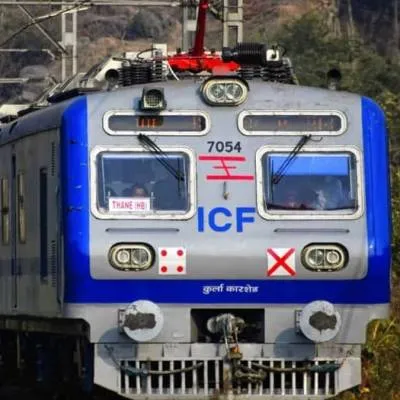
Mumbai Rail Vikas Corporation (MRVC), in collaboration with the Indian Railways, is set to partner with the Indian Institute of Technology (IIT) Bombay to conduct a technical analysis of Mumbai's suburban rail network. The primary objective of this study is to develop a framework for the financial and economic sustainability of the suburban railway system in Mumbai and its metropolitan region.

The study will focus on analysing past urban transport projects to identify key insights and suggest improvements for future development. It will also assess on-going rail projects and examine how these initiatives complement other mass transit systems, such as metro rail services. Additionally, the analysis will compare the fare structures of air-conditioned and regular local train services to evaluate their effectiveness and potential for optimisation.

The research will investigate the current costing structure of the suburban railway, benchmarking it against global practices to identify potential areas for improvement. It will explore optimal operations and maintenance expenses, innovative financing models, and strategies to enhance energy efficiency. The study is expected to be completed by July 2027.

The findings will provide a detailed understanding of suburban rail operations with a focus on financial viability and efficient service delivery. Recommendations may include strategies for implementing more effective train timetables, optimizing infrastructure planning, and improving capacity utilisation of the existing train fleet to enhance passenger convenience.

The study will also address larger transport planning strategies, identifying opportunities for the railways to monetize assets and improve infrastructure. The ultimate goal is to enhance the overall passenger experience while ensuring the long-term sustainability of Mumbai's vital suburban railway network.

News source: Hindustan Times

Mumbai Rail Vikas Corporation (MRVC), in collaboration with the Indian Railways, is set to partner with the Indian Institute of Technology (IIT) Bombay to conduct a technical analysis of Mumbai's suburban rail network. The primary objective of this study is to develop a framework for the financial and economic sustainability of the suburban railway system in Mumbai and its metropolitan region. The study will focus on analysing past urban transport projects to identify key insights and suggest improvements for future development. It will also assess on-going rail projects and examine how these initiatives complement other mass transit systems, such as metro rail services. Additionally, the analysis will compare the fare structures of air-conditioned and regular local train services to evaluate their effectiveness and potential for optimisation. The research will investigate the current costing structure of the suburban railway, benchmarking it against global practices to identify potential areas for improvement. It will explore optimal operations and maintenance expenses, innovative financing models, and strategies to enhance energy efficiency. The study is expected to be completed by July 2027. The findings will provide a detailed understanding of suburban rail operations with a focus on financial viability and efficient service delivery. Recommendations may include strategies for implementing more effective train timetables, optimizing infrastructure planning, and improving capacity utilisation of the existing train fleet to enhance passenger convenience. The study will also address larger transport planning strategies, identifying opportunities for the railways to monetize assets and improve infrastructure. The ultimate goal is to enhance the overall passenger experience while ensuring the long-term sustainability of Mumbai's vital suburban railway network. News source: Hindustan Times

Next Story
Infrastructure Urban

Implementation Status of Jal Jeevan Mission

Since August 2019 the Government has implemented Jal Jeevan Mission to provide assured potable water through household tap connections in rural India. At the start of the mission only 32.3 million (mn) rural households, representing 16.7 per cent, were reported to have tap water connections. States and union territories have reported that 125.8 mn additional rural households have since been provided with tap connections. As a result, of about 193.6 mn rural households roughly 158.2 mn, or 81.71 per cent, are reported to have tap water supply at home.\n\nThe State, district and village level st..

Next Story
Infrastructure Urban

Jal Jeevan Mission Reaches Eighty One Per Cent Rural Coverage

The Government reported substantial progress under the Jal Jeevan Mission, launched in August 2019 to provide tap water to every rural household. At launch only 32.3 million (mn) rural households had tap connections and states and Union territories reported provision of 125.8 mn additional households by March 2026. Consequently, out of about 193.6 mn rural households around 158.2 mn, or 81.71 per cent, are reported to have tap water at home. The Finance Minister announced extension of the mission until 2028 in the 2025-26 budget speech. The Swachh Bharat Mission Grameen, launched in October 20..

Next Story
Infrastructure Urban

Empowering Local Governance for Sustainable Rural Water Supply

The Ministry of Jal Shakti has aligned the Jal Jeevan Mission (JJM) with the 73rd Amendment to strengthen village level planning and community ownership of water supply. Gram Panchayats, village water and sanitation committees and Pani Samitis are to plan, implement, manage and maintain piped water systems, with gram sabha processes formalising handover and oversight. Implementation support agencies including non government organisations, community based organisations and self help groups have been empanelled to train local committees and promote women participation. Under JJM, the department ..

Advertisement

Subscribe to Our Newsletter

Get daily newsletters around different themes from Construction world.

STAY CONNECTED

Advertisement

Advertisement

Advertisement